


Osaka, Japan — As detrimental as viruses may sound, they can be helping hands for farmers when it comes to dealing with plant pathogens.

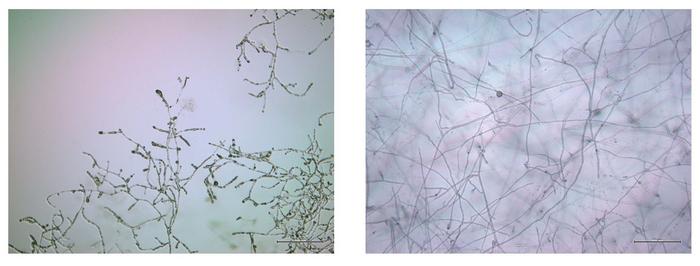
Credit: Osaka Metropolitan University
Osaka, Japan — As detrimental as viruses may sound, they can be helping hands for farmers when it comes to dealing with plant pathogens.
Osaka Metropolitan University scientists have discovered that a mycovirus that infects plant pathogenic oomycete Globisporangium ultimum can increase the latter’s sensitivity to specific fungicides. Their findings could lead to innovative approaches for controlling plant diseases, reducing reliance on chemical treatments, and minimizing agricultural loss.
Their results were published in Microbiological Research on May 3.
Mycoviruses, or fungal viruses, infect fungi as well as fungus-like organisms such as oomycetes. More commonly known as water molds, oomycetes include some of the most devastating plant pathogens and pose severe threats to global food security. When these oomycetes are infected by certain mycoviruses, however, their ability to cause disease can be weakened — a phenomenon known as hypovirulence — making mycoviruses potential biocontrol agents.
Mycoviral infections are multifaceted; they can reduce or increase virulence or remain hidden without obvious symptoms. Despite the growing number of mycoviruses identified recently, their effects on host oomycetes have remained largely unexplored.
“Since mycoviruses may significantly impact the ecology of oomycetes, we found it crucial to study their effects at both the phenotypic and gene expression levels,” said Tomofumi Mochizuki, an associate professor at the Graduate School of Agriculture of Osaka Metropolitan University and corresponding author of this study.
The research team zeroed in on Globisporangium ultimum, a major soil-borne oomycete responsible for damping-off and root rot in many plant species. They first created a virus-free isogenic strain of G. ultimum through high-temperature cultivation and then compared its characteristics and gene expression to the virus-infected isogenic strain.
The results show that compared to the virus-free isogenic strain, the virus-infected isogenic strain was more sensitive to metalaxyl, one of the four tested fungicides. No significant differences in growth rate and structure were observed between these isogenic strains in the absence of metalaxyl. Using a high throughput screening technique called RNA-seq to analyze gene expression profile, the researchers found that the virus-infected isogenic strain had lower expression of certain genes known as ABC-type transporters, which are known to contribute to fungicide resistance.
“Our results indicate that mycoviral infections alter the sensitivity of the host oomycete to fungicides,” said Aika Higuchi, a master’s student and this study’s first author.
These findings advance the current understanding of the roles that mycoviruses play and their potential for sustainable agriculture. The team plans to further explore the promise of mycoviruses as a biological control tool across different species and environmental conditions.
“Our research shows that the effects of viral infection on host oomycete can only be seen under certain conditions,” Mochizuki said. “Even if it seems that viral infection has no effect at first glance, it is necessary to analyze it from various perspectives.”
###
About OMU
Established in Osaka as one of the largest public universities in Japan, Osaka Metropolitan University is committed to shaping the future of society through “Convergence of Knowledge” and the promotion of world-class research. For more research news, visit and follow us on social media: X, Facebook, Instagram, LinkedIn.
Journal
Microbiological Research
Method of Research
Data/statistical analysis
Subject of Research
Not applicable
Article Title
Sensitivity of Globisporangium ultimum to the fungicide metalaxyl is enhanced by the infection with a toti-like mycovirus
Article Publication Date
3-May-2024
COI Statement
The authors declare no conflict of interest.
Cite Scienmag News
Alan Morgan. (June 23, 2024). Blessing in disguise: Mycoviruses enhance fungicide effectiveness against plant pathogens. Scienmag. https://scienmag.com/blessing-in-disguise-mycoviruses-enhance-fungicide-effectiveness-against-plant-pathogens/
Alan Morgan. "Blessing in disguise: Mycoviruses enhance fungicide effectiveness against plant pathogens." Scienmag, 23 June 2024, https://scienmag.com/blessing-in-disguise-mycoviruses-enhance-fungicide-effectiveness-against-plant-pathogens/. Accessed 5 September 2026.
Alan Morgan. "Blessing in disguise: Mycoviruses enhance fungicide effectiveness against plant pathogens." Scienmag. June 23, 2024. https://scienmag.com/blessing-in-disguise-mycoviruses-enhance-fungicide-effectiveness-against-plant-pathogens/

