


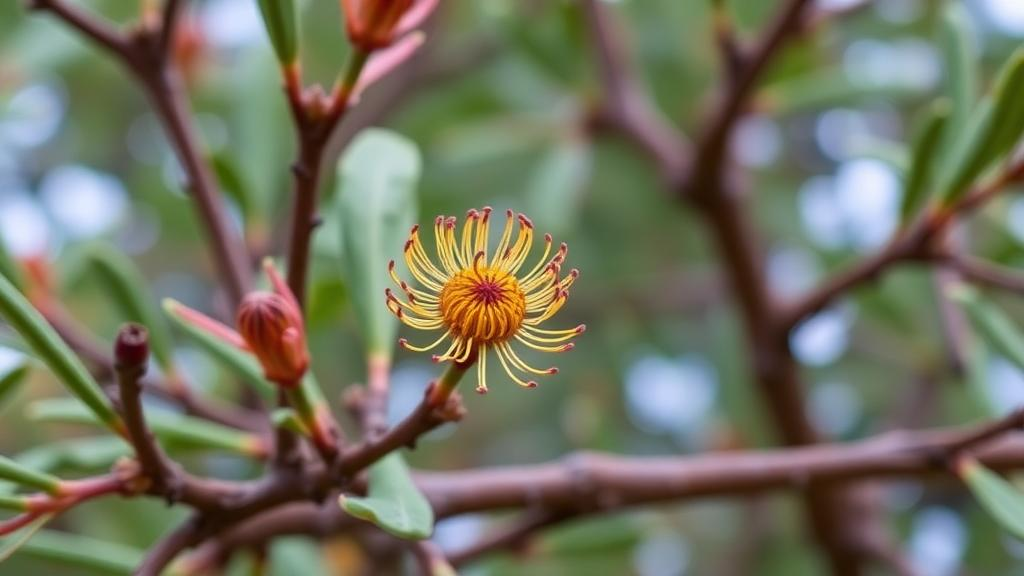
Bladder cancer remains one of the most aggressive and therapeutically frustrating malignancies in modern oncology. Despite decades of research, the mainstay treatments still rely heavily on cytotoxic chemotherapy, and clinicians continue to grapple with two persistent enemies: drug toxicity that damages healthy tissue and drug resistance that renders once-effective regimens useless. Against this backdrop, a team of Brazilian researchers has turned to an unlikely source of hope, the bark of the black wattle tree, Acacia mearnsii, a species better known in industry for tannin production than for medicine. Their new study, published in Cancer Cell International, reports that proanthocyanidins extracted from black wattle bark can kill bladder cancer cells in the laboratory at remarkably low concentrations, while also revealing, through a combination of gene expression profiling and computational biology, which molecular targets may underlie this effect.
Proanthocyanidins, often abbreviated as PACs, are a class of polyphenolic compounds famous for giving foods like grapes, cranberries, and cocoa their characteristic astringency. They are also increasingly recognized for biological activities that extend well beyond flavor, including antioxidant, anti-inflammatory, and antitumor properties. Previous studies in several cancer types have suggested that PACs can slow tumor growth, but their potential role as therapeutic adjuvants in bladder cancer specifically remained largely unexplored. The research team, led by Fernando Mendonça Diz and spanning institutions including the Pontifical Catholic University of Rio Grande do Sul and the Federal University of Rio Grande do Sul, set out to close that gap with a two-pronged strategy that combined classic laboratory experiments with modern systems biology.
The experimental centerpiece of the study was the T24 cell line, a human bladder carcinoma line derived from a grade III transitional cell carcinoma, which is widely used as a model for aggressive bladder cancer. When the researchers treated T24 cells with the black wattle proanthocyanidin extract, designated BWP, they observed a clear dose-dependent reduction in cell viability. Using the MTT assay, a standard colorimetric technique that measures metabolic activity as a proxy for the number of living cells, the team calculated an IC50 value of 11.67 micrograms per milliliter. In practical terms, this means that a very small concentration of the extract was enough to halve the survival of these aggressive cancer cells, a potency figure that immediately caught the researchers’ attention.
But killing cells is only part of the story; understanding how they die is what transforms an observation into potential medicine. To probe the mechanism of cell death, the team turned to flow cytometry, a technique that allows researchers to analyze thousands of individual cells and detect biochemical hallmarks of programmed cell death. The results were unambiguous: BWP treatment induced apoptosis in the T24 cells. Apoptosis, often described as cellular suicide, is the orderly dismantling of a cell that cancer cells notoriously evade. Triggering it selectively in tumor cells is one of the central goals of anticancer drug development, and the finding that a plant-derived polyphenol mixture can push bladder cancer cells down this path adds BWP to a growing list of natural products with pro-apoptotic activity.
Perhaps the most intriguing cellular observation came from nuclear morphometric analysis, a technique that quantifies the shape and irregularity of cell nuclei, which often change in characteristic ways when cells enter different biological states. The analysis revealed a shift toward what the researchers describe as a senescence-like phenotype, consistent with the morphological features of senescent cells. Cellular senescence is a state in which cells stop dividing but remain metabolically active, and inducing senescence in cancer cells, a strategy sometimes called therapy-induced senescence, is an emerging concept in oncology. The fact that BWP appears to push T24 cells toward both apoptosis and senescence-like features suggests that the extract may act through multiple parallel routes to suppress tumor growth, rather than through a single kill switch.
To move from cellular observations to molecular understanding, the researchers deployed an in silico systems biology approach, using computational tools to map the interactions between the constituent compounds of the black wattle extract and the human genome. This computational target identification exercise yielded a shortlist of candidate genes potentially associated with BWP activity, including BACE1, DNMT1, NOS1, NOS2, NOS3, PPARA, PPARG, PPARGC1A, and PTGS2. Each of these genes carries significant weight in cancer biology. DNMT1, for example, is a DNA methyltransferase central to epigenetic regulation and a known target of demethylating agents. The nitric oxide synthase genes NOS1, NOS2, and NOS3 govern the production of nitric oxide, a signaling molecule with complex and context-dependent roles in tumor progression and vascular biology. The PPAR family members PPARA and PPARG are nuclear receptors that regulate metabolism and inflammation, while PTGS2, better known as COX-2, is a canonical inflammation-linked enzyme long implicated in tumor development.
Computational predictions, however convincing, must be validated in living cells, and this is where the study’s experimental design shows its strength. The team performed quantitative reverse transcription polymerase chain reaction, or qRT-PCR, to measure whether BWP treatment actually changed the expression of the predicted target genes in T24 cells. The results confirmed that the extract modulated the expression of four of the candidate genes: DNMT1, BACE1, PPARG, and NOS3. This convergence between the computational predictions and the laboratory measurements is significant because it suggests that the systems biology pipeline used by the researchers can generate testable, and in this case test-worthy, hypotheses about how a complex natural extract interacts with human cellular machinery. BACE1, traditionally studied in the context of Alzheimer’s disease, has more recently been implicated in cancer cell biology, and its modulation by a plant polyphenol extract in bladder cancer cells adds a novel dimension to the findings.
The authors are careful to frame their work as hypothesis-generating rather than as proof of a new therapy, and that framing is scientifically appropriate. Extracts like BWP are complex mixtures containing many individual proanthocyanidin molecules of varying sizes and structures, and pinpointing which specific compound is responsible for which effect remains a challenge for future studies. Functional experiments, such as gene knockdown or knockout studies, will be needed to establish whether the modulated genes are genuinely driving the antiproliferative effects or are merely bystanders. Moreover, results obtained in a single cell line must be reproduced across a panel of bladder cancer models, including patient-derived cells, before any translational claims can be made. Animal studies and, eventually, carefully designed clinical trials would be required to determine whether black wattle proanthocyanidins could ever serve as a safe and effective adjuvant alongside existing bladder cancer treatments such as cisplatin-based chemotherapy.
Nevertheless, the study carries real significance on several fronts. First, it demonstrates that a low-cost, industrially abundant raw material, black wattle bark, which Brazil produces in large quantities, can yield compounds with measurable anticancer activity at low concentrations. Second, it showcases a methodological template for natural product research in the era of big data: rather than testing compounds blindly, the researchers combined in vitro pharmacology with computational target identification and gene expression validation, creating an integrated pipeline that could be applied to other plant extracts and other cancers. Third, the identification of specific molecular targets, from epigenetic regulators like DNMT1 to inflammatory mediators like PTGS2 and metabolic sensors like PPARG, gives the field a concrete starting point for mechanistic dissection rather than a vague notion that polyphenols are somehow good for you.
For patients and clinicians, the message is one of cautious optimism rather than immediate promise. No extract of black wattle is about to appear in an oncology clinic, and self-medication with tannin-rich products is not supported by this research. What the study does offer is a rigorous early-stage demonstration that nature’s chemical library still holds surprises, and that bladder cancer, a disease desperately in need of new options, may find one of them in the humble bark of a tree planted across Brazilian hillsides for leather tanning. As the researchers conclude, their findings provide a hypothesis-generating framework for future mechanistic and functional studies on proanthocyanidin-based therapies, and if those hypotheses hold up, the line between an industrial tannin and a cancer medicine may turn out to be thinner than anyone expected.
Subject of Research: Anticancer activity of black wattle bark proanthocyanidins against bladder cancer T24 cells, combining in vitro assays with gene expression profiling and computational target identification.
Article Title: In vitro and in silico evaluation of black wattle proanthocyanidins in bladder cancer T24 cells: gene expression profiling and computational target identification
Article References: In vitro and in silico evaluation of black wattle proanthocyanidins in bladder cancer T24 cells: gene expression profiling and computational target identification. (n.d.). https://doi.org/10.1186/s12935-026-04423-y
Image Credits: AI Generated
DOI: 10.1186/s12935-026-04423-y
Keywords: bladder cancer, proanthocyanidins, Acacia mearnsii, black wattle, T24 cells, apoptosis, senescence, gene expression, systems biology, natural products, DNMT1, PTGS2
Cite Scienmag News
Nathaniel Bowman. (October 14, 2026). Black Wattle Tree Extract Shows Potent Anticancer Activity Against Bladder Cancer Cells. Scienmag. https://scienmag.com/black-wattle-tree-extract-shows-potent-anticancer-activity-against-bladder-cancer-cells/
Nathaniel Bowman. "Black Wattle Tree Extract Shows Potent Anticancer Activity Against Bladder Cancer Cells." Scienmag, 14 October 2026, https://scienmag.com/black-wattle-tree-extract-shows-potent-anticancer-activity-against-bladder-cancer-cells/. Accessed 14 October 2026.
Nathaniel Bowman. "Black Wattle Tree Extract Shows Potent Anticancer Activity Against Bladder Cancer Cells." Scienmag. October 14, 2026. https://scienmag.com/black-wattle-tree-extract-shows-potent-anticancer-activity-against-bladder-cancer-cells/


