


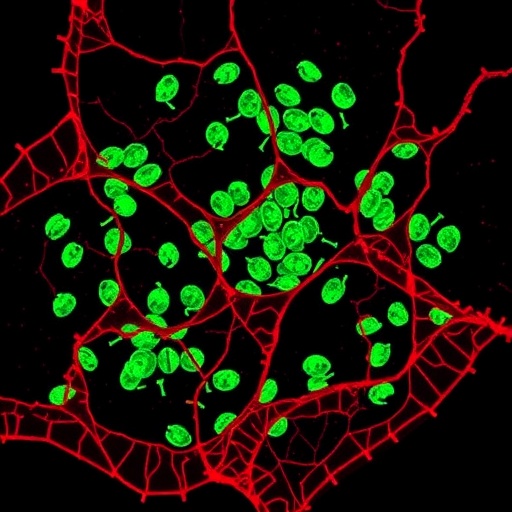
Glioblastoma Multiforme (GBM) remains one of the most formidable challenges in neuro-oncology, notorious for its aggressive nature, rapid progression, and dismal prognosis. Recent groundbreaking research spearheaded by Franceschi, Morelli, Lessi, and colleagues has thrown new light on the molecular underpinnings that fuel GBM’s virulence by identifying a critical co-expression signature involving BIRC3 and CAV1. Their seminal 2026 study, published in Cell Death Discovery, elucidates how the interplay between these two key proteins not only amplifies tumor aggressiveness but also uncovers a promising therapeutic vulnerability that could redefine future GBM management.
At its core, glioblastoma is characterized by extensive cellular heterogeneity and a highly invasive phenotype that complicates both surgical resection and chemoradiation therapy. Traditional biomarkers and therapeutic targets have thus far failed to deliver significant improvements in overall survival. The novelty of this research lies in its simultaneous focus on BIRC3, an inhibitor of apoptosis protein, and CAV1, a principal component of caveolae membranes involved in multiple signaling pathways. The synergistic overexpression of these molecules portends a dual mechanism by which GBM cells not only evade programmed cell death but also harness enhanced proliferative and migratory capabilities.
Detailed molecular analyses within the study revealed that the BIRC3/CAV1 axis functions as a distinct prognostic signature, capable of stratifying patient outcomes with greater precision. Elevated co-expression levels correlated strongly with poorer survival rates, underscoring the prognostic utility of these biomarkers. This insight paves the way for more personalized therapeutic regimens that integrate molecular profiling at diagnosis, moving beyond histological grading toward a precision oncology paradigm.
Mechanistically, BIRC3 disrupts the intrinsic apoptotic cascade by binding to and inhibiting caspases, enzymes essential for cell death execution. This inhibition allows GBM cells to survive despite genotoxic stress induced by standard treatments such as temozolomide or ionizing radiation. Conversely, CAV1 modulates various signal transduction pathways including those mediated by receptor tyrosine kinases and integrins, thereby facilitating cell survival, migration, and angiogenesis. When co-expressed at high levels, these proteins create a microenvironment highly conducive to tumor growth and infiltrative behavior.
Using a combination of in vitro assays and in vivo tumor models, the authors demonstrated that silencing either BIRC3 or CAV1 individually attenuated tumor growth, yet simultaneous targeting of both produced a synergistic antitumor effect. This finding suggests an interdependent functional relationship, where disruption of the BIRC3/CAV1 axis cripples multiple survival pathways, rendering GBM cells profoundly vulnerable. Such a dual-target approach holds tremendous therapeutic promise, especially in overcoming resistance mechanisms inherent to current monotherapies.
The study also employed advanced transcriptomic profiling to characterize downstream effectors regulated by BIRC3 and CAV1. Notably, pathways related to NF-κB activation, epithelial-mesenchymal transition, and vascular mimicry were upregulated in the presence of co-expression, contributing to the hallmark traits of GBM aggressiveness. Targeting these downstream nodes may offer additional treatment avenues, amplifying the efficacy of BIRC3/CAV1 inhibition.
Translationally, the identification of this cooperative signature opens avenues for the development of novel diagnostic tools. For instance, multiplex assays detecting BIRC3 and CAV1 expression in biopsy samples could refine risk stratification models. Furthermore, circulating tumor DNA or exosome-based biomarkers reflecting this co-expression profile might enable real-time monitoring of tumor dynamics, allowing adaptive adjustments in therapy that are critical for managing a disease notorious for rapid progression and temporal heterogeneity.
Importantly, the therapeutic vulnerability conferred by the BIRC3/CAV1 axis is not just theoretical. The study explored small molecule inhibitors and genetic knockdown strategies, both of which suppressed tumor cell viability and invasion in preclinical GBM models. These promising results warrant accelerated efforts to develop clinically translatable inhibitors, potentially facilitated by combinational regimens that also incorporate immune checkpoint blockade or antiangiogenic agents to exploit the multifaceted tumor microenvironment dependencies.
The implications of this research extend beyond glioblastoma. Given the conserved roles of BIRC3 and CAV1 across diverse cancer types, the concept of a co-expression-driven signature steering tumor behavior might be universally relevant. This challenges the traditional paradigm of focusing on single gene targets and favors a more holistic view of oncogenic networks, emphasizing the need for multidimensional molecular interventions.
Furthermore, this work exemplifies how integrated multi-omic approaches can unravel complex tumor biology. The combination of protein interaction studies, signaling pathway analyses, and functional validation provides a comprehensive framework that other research domains could emulate. Such rigor ensures that therapeutic strategies emerging from molecular discoveries possess a robust mechanistic foundation and clinical relevance.
While these findings herald a new frontier in GBM research, challenges remain. The blood-brain barrier presents a formidable obstacle for drug delivery, necessitating innovative formulation and administration methods. Additionally, tumor heterogeneity and the dynamic evolution of resistant clones require longitudinal assessment to ensure sustained treatment efficacy. Nevertheless, targeting a central node such as the BIRC3/CAV1 axis offers the tantalizing prospect of overcoming some of these hurdles by disabling critical survival pathways shared by most tumor cells.
Looking forward, clinical trials designed to evaluate inhibitors targeting the BIRC3/CAV1 signature, possibly in combination with standard of care and emerging immunotherapies, will be crucial. Biomarker-driven patient selection can enhance trial outcomes, emphasizing the utility of the co-expression signature as both a prognostic and predictive tool. This integrated approach aligns well with the precision medicine ethos, tailoring intervention not just to the tumor’s molecular features but also to the patient’s unique tumor biology.
In summary, the discovery of BIRC3 and CAV1 co-expression as a driver of GBM aggressiveness represents a seminal advance in our understanding of this devastating malignancy. By delineating a novel prognostic and therapeutic axis, Franceschi and colleagues provide a crucial link between molecular biology and clinical translation. Their findings offer hope that improving the dismal prognosis of glioblastoma may soon be within reach, fueled by targeted therapies that exploit tumor vulnerabilities previously unrecognized.
The 2026 Cell Death Discovery publication solidifies the importance of integrative molecular oncology approaches. It also underscores the potential for previously underappreciated protein interactions to serve as dual biomarkers and actionable targets. As this field rapidly evolves, the BIRC3/CAV1 paradigm may become a cornerstone of future GBM treatment algorithms, symbolizing a profound leap from traditional, often empirical therapies to rationally designed molecular interventions that improve survival and quality of life for patients worldwide.
Cite Scienmag News
Nathaniel Bowman. (April 14, 2026). BIRC3/CAV1 Co-Expression Marks Aggressive GBM Target. Scienmag. https://scienmag.com/birc3-cav1-co-expression-marks-aggressive-gbm-target/
Nathaniel Bowman. "BIRC3/CAV1 Co-Expression Marks Aggressive GBM Target." Scienmag, 14 April 2026, https://scienmag.com/birc3-cav1-co-expression-marks-aggressive-gbm-target/. Accessed 4 September 2026.
Nathaniel Bowman. "BIRC3/CAV1 Co-Expression Marks Aggressive GBM Target." Scienmag. April 14, 2026. https://scienmag.com/birc3-cav1-co-expression-marks-aggressive-gbm-target/


