


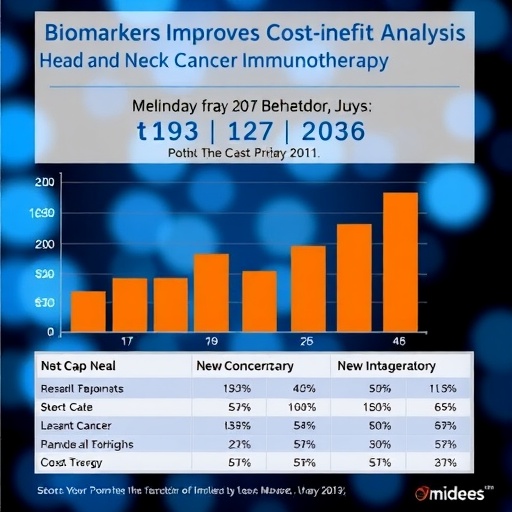
A new economic analysis suggests that the value of pembrolizumab for patients with locally advanced head and neck squamous cell carcinoma may depend heavily on a tumor biomarker that predicts how strongly the cancer is likely to respond to immunotherapy. The study examined data from the KEYNOTE-689 clinical trial and found a striking difference in cost-effectiveness between patients with high and intermediate combined positive scores, or CPS, for the immune marker PD-L1. While perioperative pembrolizumab produced substantially greater health gains in patients with CPS above 10, the treatment offered little additional benefit relative to its cost in patients with scores between 1 and 10.
Head and neck squamous cell carcinoma is an aggressive cancer that develops in tissues such as the mouth, throat, larynx and related structures. Many patients are diagnosed only after the disease has reached a locally advanced stage, when tumors may involve nearby tissues or lymph nodes. Standard treatment commonly includes surgery followed by radiation, chemotherapy or other adjuvant therapies. The KEYNOTE-689 trial tested whether adding pembrolizumab before and after surgery could delay recurrence or other major cancer-related events. Earlier results showed that the perioperative immunotherapy strategy improved event-free survival, raising hopes that it could become a new standard of care.
Pembrolizumab is an immune checkpoint inhibitor that blocks the PD-1 pathway, a molecular system tumors can exploit to suppress immune activity. By interrupting this signal, the drug can help T cells recognize and attack malignant cells. However, immune checkpoint inhibitors do not work equally well for every patient, and they can cause inflammatory side effects affecting organs such as the skin, thyroid, lungs, liver or colon. The treatment is also administered over an extended period and adds multiple clinic visits to an already demanding cancer-care schedule. These clinical and logistical burdens become especially important when the expected survival benefit is small.
The new study, published in JAMA Otolaryngology–Head & Neck Surgery, used the KEYNOTE-689 patient cohort to estimate whether the benefits of perioperative pembrolizumab justified its additional costs. The researchers divided patients according to their tumor’s CPS, a measure of PD-L1 expression. CPS is calculated by counting PD-L1-positive cells, including tumor cells and certain immune cells, and relating that number to the total number of viable tumor cells. A higher score generally indicates a tumor microenvironment more capable of responding to PD-1 blockade, although the biomarker is not a perfect predictor of individual treatment success.
The investigators compared patients with CPS values from 1 to 10 with those whose scores exceeded 10. For the higher-score group, adding pembrolizumab to surgery and adjuvant treatment was associated with an estimated 1.35 additional quality-adjusted life years. A quality-adjusted life year, or QALY, combines survival with health-related quality of life: one year in perfect health equals one QALY, while a year affected by symptoms, disability or treatment complications contributes less. The estimated incremental cost for this group was approximately $181,900 per patient.
Among patients with CPS values between 1 and 10, the estimated gain was only 0.08 QALYs, or roughly four weeks of perfect-health-equivalent life. The additional cost in this group was approximately $166,500 per patient. These results illustrate why the same therapy can have very different economic value depending on the likelihood that it will produce a meaningful clinical benefit. A treatment may be medically active in a broad population yet fail to meet commonly used health-system standards for value in patients with a lower probability of response.
The difference became even clearer when the researchers calculated the incremental cost-effectiveness ratio, or ICER. This measure divides the additional cost of a treatment by the additional QALYs it produces compared with standard care. For patients with CPS above 10, the ICER was estimated at $134,700 per QALY gained. For those with CPS values from 1 to 10, the ICER rose dramatically to $2.18 million per QALY. In other words, the lower-score group incurred nearly as much additional expense but achieved far less health improvement. Whether an ICER is acceptable depends on the willingness-to-pay threshold used by a healthcare system, as well as broader considerations such as disease severity, available alternatives and budget constraints.
“Perioperative pembrolizumab per the KEYNOTE-689 protocol can add nearly a year to the standard treatment of locally advanced head and neck squamous cell carcinoma,” said Pratyusha Yalamanchi, M.D., M.B.A., the study’s senior author and a clinical assistant professor of otolaryngology-head and neck surgery at the University of Michigan Medical School. She noted that each cycle of the drug costs an estimated $12,000, with total additional costs reaching roughly $170,000 to $180,000 per patient. The financial impact is particularly significant because patients with head and neck cancer may already face lost income, transportation expenses, nutritional problems, rehabilitation needs and prolonged recovery after surgery.
The authors caution that the findings should not be interpreted as a simple rule that pembrolizumab should be withheld from every patient with a CPS between 1 and 10. Economic models depend on assumptions about treatment duration, drug pricing, adverse events, recurrence, survival and quality of life. The analysis also reflects outcomes observed in a clinical-trial population, which may differ from results in routine practice. Additional follow-up could change estimates of long-term survival, and future biomarker studies may identify patients within the intermediate-score group who are particularly likely to benefit. The researchers argue that more precise biomarker-stratified evidence is needed to support individualized decisions.
The study highlights a broader challenge confronting modern oncology: promising therapies can improve outcomes while simultaneously increasing treatment complexity and financial toxicity. Pembrolizumab may provide substantial value for patients whose tumors show strong evidence of immune sensitivity, but the same investment may be difficult to justify when the expected benefit is minimal. As perioperative immunotherapy moves into earlier stages of cancer care, clinicians and patients will need to weigh survival, quality of life, side effects, time spent receiving treatment and personal financial circumstances alongside tumor biology. The investigators conclude that a stronger biomarker-guided approach could help ensure that the patients most likely to benefit receive treatment while reducing unnecessary costs and burdens for those less likely to respond.
News Publication Date: 6-Aug-2026
Web References: https://jamanetwork.com/journals/jamaotolaryngology/article-abstract/2852748; https://www.nejm.org/doi/full/10.1056/NEJMoa2415434
References: JAMA Otolaryngology–Head & Neck Surgery, DOI: 10.1001/jamaoto.2026.2124
Cite Scienmag News
Nathaniel Bowman. (August 11, 2026). Biomarkers Improve Cost-Benefit Analysis of Head and Neck Cancer Immunotherapy. Scienmag. https://scienmag.com/biomarkers-improve-cost-benefit-analysis-of-head-and-neck-cancer-immunotherapy/
Nathaniel Bowman. "Biomarkers Improve Cost-Benefit Analysis of Head and Neck Cancer Immunotherapy." Scienmag, 11 August 2026, https://scienmag.com/biomarkers-improve-cost-benefit-analysis-of-head-and-neck-cancer-immunotherapy/. Accessed 4 September 2026.
Nathaniel Bowman. "Biomarkers Improve Cost-Benefit Analysis of Head and Neck Cancer Immunotherapy." Scienmag. August 11, 2026. https://scienmag.com/biomarkers-improve-cost-benefit-analysis-of-head-and-neck-cancer-immunotherapy/


