


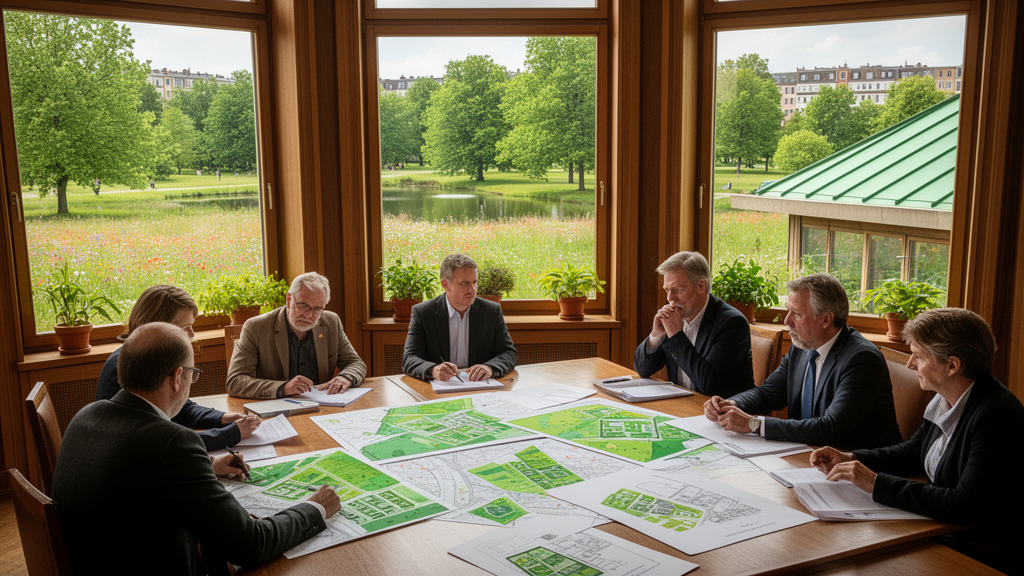
A large-scale survey of green space managers across Europe has found that biodiversity is now a central motivation in how cities plan and maintain their public green areas. The study, published in the journal Nature, surveyed the people responsible for green space planning and management in 574 municipalities spanning 18 European countries and multiple climate zones. It is the first research effort to place municipalities themselves at the center of attention as key actors in urban biodiversity conservation, rather than focusing solely on the ecological conditions of cities.
The findings are striking in their breadth. According to the survey, 85 percent of the municipalities questioned stated that biodiversity is a key motivation in the planning and management of their green spaces. A comparable share, 82 percent, reported conducting targeted employee training sessions on biodiversity, indicating that ecological considerations extend beyond policy statements into the daily practice of municipal staff.
Meanwhile, 75 percent of respondents said they take measures to increase public acceptance of so-called wild green spaces, the species-rich, less intensively managed areas that often look noticeably different from manicured lawns. The survey also captured a cautiously optimistic picture of recent ecological trends. Only 19 percent of municipalities stated that the ecological condition of their urban green spaces had deteriorated within the past year.
While the researchers note that this is a self-reported measure over a short timeframe rather than a direct ecological census, the figure suggests that widespread degradation is not the dominant experience among the surveyed municipalities. The analysis additionally revealed a geographic pattern: municipalities in countries with a higher quality-of-living index tended to attribute greater importance to biodiversity in their planning and management decisions. The context for this work is the accelerating global loss of biodiversity driven by urbanization and the fragmentation of natural habitats.
Yet urban green spaces, including parks, meadows, and forests, hold considerable potential to support biodiversity conservation at local and regional scales. On average, such green spaces account for 40 percent of the land cover in European capitals, a figure highlighted by Ellen De Vrieze of Ghent University, the study's first author. Political frameworks such as the European Green Deal encourage cities to improve the ecological quality of their green infrastructure, and recent legal instruments, including the EU Nature Restoration Regulation, explicitly emphasize the need to strengthen nature within cities.
Despite these policy developments, past research has rarely examined municipalities as actors. Valentin Klaus, a co-author of the study, noted that the extent to which cities and municipalities across different countries and climate zones in Europe actually prioritize biodiversity when planning and managing urban green spaces had remained largely unclear. By directly surveying the responsible managers, the standardized questionnaire captured their underlying motivations, management goals, and the specific measures they deploy to promote public acceptance of biodiversity-friendly practices.
One of the most significant findings concerns public involvement. Klaus emphasized that the success of biodiversity-friendly urban green spaces does not depend solely on the ecological expertise and engagement of city administrations, but hinges heavily on the involvement of and support from the local population. This is particularly relevant because biodiverse green spaces often appear wilder and more natural than conventionally maintained areas.
The fact that three-quarters of the surveyed municipalities actively work to increase acceptance of such management practices suggests that administrators recognize this social dimension as critical to implementation. Beyond acceptance-building measures, more than half of the cities surveyed reported directly involving the public in the planning of green spaces. Klaus views this as a potential starting point for bottom-up initiatives on urban biodiversity, pointing to indications that participation offers benefits to the public and can strengthen both the social and the ecological resilience of municipalities.
The researchers also offer an interpretive frame for their results: they hope the findings could reflect a shift in public administration toward post-materialist values, in which urban administrations increasingly look beyond immediate human needs and place value on promoting the coexistence of different species in the urban environment. Whether this represents a durable transformation or a snapshot of current attitudes among surveyed managers remains an open question, and the authors present this interpretation as a hope rather than a demonstrated trend.
Subject of Research: Municipal prioritization of biodiversity in European urban green space planning and management
Article Title: Biodiversity is a priority for European municipalities
Article References: Biodiversity is a priority for European municipalities. Original publication (Bibliographic details unavailable.)
Image Credits: AI Generated
DOI: Not provided
Keywords: biodiversity, urban green spaces, municipalities, Europe, Nature journal, EU Nature Restoration Regulation, European Green Deal, public participation, urban ecology, green space management, survey, urbanization
Cite Scienmag News
Margaret Porter. (October 26, 2026). Biodiversity Emerges as a Key Priority for European Municipalities, Survey Finds. Scienmag. https://scienmag.com/biodiversity-emerges-as-a-key-priority-for-european-municipalities-survey-finds/
Margaret Porter. "Biodiversity Emerges as a Key Priority for European Municipalities, Survey Finds." Scienmag, 26 October 2026, https://scienmag.com/biodiversity-emerges-as-a-key-priority-for-european-municipalities-survey-finds/. Accessed 26 October 2026.
Margaret Porter. "Biodiversity Emerges as a Key Priority for European Municipalities, Survey Finds." Scienmag. October 26, 2026. https://scienmag.com/biodiversity-emerges-as-a-key-priority-for-european-municipalities-survey-finds/


