

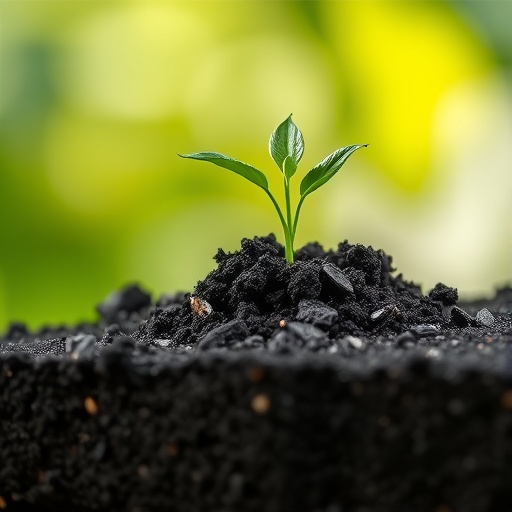
In a significant advancement in the field of environmental science, recent research has highlighted the potential of magnesium oxide-functionalized biochar synthesized from municipal solid waste. This innovative approach to waste management not only addresses the pressing issue of solid waste disposal but also offers a promising method for the removal of lead ions (Pb(II)) from contaminated aqueous media. The implications of this research extend beyond mere waste reduction; they touch on critical environmental health issues, particularly concerning heavy metal contamination in water sources.
The synthesis of biochar from municipal solid waste (MSW) is a process that transforms an environmental liability into a valuable resource. As urban areas continue to grapple with increasing waste generation, the conversion of MSW into biochar presents a dual solution: it reduces the volume of waste requiring disposal while simultaneously creating a product with the potential to remediate contaminated water bodies. This is particularly relevant in regions suffering from heavy metal pollution, where Pb(II) poses significant health risks, including neurological damage, particularly in children.
Central to the research is the functionalization of biochar with magnesium oxide (MgO), a technique that enhances the adsorptive capacity of the biochar towards lead ions. The functionalization process involves treating the raw biochar with magnesium compounds, enabling the material to bind more effectively with Pb(II) ions in solution. The resulting MgO-functionalized biochar exhibits superior performance in adsorption tests compared to its unmodified counterpart, demonstrating its potential utility as a remedial agent in various water treatment applications.
The significance of lead removal from water cannot be overstated. Exposure to lead is linked to a myriad of health problems, including developmental delays, cognitive impairments, and various systemic illnesses. As such, finding effective methods for Pb(II) removal is not merely a scientific challenge but a public health imperative. This research stands out as it presents an eco-friendly approach that not only mitigates the effects of lead contamination but also contributes to waste valorization.
One of the key advantages of using magnesium oxide-functionalized biochar is its relatively simple synthesis process. The researchers employed a thermal pyrolysis method to produce the biochar from treated MSW, which involves heating the waste in an oxygen-limited environment. This method not only ensures the retention of carbon in the biochar but also enhances its physical and chemical properties, making it a robust candidate for heavy metal adsorption.
In laboratory studies, the MgO-functionalized biochar demonstrated remarkable efficacy in removing Pb(II) from aqueous solutions. The adsorption capacity was evaluated across varying concentrations of lead, showcasing the material’s ability to attract and retain lead ions even at lower concentrations. This characteristic is particularly pertinent for real-world applications, where contaminants may be present at varying levels due to industrial discharges or urban runoff.
Moreover, the research team explored the kinetics and thermodynamics of the adsorption process, which provided insights into the mechanisms at play. The results indicated that the adsorption of Pb(II) onto the MgO-functionalized biochar follows pseudo-second-order kinetics, suggesting that the rate of Pb(II) removal is influenced by the availability of active sites on the biochar. This kinetic modeling emphasizes the efficiency of the synthesized material and suggests its feasibility for practical deployment in remediation efforts.
Another critical aspect of this research is its potential application in leachate remediation. Landfill leachate, which often contains high concentrations of heavy metals and other toxic substances, poses a significant environmental risk. The ability of magnesium oxide-functionalized biochar to effectively sequester lead from leachate could provide a viable solution for treating contaminated runoff from landfills and other waste disposal sites. This could mitigate the infiltration of pollutants into groundwater resources, enhancing the overall quality of the environment.
Furthermore, the study also highlights the sustainable nature of this approach. By utilizing municipal solid waste as a feedstock for biochar production, the process contributes to circular economy principles, reducing landfill dependency and resource wastage. The functionalization with magnesium oxide adds an element of value, transforming waste into a functional product that serves a critical environmental purpose.
As cities continue to expand and face the challenges of waste management and pollution control, the integration of innovative materials such as magnesium oxide-functionalized biochar could play a pivotal role. This research not only underscores the importance of interdisciplinary approaches in addressing complex environmental issues but also opens avenues for future explorations in similar spheres of research.
In conclusion, the synthesis of magnesium oxide-functionalized biochar from municipal solid waste represents a groundbreaking stride in environmental remediation technologies. By facilitating the removal of toxic lead ions from aqueous media, this research not only holds promise for improving water quality but also offers a sustainable solution to waste management challenges. Continued investigation into the multifaceted applications of this technology will be essential for harnessing its full potential, paving the way for cleaner, safer ecosystems.
As the global community increasingly recognizes the importance of sustainable practices, research such as this illuminates the paths we can take to foster environmental resilience. Through innovation and collaboration, the challenges posed by urban waste and heavy metal contamination can become opportunities for transformation, fostering a healthier planet for generations to come.
Subject of Research: Synthesis and application of magnesium oxide-functionalized biochar for Pb(II) removal and waste management.
Article Title: Magnesium oxide-functionalized biochar synthesis from municipal solid waste for Pb(II) removal in aqueous media and potential application in leachate remediation.
Article References: Dlamini, N.S., Jha, P.K. & Sharma, P.K. Magnesium oxide-functionalized biochar synthesis from municipal solid waste for Pb(II) removal in aqueous media and potential application in leachate remediation. Environ Sci Pollut Res (2026). https://doi.org/10.1007/s11356-026-37461-0
Image Credits: AI Generated
DOI: https://doi.org/10.1007/s11356-026-37461-0
Keywords: magnesium oxide, biochar, municipal solid waste, lead ions, waste management, environmental remediation, leachate treatment, adsorption technology.


