


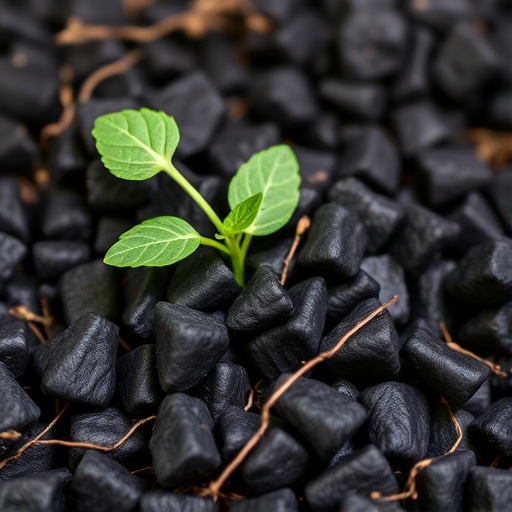
In a groundbreaking study, researchers from India have made significant advancements in environmental remediation by synthesizing magnesium oxide-functionalized biochar from municipal solid waste. The innovative approach utilizes readily available waste materials, transforming discarded organic matter into a powerful medium for contaminant removal. The study, set to be published in 2026 in the journal Environmental Science and Pollution Research, sheds light on the complexities of lead (Pb II) removal from aqueous systems, an essential concern for water quality management.
The escalating issue of heavy metal contamination in water bodies is a pressing environmental challenge affecting ecosystems and human health. Lead, a toxic heavy metal, is a primary focus due to widespread industrial activities and urban runoff leading to increased concentrations of this contaminant in various water sources. Therefore, the quest for efficient and sustainable removal techniques has sparked research interest, necessitating novel strategies that can tackle this pervasive problem.
Biochar, derived from the pyrolysis of biomass, has emerged as an effective sorbent due to its high surface area, porous structure, and overall chemical stability. The researchers in this study have taken this a step further by modifying biochar with magnesium oxide (MgO). This modification not only enhances the biochar’s adsorption capacity for heavy metals, particularly lead, but also improves its overall stability and reactivity, making it a formidable candidate for water treatment applications.
One of the vital aspects of the research involves optimizing the synthesis process of magnesium oxide-functionalized biochar. The team meticulously outlined the conditions under which biochar could be synthesized from municipal solid waste, focusing on temperature, duration of pyrolysis, and the ratio of MgO to biochar. These parameters significantly influence the properties and efficacy of the final product. Through rigorous experimentation, they identified optimal conditions that yield a biochar with enhanced affinity for lead ions.
The successful implementation of this synthesis process resulted in a biochar that not only exhibits superior adsorption characteristics but also demonstrates longevity and resilience in aquatic environments. The research showcased the potential of this biochar to capture lead ions effectively through various mechanisms, including ion exchange and surface complexation. These mechanisms are crucial for ensuring that lead is securely bound to the biochar, preventing leaching and ensuring safe disposal or further utilization.
Beyond its immediate applicability in remediating contaminated water, the study also elaborates on the potential of this magnesium oxide-functionalized biochar in leachate remediation from landfills. Leachate, a byproduct of waste decomposition, is notorious for harboring a cocktail of hazardous substances, including heavy metals and organic pollutants. The researchers posit that their synthesized biochar could serve a dual purpose: not only treating aqueous solutions but also acting as a filtration medium for leachate, thereby reducing the environmental impact of landfill operations.
The environmental ramifications of this research extend far beyond water purification. By utilizing municipal solid waste as a feedstock, the researchers are contributing to waste reduction and promoting a circular economy. This approach aligns with global sustainability goals by addressing waste management challenges while simultaneously enhancing environmental quality. Moreover, the transformation of waste into valuable resources exemplifies the potential for innovative solutions to complex environmental dilemmas.
The team anticipates that their findings will incite further research into the scalability of this synthesis process. The goal is to facilitate broader application, ensuring that communities grappling with water contamination can adopt this technology. The researchers envision pilot projects that employ their magnesium oxide-functionalized biochar in real-world settings, particularly in areas where heavy metal contamination is prevalent.
Furthermore, the study calls for collaborative efforts among governments, research institutions, and industries to explore practical implementations of these findings. By fostering partnerships, it is possible to translate laboratory success into tangible solutions for communities suffering from water contamination. This could usher in new regulations and standards regarding the use of biochar and similar technologies in water treatment practices.
Public awareness and education about these innovative research outcomes are equally essential. The team emphasizes the importance of informing communities about the capabilities of biochar in addressing water contamination issues. Engaging educational campaigns can empower individuals and organizations to advocate for sustainable practices within their own regions, advocating for proactive measures in water quality management.
As the research unfolds, the scientific community eagerly awaits the publication in Environmental Science and Pollution Research, which will provide a detailed analysis of the methodologies, results, and implications of this groundbreaking study. The potential implications resonate beyond the confines of a single study, indicating a path towards a more sustainable future in environmental remediation.
In summary, the synthesis of magnesium oxide-functionalized biochar using municipal solid waste presents an innovative solution to the pressing problem of lead contamination in water bodies. This research not only highlights the effectiveness of modified biochar but also underscores the potential for waste transformation into valuable resources. The implications extend to landfill leachate management and contribute to global sustainability efforts, paving the way for future explorations into sustainable environmental practices.
With comprehensive approaches like this, the scientific community is making strides in combatting environmental challenges, indicating a bright horizon for innovative technologies that can protect ecosystems and promote human health. As research continues, the integration of biochar technologies could become standard practices in remediation efforts worldwide, addressing heavy metal contamination effectively and sustainably for future generations.
Dlamini, N.S., Jha, P.K. & Sharma, P.K. Magnesium oxide-functionalized biochar synthesis from municipal solid waste for Pb(II) removal in aqueous media and potential application in leachate remediation.
Environ Sci Pollut Res (2026). https://doi.org/10.1007/s11356-026-37461-0
Cite Scienmag News
Violet Maxwell. (January 28, 2026). Biochar from Waste: Efficient Pb(II) Removal Revealed. Scienmag. https://scienmag.com/biochar-from-waste-efficient-pbii-removal-revealed/
Violet Maxwell. "Biochar from Waste: Efficient Pb(II) Removal Revealed." Scienmag, 28 January 2026, https://scienmag.com/biochar-from-waste-efficient-pbii-removal-revealed/. Accessed 4 September 2026.
Violet Maxwell. "Biochar from Waste: Efficient Pb(II) Removal Revealed." Scienmag. January 28, 2026. https://scienmag.com/biochar-from-waste-efficient-pbii-removal-revealed/


