

Sunday, July 19, 2026
Science
No Result
View All Result
  • Login
  • HOME
  • SCIENCE NEWS
  • CONTACT US
  • HOME
  • SCIENCE NEWS
  • CONTACT US
No Result
View All Result
Scienmag
No Result
View All Result
Home Science News Chemistry

Bin Wang receives Friedrich Wilhelm Bessel Research Award

June 26, 2024
in Chemistry
Reading Time: 2 mins read
0
Bin Wang receives Friedrich Wilhelm Bessel Research Award
68
SHARES
615
VIEWS
Share on FacebookShare on Twitter
ADVERTISEMENT

NORMAN, OKLA. – Bin Wang, a professor in the School of Sustainable Chemical, Biological and Materials Engineering at the University of Oklahoma, has received a Friedrich Wilhelm Bessel Research Award from the Alexander von Humboldt Foundation. Wang was selected for his contributions to computational catalysis and physical chemistry.

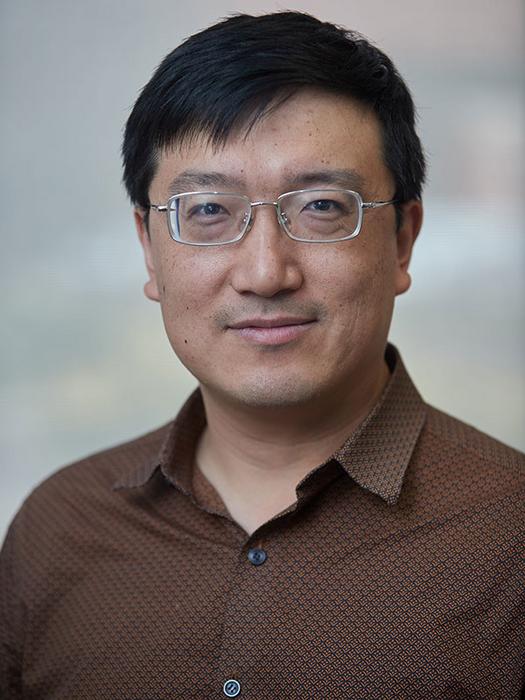
Bin Wang

Credit: The University of Oklahoma

NORMAN, OKLA. – Bin Wang, a professor in the School of Sustainable Chemical, Biological and Materials Engineering at the University of Oklahoma, has received a Friedrich Wilhelm Bessel Research Award from the Alexander von Humboldt Foundation. Wang was selected for his contributions to computational catalysis and physical chemistry.

The Bessel Award is funded by the German Federal Ministry of Education and Research to foster collaborative relationships between international academics and German researchers. The award includes a grant that supports up to 12 months of study in Germany.

In his research, Wang uses simulations to understand materials at the atomic level, providing insights into materials that can be used to accelerate chemical reactions. He will work with the Sustainable Materials Computational Materials Design department of the Max Planck Institute to use a machine learning approach to study solid-liquid interfacial chemistry. Wang says that because simulations of the solid-liquid interface include so much complexity, accurate simulation can be challenging. Machine learning techniques can help improve those simulations.

According to Wang, the collaboration could not come at a better time. Recently, OU’s School of Sustainable Chemical, Biological and Materials Engineering added “sustainable” to its name. “When people think about chemical engineering, the perception is that it’s all about oil and gas chemistry and operation,” he said. “That’s the reason [the school] changed the name, to show that our research and education is very broad and to achieve a sustainable future.”

This April, the Max Planck Institute for Iron Research did something similar, becoming the Max Planck Institute for Sustainable Materials.

“This really reflects what’s happening in the field right now. People are looking to sustainability and the challenges associated with it,” said Wang.

Wang has received numerous accolades during the span of his career, including an Early Career Award from the U.S. Department of Energy. He has been recognized as an Emerging Investigator by the Royal Society of Chemistry’s Catalysis Science & Technology and an Influential Researcher by the American Chemical Society’s Industrial & Engineering Chemistry Research.


Share27Tweet17
Previous Post

Cardiovascular health could be biggest risk factor for future dementia rates

Next Post

Early childhood problems linked to persistent school absenteeism

Related Posts

Researchers Enhance Hydrogen Production with Single-Element Dual-Site Substitution
Chemistry

Researchers Enhance Hydrogen Production with Single-Element Dual-Site Substitution

July 17, 2026
Satellite Observations Improve Global Mapping of Soil Moisture
Chemistry

Satellite Observations Improve Global Mapping of Soil Moisture

July 17, 2026
Noble Metal-Modified Zinc Oxide Nanoflakes Show Enhanced Gas Sensing Properties
Chemistry

Noble Metal-Modified Zinc Oxide Nanoflakes Show Enhanced Gas Sensing Properties

July 17, 2026
Y-Added FeCoNiSiB Amorphous Multi-Principal Alloys Demonstrate Enhanced Performance
Chemistry

Y-Added FeCoNiSiB Amorphous Multi-Principal Alloys Demonstrate Enhanced Performance

July 17, 2026
Surface-Enhanced Raman Enables Ultra-Sensitive Detection of Pb2+ Ions
Chemistry

Surface-Enhanced Raman Enables Ultra-Sensitive Detection of Pb2+ Ions

July 17, 2026
Researchers Develop New Approaches to Tackle the PFAS Contamination Crisis
Chemistry

Researchers Develop New Approaches to Tackle the PFAS Contamination Crisis

July 17, 2026
Next Post
Early childhood problems linked to persistent school absenteeism

Early childhood problems linked to persistent school absenteeism

  • Mothers who receive childcare support from maternal grandparents show more

    Mothers who receive childcare support from maternal grandparents show more parental warmth, finds NTU Singapore study

    27656 shares
    Share 11059 Tweet 6912
  • University of Seville Breaks 120-Year-Old Mystery, Revises a Key Einstein Concept

    1061 shares
    Share 424 Tweet 265
  • Bee body mass, pathogens and local climate influence heat tolerance

    682 shares
    Share 273 Tweet 171
  • Researchers record first-ever images and data of a shark experiencing a boat strike

    546 shares
    Share 218 Tweet 137
  • Groundbreaking Clinical Trial Reveals Lubiprostone Enhances Kidney Function

    531 shares
    Share 212 Tweet 133
Science

Embark on a thrilling journey of discovery with Scienmag.com—your ultimate source for cutting-edge breakthroughs. Immerse yourself in a world where curiosity knows no limits and tomorrow’s possibilities become today’s reality!

RECENT NEWS

  • Rannasangpei crocin-1 improves valproate-induced autism-like behaviors by reducing oxidative stress
  • Sleep Quality Links Synergistically with Frailty to Increase Cardiometabolic Multimorbidity in Elderly Chinese
  • Gut Microbiome Metabolites Shape Development of Stress-Related Mental Disorders
  • Cognitive reserve helps older adults resist frailty and recover better

Categories

  • Agriculture
  • Anthropology
  • Archaeology
  • Athmospheric
  • Biology
  • Biotechnology
  • Blog
  • Bussines
  • Cancer
  • Chemistry
  • Climate
  • Earth Science
  • Editorial Policy
  • Marine
  • Mathematics
  • Medicine
  • Pediatry
  • Policy
  • Psychology & Psychiatry
  • Science Education
  • Social Science
  • Space
  • Technology and Engineering

Subscribe to Blog via Email

Success! An email was just sent to confirm your subscription. Please find the email now and click 'Confirm Follow' to start subscribing.

Join 5,146 other subscribers

© 2025 Scienmag - Science Magazine

Welcome Back!

Login to your account below

Forgotten Password?

Retrieve your password

Please enter your username or email address to reset your password.

Log In
No Result
View All Result
  • HOME
  • SCIENCE NEWS
  • CONTACT US

© 2025 Scienmag - Science Magazine
