


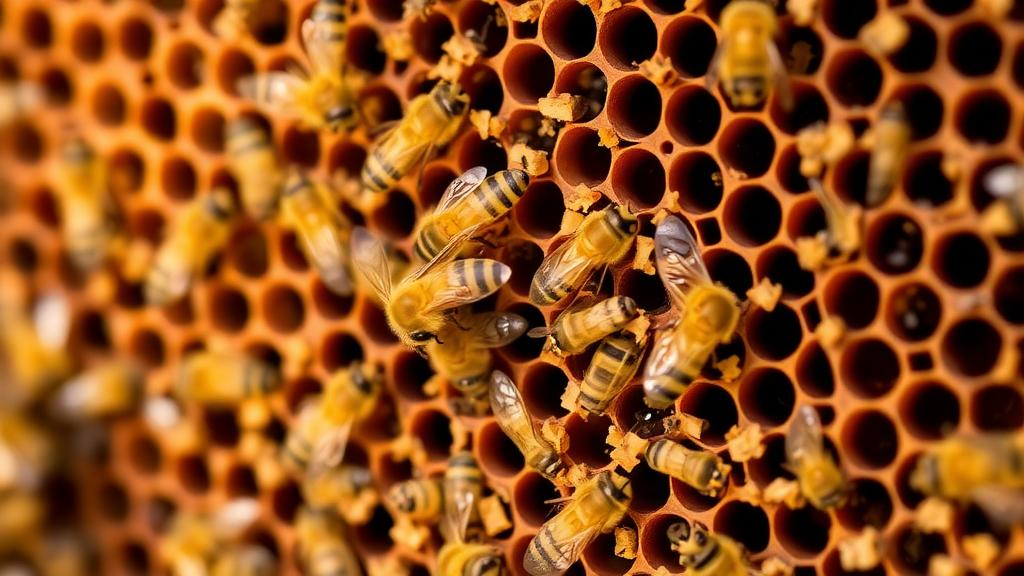
America’s honeybee colonies face an enemy so stubborn that beekeepers often have no choice but to burn infected hives to the ground. American Foulbrood, a devastating bacterial disease of bee larvae caused by the spore-forming bacterium Paenibacillus larvae, has spread across the globe and remains one of the most destructive threats to managed pollination. With antibiotic treatments faltering due to rising pathogen resistance and concerns about drug residues accumulating in hive products, researchers have been searching for biologically based alternatives. A new study from the University of Idaho, published in Frontiers in Insect Science, offers a promising candidate: bacteria taken from inside infected beehives themselves, and specifically a cell-free lysate derived from Bacillus licheniformis.
The research team, led by Anuja Shrestha and James T. Van Leuven, approached the problem systematically, working across multiple experimental levels rather than stopping at simple laboratory inhibition tests. First, they isolated bacteria from honeybee guts and from comb material taken from hives actively infected with American Foulbrood. Those samples included dark, perforated cell caps, the telltale sign of dead larvae degraded by millions of highly heat-resistant pathogen spores. Ten bacterial strains were characterized by 16S rRNA gene sequencing, including representatives of Bacillus zhangzhouensis, B. subtilis, B. pumilus, B. amyloliquefaciens, B. licheniformis, and B. mojavensis, along with two gut-associated bacteria, one Bacillus and one Apilactobacillus. The team also isolated a new Paenibacillus larvae strain, designated ONT-R-1C or strain 55, from the infected comb and characterized it by whole-genome sequencing, placing it in Sequence Type 15 within ERIC group I, one of the genotypes driving global outbreaks of the disease.
The screening phase revealed considerable antagonistic potential among the hive-associated isolates. When the researchers streaked bacterial cultures and cell-free lysates onto lawns of four different P. larvae strains, five of the ten isolated bacteria, plus a Lactobacillus strain obtained from the NCIMB culture collection, strongly inhibited one or more pathogen strains. The effects were strain-specific: B. zhangzhouensis cultures suppressed P. larvae strains Y-3650 and 368 but merely overgrew the lawns of other strains, while the NCIMB Lactobacillus and B. licheniformis showed inhibition with their cells, their lysates, or both. Notably, the strongest performer, B. licheniformis strain ONT-R2-ASx, inhibited P. larvae Y-3650 and strain 55 only through its cell-free lysate, hinting that a secreted antimicrobial compound, rather than the living bacterium itself, was responsible for the antagonism.
To characterize that compound, the team filtered the ASx lysate through a series of membranes with decreasing molecular-weight cut-offs, generating four fractions spanning everything above 100 kilodaltons down to molecules smaller than 30 kilodaltons. Spot assays on P. larvae lawns showed that all undiluted fractions except those containing proteins smaller than 30 kilodalths inhibited pathogen growth, with inhibition zones shrinking significantly as filter size decreased. Against strain 55, the largest fraction produced an inhibition zone averaging just over two centimeters, and even at ten-fold dilution the two largest fractions retained activity against that strain. The pattern pointed to antimicrobial activity concentrated in the 30 to 50 kilodalton range, a size consistent with proteinaceous compounds such as bacteriocins, which Bacillus species are well known to produce.
Three further tests probed the nature of the active ingredient. Treatment with proteinase K, an enzyme that digests proteins, completely abolished the antimicrobial activity across all P. larvae strains tested, a striking result that strongly implicates a protein as the active component. Heat treatment at 100 degrees Celsius for ten minutes significantly reduced activity against one strain but not the others, suggesting the compound is at least partially heat-stable, an important practical quality for any treatment destined for the warm interior of a beehive. Crucially, mixing the lysate with royal jelly, the diet fed to laboratory-reared larvae, did not diminish its potency, indicating the antimicrobial would remain effective in the nutritional environment of a real brood cell.
The decisive question was whether this laboratory activity would translate into protection of living bees. Using standard artificial rearing techniques, the researchers grafted first-instar larvae into plates and challenged them with P. larvae. Larvae infected with approximately 100 cells of strain 55 fared catastrophically, with survival dropping to just 6.25 percent. But when the ASx lysate was added to the larval diet, survival during infection rose to 70.8 percent, statistically indistinguishable from uninfected control larvae. Larvae fed the lysate alone survived at 75 percent, matching the healthy controls. A second candidate, the B. zhangzhouensis culture, also significantly improved survival of larvae challenged with P. larvae strain Y-3650, while a Lactobacillus strain that had excelled in vitro surprisingly failed to protect larvae in vivo, underscoring the importance of testing candidates beyond petri-dish assays.
Any treatment intended for use in apiculture must also be safe for adult bees, a dimension often neglected in previous biocontrol studies. The researchers therefore caged newly emerged worker bees and fed them sugar syrup containing the ASx lysate, comparing survival and gut microbiome composition against untreated controls and against bees receiving Terra-Pro, a commercial Terramycin-based antibiotic treatment used against American Foulbrood in the field. Survival of lysate-fed bees differed from untreated controls but was statistically comparable to that of Terra-Pro-fed bees at multiple timepoints, meaning the biological treatment was no worse for adult survival than the antibiotic already in common use.
The gut microbiome results were particularly encouraging. Honeybees depend on a tightly conserved community of gut bacteria, dominated by Lactobacillus and Gilliamella, that supports digestion, immunity, and overall health, and disruptions such as dysbiosis can be harmful. To allow caged bees to acquire a normal microbiome, the team provided pieces of brood comb in each cage, and sequencing of full-length 16S rRNA genes confirmed that the caged bees developed the characteristic Lactobacillus-dominated community of adult workers. Among the caged treatment groups, the ASx lysate produced no significant shifts in the abundance of any gut taxa by two different statistical methods and remained closest to untreated controls by Jaccard distance analysis. In contrast, the two antibiotic treatments most closely resembled each other, and tetracycline was associated with changes in several taxa, including the honeybee-specific gut symbiont Lactobacillus kullabergensis.
The findings position hive-associated Bacillus species, and the 30 to 50 kilodalton proteinaceous fraction of B. licheniformis in particular, as credible candidates for biologically based American Foulbrood management. The approach has clear conceptual appeal: Bacillus species are regular inhabitants of honey, pollen, and hive materials rather than foreign invaders, and B. licheniformis itself has a track record as a safe probiotic in veterinary applications. The specificity suggested by the data, antimicrobial against the pathogen yet gentle on the beneficial core microbiome, is exactly the profile an ideal hive treatment would need, especially in European countries where antibiotic use in beekeeping is prohibited and burning infected colonies is the only sanctioned response.
Important questions remain before any field deployment. The researchers acknowledge that not every isolate was tested against every pathogen strain, that the precise identity and concentration of the antimicrobial compound within the 30 to 50 kilodalton fraction has not yet been determined, and that in vivo testing covered only ERIC group I strains of P. larvae, leaving the more virulent ERIC group II genotype, frequent in Europe, untested. Molecular weight validation such as SDS-PAGE and full protein characterization will be needed to pinpoint the active molecule. Still, the study demonstrates something rare in the biocontrol literature: a candidate treatment that has been validated from initial in vitro screening through larval infection assays to adult bee safety and microbiome impact, providing a solid foundation for the next stage of evaluation under real, colony-level conditions.
Subject of Research: Biological control of American Foulbrood disease in honeybees using hive-associated Bacillus bacteria
Article Title: Biocontrol potential of hive-associated Bacillus species against American Foulbrood disease in honeybees (Apis mellifera L.)
Article References: Biocontrol potential of hive-associated Bacillus species against American Foulbrood disease in honeybees (Apis mellifera L.). (n.d.). https://doi.org/10.3389/finsc.2026.1870750
Image Credits: AI Generated
DOI: 10.3389/finsc.2026.1870750
Keywords: American Foulbrood, Paenibacillus larvae, Bacillus licheniformis, honeybees, biocontrol, bacteriocins, larval survival, gut microbiome, Apiculture, Apis mellifera, antimicrobial proteins, probiotics
Cite Scienmag News
Kristina Jarvis. (October 15, 2026). Beehive Bacteria Show Promise Against Deadly Honeybee Brood Disease. Scienmag. https://scienmag.com/beehive-bacteria-show-promise-against-deadly-honeybee-brood-disease/
Kristina Jarvis. "Beehive Bacteria Show Promise Against Deadly Honeybee Brood Disease." Scienmag, 15 October 2026, https://scienmag.com/beehive-bacteria-show-promise-against-deadly-honeybee-brood-disease/. Accessed 15 October 2026.
Kristina Jarvis. "Beehive Bacteria Show Promise Against Deadly Honeybee Brood Disease." Scienmag. October 15, 2026. https://scienmag.com/beehive-bacteria-show-promise-against-deadly-honeybee-brood-disease/


