


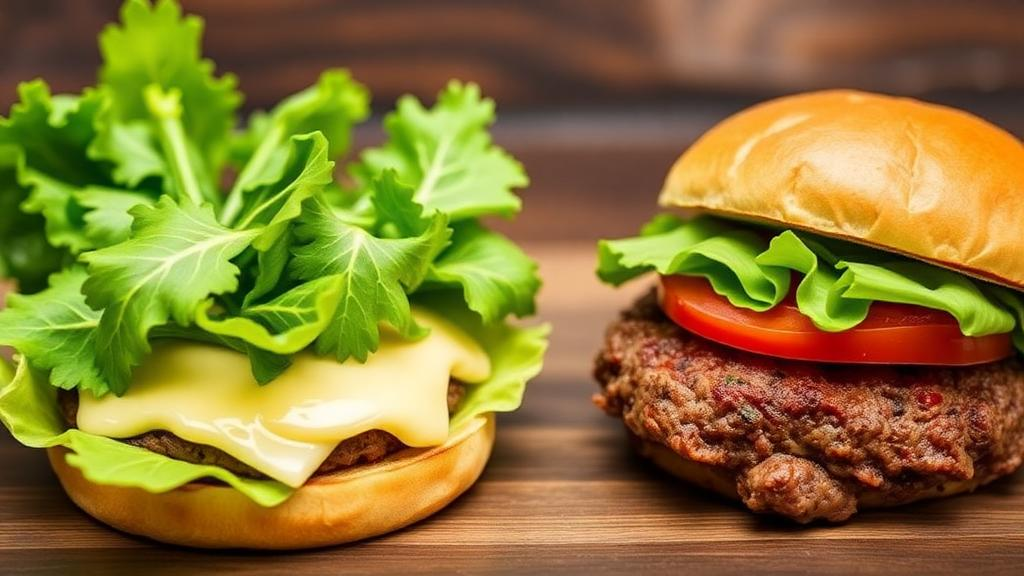
The burger patty has become the unlikely battleground of the global food revolution. As plant-based meat analogs race to replicate the juicy, savory experience of real beef, a team of South Korean food scientists has delivered one of the most comprehensive head-to-head comparisons to date, pitting patties made from Hanwoo beef, Korea’s prized native cattle breed, against commercial plant-based alternatives sold in the same market. Their findings, published in Food Science of Animal Resources, reveal two products that are far more nutritionally distinct than their similar appearances suggest, and they expose labeling discrepancies that could shake consumer confidence in an industry betting billions on the future of sustainable protein.
The stakes are enormous. The global fast food market was valued at approximately 862 billion US dollars as of 2020, with the burger and sandwich segment alone accounting for 36 percent of that figure. Meanwhile, the Food and Agriculture Organization projects that global meat consumption will reach 455 million tons by 2050, driven by population growth. Yet livestock farming carries a heavy environmental footprint, including land degradation, deforestation, and biodiversity loss, with roughly seven kilograms of plant-derived feed required to produce just one kilogram of meat. These pressures have fueled explosive interest in plant-based meat analogs, or PBMAs, engineered to mimic the texture, flavor, appearance, and nutrition of traditional meat.
In the new study, researchers led by Soomin Oh and Aera Jang of Kangwon National University, together with colleagues at Chung-Ang University, purchased three types of Hanwoo beef patties and three varieties of plant-based patties from an online South Korean market. Each product was homogenized and frozen until analysis, then subjected to a battery of standardized tests: proximate composition, total calories, cholesterol, minerals, sugars, fatty acids, and amino acids. The team also compared the values printed on packaging with laboratory measurements, an aspect few previous studies had addressed for commercial patty products.
The macronutrient results were striking. Hanwoo beef patties contained significantly higher crude protein, fat, and total calories than their plant-based counterparts, while carbohydrates were detected only in the plant-based products, which averaged 9.68 percent. Cholesterol told a similar story of divergence: the beef patties contained 70.46 milligrams per 100 grams, whereas no cholesterol was detected in the plant-based versions. That beef figure sits well below the 300 milligram daily maximum recommended by Korea’s Ministry of Food and Drug Safety, a nuance the researchers emphasize, since cholesterol performs essential physiological functions and both product types can fit into a balanced diet. The cholesterol gap stems from basic biology: animal cell membranes carry cholesterol, while plants produce sterols such as campesterol, stigmasterol, and sitosterol, which the intestine pumps back out via ABCG5/ABCG8 transporters and excretes rather than absorbing into circulation.
The mineral analysis complicated the simple narrative that plant-based means healthier. Iron, potassium, magnesium, and sodium were all significantly higher in the plant-based patties, likely reflecting the nutritional enhancers manufacturers blend into their formulations. Calcium, phosphorus, and copper showed no significant differences between the two groups. But zinc, a mineral abundant in beef and crucial for immune function, bone development, and brain health, was significantly higher in the Hanwoo patties. The researchers caution that even where mineral levels look comparable on paper, bioavailability may be reduced in plant-based sources, and they call for additional studies to clarify how well humans actually absorb iron and zinc from analogs. They also flag sodium: the plant-based patties contained significantly more than the beef versions, echoing earlier reports that commercial PBMAs often exceed beef in salt content, a concern given links between excessive sodium intake and elevated blood pressure.
Sugar was another unexpected differentiator. Fructose, glucose, sucrose, and total sugars were all significantly higher in the plant-based patties. This is not accidental: reducing sugars are deliberately added to analogs to drive Maillard reactions, the browning chemistry that generates meat-like aromas during cooking. All products remained below the recommended daily sugar limit of 100 grams on a per-100-gram basis, but the finding underscores how heavily engineered these products are. On the fat side, the beef patties dominated in oleic acid, saturated fatty acids, and monounsaturated fatty acids, compounds that contribute significantly to meat flavor and palatability, while the plant-based patties achieved a higher polyunsaturated-to-saturated fatty acid ratio, a commonly cited marker of fat quality. The specific oils used, including palm, canola, coconut, and sunflower oils, shaped each analog’s fatty acid fingerprint.
Perhaps the most provocative finding involved trans fat labeling. In one beef patty product labeled as containing zero grams of trans fat, the team detected vaccenic acid at 1.34 percent, a naturally occurring trans fatty acid formed by microbial hydrogenation in the rumen of cattle. Unlike industrial trans fats, vaccenic acid has not been associated with negative cardiovascular effects, and some scientists have proposed it should be measured and reported separately. Yet current labeling regulations classify it alongside other trans fats, creating an apparent contradiction between what the label says and what the chemistry reveals. The amino acid analysis added further texture to the comparison: plant-based patties fell short on lysine, a known limiting amino acid in plant proteins, but exceeded beef in glutamic and aspartic acid, the umami compounds central to savory taste.
To make sense of the sprawling dataset, the researchers applied partial least squares-discriminant analysis, a multivariate statistical technique well suited to datasets with strongly correlated variables. The model performed exceptionally well, with the first two components accounting for 74.8 percent of the overall variation in nutrient composition and fitting statistics approaching unity. The analysis cleanly separated the two product categories along the first component, and variable importance in projection scores identified arachidic acid, a long-chain saturated fatty acid, as the single most influential biomarker distinguishing beef from plant-based patties. Notably, arachidic acid has been reported to have a negative association with gestational diabetes risk in plasma studies, and it was significantly higher in the plant-based products.
Sensory evaluation, conducted with 125 panelists aged 20 to 50 using a nine-point hedonic scale on patties pan-fried to an internal temperature of 72 degrees Celsius, delivered the verdict that matters most to consumers. The Hanwoo patties scored significantly higher on appearance, color, taste, flavor, and overall acceptability, while the plant-based versions scored significantly higher on off-flavor, a persistent problem attributed to beany notes, bitterness, and astringency from soy-derived saponins and isoflavones. Interestingly, the plant-based patties won on juiciness and tenderness, likely because carbohydrate-based gels retain moisture during cooking, but that advantage could not compensate for deficits in appearance and flavor. The researchers suggest the elevated sodium and sugar in the analogs may partly reflect attempts to mask these off-flavors and boost palatability.
Woven through all of these findings is a quieter scandal: the numbers on the labels did not always match reality. One beef product’s sodium deviated from its declared value by 136.02 percent, and its labeled carbohydrates never appeared in the analysis at all. One plant-based product showed deviations of 68 percent for fat and 165.63 percent for protein, while another’s total sugar content exceeded its labeled value by 125.60 percent, breaching regulatory thresholds. Korea’s labeling rules require measured values for calories, sodium, sugars, fats, and cholesterol to stay within 120 percent of declared amounts, and nutrients like protein and minerals to reach at least 80 percent. The discrepancies, which echo a 2022 Korea Consumer Agency report on plant-based products, led the researchers to call for stricter quality control and standardized analytical protocols. As the plant-based meat industry fights for mainstream acceptance, the study suggests its path forward runs through two doors at once: closing the sensory gap with real meat, and closing the credibility gap on the label.
Subject of Research: Comparative nutritional and sensory analysis of Hanwoo beef patties and commercial plant-based meat analog patties
Article Title: Nutritional and sensory evaluation of a formulated Hanwoo beef patty and commercial plant-based alternatives
Article References: Oh, S., Lee, D. Y., Kim, D., Jung, Y., Hur, S. J., & Jang, A. (2026). Nutritional and sensory evaluation of a formulated Hanwoo beef patty and commercial plant-based alternatives. Food Science of Animal Resources, 46(1), Article 60. https://doi.org/10.1007/s44463-025-00052-7
Image Credits: AI Generated
DOI: 10.1007/s44463-025-00052-7
Keywords: plant-based meat analogs, Hanwoo beef, food science, nutrition labeling, cholesterol, fatty acids, amino acids, minerals, sensory evaluation, sustainable protein, Maillard reaction, food analysis
Cite Scienmag News
Daisy Hatcher. (October 3, 2026). Beef vs. Plant-Based Patties: Lab Tests Reveal Surprising Nutritional Gaps and Labeling Errors. Scienmag. https://scienmag.com/beef-vs-plant-based-patties-lab-tests-reveal-surprising-nutritional-gaps-and-labeling-errors/
Daisy Hatcher. "Beef vs. Plant-Based Patties: Lab Tests Reveal Surprising Nutritional Gaps and Labeling Errors." Scienmag, 3 October 2026, https://scienmag.com/beef-vs-plant-based-patties-lab-tests-reveal-surprising-nutritional-gaps-and-labeling-errors/. Accessed 4 October 2026.
Daisy Hatcher. "Beef vs. Plant-Based Patties: Lab Tests Reveal Surprising Nutritional Gaps and Labeling Errors." Scienmag. October 3, 2026. https://scienmag.com/beef-vs-plant-based-patties-lab-tests-reveal-surprising-nutritional-gaps-and-labeling-errors/


