


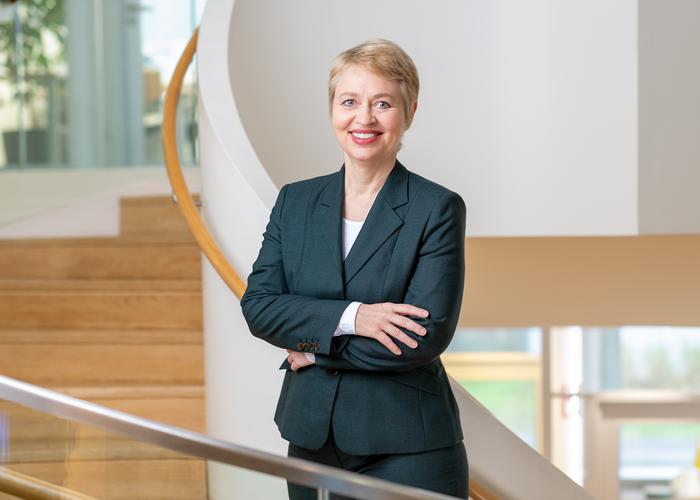
Professor Beate Heinemann is set to make history as she takes the reins of one of the world’s leading research centers, the Deutsches Elektronen-Synchrotron (DESY), on April 1, 2025. Her appointment as Chairperson of DESY’s Board of Directors not only symbolizes a significant milestone for the institution but also marks a transformative moment for women in the field of science. Beate Heinemann will succeed Helmut Dosch, the outgoing chairperson who has successfully led the center for over 16 years, and her leadership is anticipated to usher in a new era of groundbreaking research and progress.
As a prominent figure in experimental particle physics, Heinemann’s previous role as Director for Particle Physics at DESY has positioned her uniquely to lead the center into its next chapter. She has been an integral part of DESY’s ongoing commitment to scientific excellence, and her vision for enhancing the center’s capabilities is aligned with the center’s objectives. Heinemann’s statement highlights her determination to continue to expand DESY’s scientific and innovative performance, with a specific focus on the ambitious PETRA IV project—a world-class X-ray source that aims to elevate the capabilities of the center’s research initiatives.
Heinemann’s appointment is the result of a comprehensive international search conducted by a committee that valued her extensive experience and the promise of her leadership. Volkmar Dietz, from the German Federal Ministry for Education and Research, BMBF, expressed confidence that Heinemann’s dynamic approach and international insight will serve DESY well as it evolves in an increasingly complex global research landscape. He emphasized the importance of her leadership as the center prepares to tackle future scientific challenges and opportunities.
Former chair Helmut Dosch expressed his respect and trust in Heinemann’s abilities, citing her exceptional expertise and years of collaboration. His tenure at DESY set a high bar for strategic positioning and operational readiness, and Dosch’s support underscores the continuity and stability that Heinemann will bring to the role. Their partnership in advancing scientific discovery at DESY is anticipated to foster a nurturing environment for the next generation of researchers.
The significance of Heinemann’s appointment resonates within the broader scientific community as well. Otmar D. Wiestler, the President of the Helmholtz Association, pointed out that DESY’s unique research portfolio positions it as a vital player not only within Germany but also across Europe. Heinemann’s leadership, wrapped in her extensive international network and distinguished reputation, promises to enhance DESY’s contributions to the scientific community and bolster its role in tackling urgent research questions.
Professor Heinemann’s academic journey began in Hamburg, where she was born and raised. Her initial studies at the University of Hamburg paved the way for her Ph.D. in 1999, which marked the beginning of her illustrious career. The path led her to the University of Liverpool, where she engaged in pivotal research, followed by a well-regarded tenure at the University of California, Berkeley. This trajectory has given her a plethora of experience in both teaching and research, fostering an understanding of the complexities of scientific inquiry and the importance of innovative thinking.
Her experience is further accentuated by her leadership roles in significant international research collaborations. She has significantly impacted high-energy particle physics through her involvement in critical experiments such as H1 at DESY, CDF at Fermilab, and ATLAS at CERN’s Large Hadron Collider. Leading large collaborative efforts like these requires not only remarkable technical skills but also the ability to manage teams and communicate effectively across various disciplines.
Heinemann’s contributions to the scientific community extend beyond her individual work, as evidenced by her leadership in the ATLAS collaboration, where she served as deputy head during a period that witnessed groundbreaking discoveries in particle physics. This collaboration—which involves thousands of researchers from around the world—demonstrates her ability to inspire and unify a diverse range of voices around shared goals, an essential skill for her leadership at DESY.
As a recognized expert in her field, Heinemann has received numerous accolades, including her election as a Fellow of the American Physical Society and her membership in the Academy of Sciences in Hamburg. Her recent honorary doctorate from the University of Zurich underscores her status as a leading scientist, validating her influence and contributions to the global scientific community.
Looking ahead, Heinemann will not only continue her contributions to particle physics but will also champion initiatives that aim to integrate advancements in technology and research methodologies at DESY. Her vision includes not just expanding existing scientific programs but actively creating synergies between disciplines to foster innovations that will have wider societal impacts, thus linking basic research to applicable technologies.
The collaborative spirit fostered at DESY under Heinemann’s leadership could redefine research boundaries, influencing how scientists approach complex questions related to particle physics and beyond. Her commitment to providing a supportive environment for researchers will likely fortify DESY’s standing as a leader in the global scientific community, where interdisciplinary collaboration becomes an essential approach to tackling 21st-century challenges.
In conclusion, Professor Beate Heinemann’s appointment as the first female leader of DESY is a watershed moment in the field. Her arrival at the helm signifies a bold step toward inclusive leadership in science, making a powerful statement about the potential for women in the upper echelons of scientific and research organizations. As she prepares to embark on this new journey, the scientific community watches with anticipation, eager to see the advances that will undoubtedly emerge from Heinemann’s innovative leadership.
Keywords
Cite Scienmag News
Katie Riggs. (March 31, 2025). Beate Heinemann Appointed Chair of DESY’s Board of Directors. Scienmag. https://scienmag.com/beate-heinemann-appointed-chair-of-desys-board-of-directors/
Katie Riggs. "Beate Heinemann Appointed Chair of DESY’s Board of Directors." Scienmag, 31 March 2025, https://scienmag.com/beate-heinemann-appointed-chair-of-desys-board-of-directors/. Accessed 3 September 2026.
Katie Riggs. "Beate Heinemann Appointed Chair of DESY’s Board of Directors." Scienmag. March 31, 2025. https://scienmag.com/beate-heinemann-appointed-chair-of-desys-board-of-directors/


