


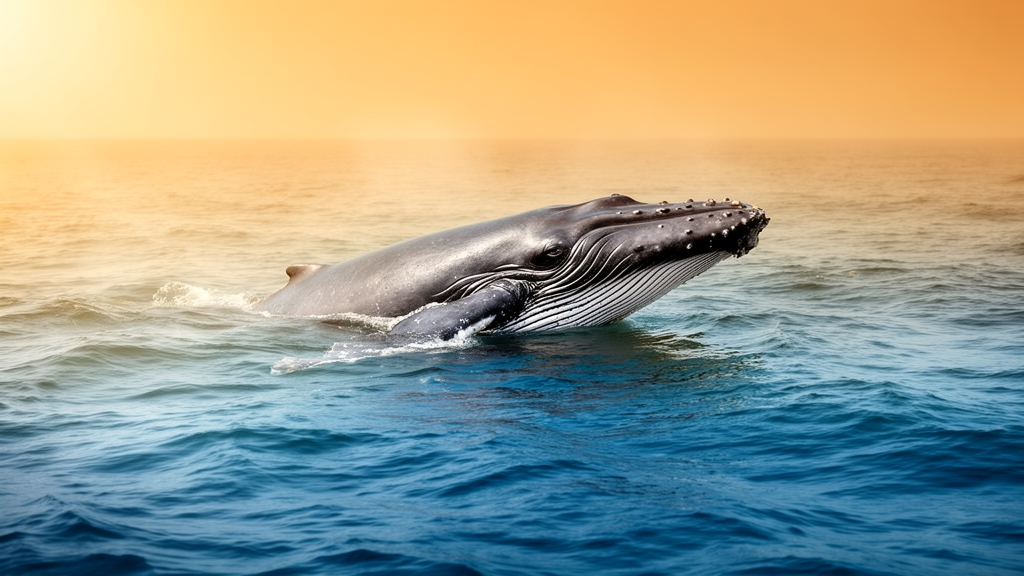
A new study led by researchers at the University of Hawai’i (UH) at Mānoa has uncovered the physiological mechanisms that link extreme ocean warming to the population-level declines previously documented in North Pacific humpback whales. The research, published in iScience, shows that during the 2014–2016 Pacific marine heatwave known as the Blob, whales slowed their metabolism to stretch limited food supplies, a response that disrupted nutrient use and made early pregnancies harder to maintain. The findings arrive as the Pacific enters a developing 2026–2027 El Niño that forecasters expect could rank among the strongest on record, sharpening interest in how these animals cope with sustained environmental stress.
Earlier reports from NOAA, academic researchers, and regional monitoring programs had already documented troubling symptoms during the Blob: fewer humpback whale sightings in Hawai’i and Alaska, declines in calf numbers, and widespread signs of nutritional stress. What remained unclear until now was the physiological story behind those patterns. The new analysis provides that missing link by reconstructing, at the level of individual metabolism, how the whales adjusted their energy budgets when the heatwave cut into their food supply.
To trace those internal responses, the team analyzed nearly eight years of biochemical records preserved in the baleen of stranded female humpbacks from Hawai’i. Baleen grows continuously, creating a natural timeline of metabolic signals that can be read long after an animal dies. Using compound-specific isotope analysis of amino acids paired with bioenergetic models—computer models that estimate how animals use and allocate energy—the researchers reconstructed how the whales routed nutrients and mobilized energy reserves before, during, and after the heatwave.
“These findings give us a window into how whales actually cope with extreme environmental stress,” said lead author Ching-Tsun Chang, a former graduate student in the Department of Oceanography at the UH Mānoa School of Ocean and Earth Science and Technology who is now an assistant professor at National Sun Yat-sen University in Taiwan. “We’ve known from previous reports that humpback whales declined in number and body condition during the Blob. What we show here is the physiological story behind those patterns: how whales adjust their metabolism, how nutrient use shifts, and how reproduction may be compromised.”
“Baleen is an extraordinary archive,” said co-author Kristi West, Director of the UH Health and Stranding Lab and associate researcher in Human Nutrition, Food and Animal Sciences at the UH Mānoa College of Tropical Agriculture and Human Resilience. “It lets us reconstruct an animal’s nutritional and reproductive history with fine detail. By pairing these biochemical records with bioenergetic models, we can finally see how climate extremes ripple through a whale’s body.”
The results show that during the heatwave, the whales essentially powered down, slowing their metabolism to conserve energy when prey became scarce. This lack of nutrition made early pregnancy harder to maintain, even in whales that had become pregnant. The baleen record also captured the cumulative toll of environmental change on a longer timescale: one whale’s decades-long history preserved a five-year record of how shifting ocean conditions affected its body late in life, offering a rare individual-level view of prolonged stress.
The vulnerability revealed by the study stems from humpback whales’ life-history strategy. They are capital breeders, animals that rely on energy stored during feeding seasons to fuel migration, pregnancy, and lactation. When feeding seasons are disrupted, as occurred during marine heatwaves, these species have limited ability to compensate. That constraint helps explain why a prolonged warming event in northern foraging grounds can translate into fewer calves and weaker body condition thousands of kilometers away in Hawaiian breeding waters, where scientists estimate that up to 12,000 whales—more than half of the North Pacific humpback population—return each year from November through May to breed, calve, and nurse their young.
The new findings arrive as the Pacific enters a developing 2026–2027 El Niño that is expected to be one of the strongest on record, bringing unusually warm conditions across the North Pacific. Seasonal forecasts from international climate centers project widespread surface ocean warming that could reduce prey availability in key humpback whale foraging regions. While this event is distinct from the 2014–2016 Blob, the anticipated warming underscores why understanding whale physiological responses to extreme environmental stress has become increasingly urgent for conservation planning.
“As marine heatwaves become more frequent, capital-breeding species like humpback whales may face increasing challenges in a rapidly warming ocean,” said Brian Popp, co-author and professor of Earth Sciences in the UH Mānoa School of Ocean and Earth Science and Technology. “Understanding these physiological responses is essential for anticipating how populations will fare in the decades ahead.” The study was observational in design, based on stranded animals from Hawai’i, and the authors declared no conflict of interest. By connecting baleen chemistry to whole-animal energy budgets, the work establishes a framework for reading past heatwave impacts directly from whale tissue—and for anticipating how the next major warming event may test the limits of one of the ocean’s most iconic migratory species.
Subject of Research: Physiological effects of the 2014–2016 Pacific marine heatwave on humpback whale metabolism, nutrient use, and reproduction
Article Title: Marine heatwaves suppress nutrient use, reproductive flexibility in humpback whales
Article References: Marine heatwaves suppress nutrient use, reproductive flexibility in humpback whales. Original publication (Bibliographic details unavailable.)
Image Credits: AI Generated
DOI: Not provided
Keywords: humpback whales, marine heatwaves, the Blob, baleen, compound-specific isotope analysis, bioenergetic models, capital breeders, El Niño, North Pacific, Hawai'i, nutritional stress, iScience
Cite Scienmag News
Violet Maxwell. (October 24, 2026). Baleen records reveal how marine heatwaves drained humpback whale energy and reproduction. Scienmag. https://scienmag.com/baleen-records-reveal-how-marine-heatwaves-drained-humpback-whale-energy-and-reproduction/
Violet Maxwell. "Baleen records reveal how marine heatwaves drained humpback whale energy and reproduction." Scienmag, 24 October 2026, https://scienmag.com/baleen-records-reveal-how-marine-heatwaves-drained-humpback-whale-energy-and-reproduction/. Accessed 24 October 2026.
Violet Maxwell. "Baleen records reveal how marine heatwaves drained humpback whale energy and reproduction." Scienmag. October 24, 2026. https://scienmag.com/baleen-records-reveal-how-marine-heatwaves-drained-humpback-whale-energy-and-reproduction/


