


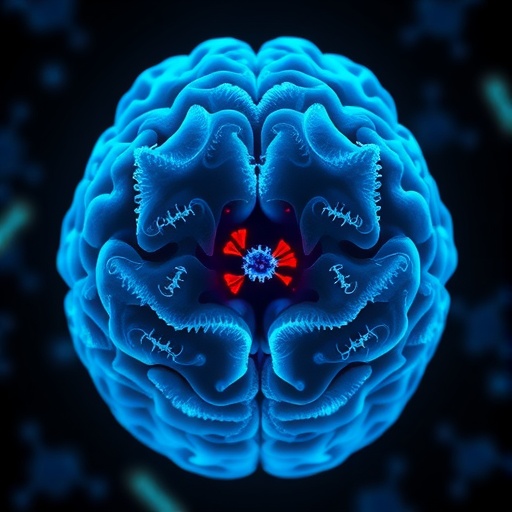
The traditionally held view of the brain as a sterile organ is facing a paradigm shift following groundbreaking research conducted by a team at The University of Texas MD Anderson Cancer Center. This study reveals the unexpected presence of biologically active bacterial genetic and cellular elements embedded within brain tumor cells, a discovery that could revolutionize our understanding of tumor biology and pave the way for innovative therapeutic strategies. Published in the prestigious journal Nature Medicine, these findings challenge existing dogma and introduce a novel dimension to brain tumor microenvironment research.
For decades, it was widely believed that the brain was devoid of microbial life, creating a conceptual sterility that obscured any microbial role in brain pathologies. However, leveraging advanced molecular and imaging technologies, researchers explored over 200 brain tumor samples, including gliomas and metastatic brain cancers, unearthing microbial components residing not just around the tumor but within tumor cells themselves. This substantial body of work suggests that these bacterial elements are not mere contaminants but biologically active participants potentially influencing tumor dynamics.
Central to this investigation was the involvement of intra-tumoral microbial elements interacting with the immune system and metabolic pathways within the tumor milieu. The research team employed a multidimensional approach combining genetic sequencing, bacterial cultures, and state-of-the-art imaging techniques to precisely characterize bacterial signatures. Notably, these bacterial elements showed associations with specific immunometabolic pathways, implying a role in modulating tumor progression and the host immune response.
Brain tumors, particularly gliomas and metastases, have notoriously poor prognoses, with limited effective treatments. This discovery is poised to offer new avenues for therapeutic intervention by elucidating how bacterial components might modulate tumor growth and treatment resistance. The researchers posit that understanding microbial influence could contribute to tailored therapies aimed at improving clinical outcomes in these devastating diseases.
Moreover, the study identified intriguing links between the bacterial elements within brain tumors and microbial communities residing elsewhere in the body, especially the oral microbiome. This suggests potential microbial trafficking routes or systemic microbial influences that may be involved in tumor biology. Such findings open speculative yet compelling conversations about how oral health, systemic infections, or disruptions in microbial balance might impact brain tumor development and progression.
The pioneering work was spearheaded by Golnaz Morad, DDS, PhD, in collaboration with Jennifer Wargo, MD, among others, representing a multi-disciplinary convergence of surgical oncology, genomic medicine, and innovative microbiome research. Their efforts, supported by MD Anderson’s PRIME-TR initiative, characterized not only the presence but the functional relevance of bacterial components inside brain tumors, a first in the landscape of neuro-oncology research.
The implications of this study extend beyond basic science and into clinical realms, as the active communication between microbial elements and tumor cells could affect how tumors respond to chemotherapy, radiotherapy, and immunotherapies. This microbial-tumor interplay might influence immune evasion mechanisms or metabolic reprogramming within tumors, factors crucial to therapeutic resistance.
Despite these promising advances, the authors caution that the current findings are correlative and do not conclusively establish causality. More extensive studies, involving diverse patient populations and experimental models, are necessary to delineate whether bacterial presence drives meaningful changes in tumor biology or treatment responsiveness. Variability in bacterial compositions across different geographical and environmental settings may further complicate interpretations.
Another critical question arising from these findings concerns the mechanisms by which bacteria or bacterial elements gain access to the brain and integrate into tumor cells. Hypotheses include translocation via the bloodstream, possibly facilitated by breaches in the blood-brain barrier or through systemic conditions such as periodontal disease. The role of cancer therapies in altering tissue environments that favor microbial colonization is also being investigated.
The intersection of microbiome research and neuro-oncology illuminated by this study offers a fertile ground for future research. By decoding the microbial contributions to brain tumor ecosystems, scientists aim to exploit these interactions for innovative diagnostics and targeted interventions. This may involve manipulating microbial communities or targeting microbial pathways as adjuncts to conventional cancer therapies.
Funding for this multifaceted research was provided by numerous institutions, including the NIH, the Dr. Marnie Rose Foundation, and Stand Up to Cancer, highlighting the collaborative and high-impact nature of this work. These investments underscore the growing recognition of the microbiome’s potential as a frontier in cancer research.
In sum, this landmark study not only disrupts the entrenched concept of brain sterility but also invites a reconsideration of brain tumor pathophysiology through the lens of microbiology. By mapping the active participation of bacterial elements in brain tumors, researchers embark on a promising journey that may ultimately yield novel strategies to improve survival and quality of life for patients afflicted by these formidable cancers.
- Nature Medicine article: https://doi.org/10.1038/s41591-025-03957-4
- MD Anderson Cancer Center: http://www.mdanderson.org/
- Brain tumor information: https://www.mdanderson.org/cancer-types/brain-tumor.html
Image Credits: The University of Texas MD Anderson Cancer Center
Keywords: Brain cancer, glioma, brain tumors, microbiome, tumor microenvironment, surgical oncology, genomic medicine, microbial elements, immunometabolism
Cite Scienmag News
Nathaniel Bowman. (November 15, 2025). Bacterial Traces Within Brain Tumors Could Influence Tumor Behavior. Scienmag. https://scienmag.com/bacterial-traces-within-brain-tumors-could-influence-tumor-behavior/
Nathaniel Bowman. "Bacterial Traces Within Brain Tumors Could Influence Tumor Behavior." Scienmag, 15 November 2025, https://scienmag.com/bacterial-traces-within-brain-tumors-could-influence-tumor-behavior/. Accessed 3 September 2026.
Nathaniel Bowman. "Bacterial Traces Within Brain Tumors Could Influence Tumor Behavior." Scienmag. November 15, 2025. https://scienmag.com/bacterial-traces-within-brain-tumors-could-influence-tumor-behavior/


