


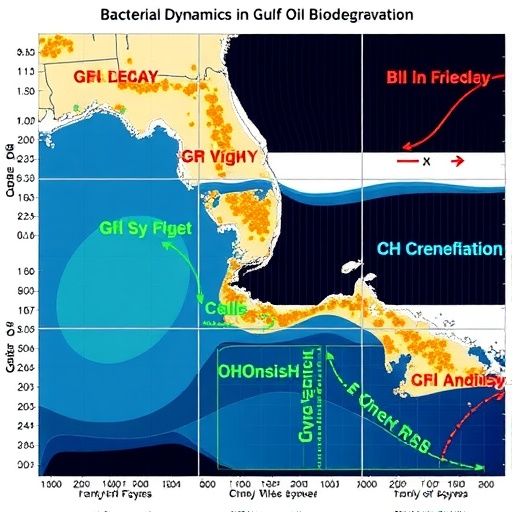
In recent years, the degradation of environmental pollutants by microbial communities has emerged as a focal point in ecological research. An illuminating study led by Muñoz-Rivera and colleagues, published in the journal Int Microbiol, delves into the population dynamics of a bacterial consortium sourced from marine sediment located in the Gulf of Mexico. The implications of this research echo far beyond academic circles, aiming to unravel how microbial life can interact with anthropogenic pollutants, particularly during the biodegradation of heavy crude oil.
The aromatics present in crude oil, notably toxic compounds, pose significant threats to marine ecosystems. Understanding the microbial processes involved in breaking down these complex hydrocarbons is vital for developing bioremediation strategies that are both efficient and environmentally friendly. This research not only sheds light on microbial capabilities but also provides a clearer picture of how these organisms can be harnessed to mitigate the impacts of oil spills and other pollution events.
The Gulf of Mexico, a vast and biologically rich marine ecosystem, is particularly vulnerable to crude oil contamination due to its extensive oil drilling activities and the frequent occurrence of oil spills. The authors examined the dynamics of specific bacterial populations within sediment samples that had undergone varying levels of exposure to the toxic aromatic fractions of heavy crude oil. By employing advanced genomic techniques, they were able to track shifts in microbial community composition and identify key players in the biodegradation process.
Preliminary findings indicate that certain bacterial taxa exhibit a surprising resilience to the alkylated polycyclic aromatic hydrocarbons (PAHs). For instance, certain strains from the genera Alcanivorax and Pseudomonas have demonstrated the ability to degrade these compounds effectively, indicating their potential roles as bioremediators. The study meticulously documented these population changes before and after the introduction of crude oil, highlighting the adaptive nature of these microbial communities in response to environmental stressors.
The research does not merely document shifts in bacterial populations; it delves deeper into the metabolic pathways utilized by these organisms to process aromatic hydrocarbons. By elucidating the biochemical mechanisms at play, the authors pave the way for future studies aimed at engineering enhanced biodegradation capabilities. The findings reveal unique enzymatic pathways that some bacteria employ to break down complex hydrocarbons into less harmful substances, essentially converting a pollutant into a source of energy for the microbial community.
Interestingly, the study also explored the interspecies interactions within the microbial consortium. It was observed that some bacteria form synergistic relationships, thus enhancing the overall efficiency of hydrocarbon degradation. The mutualistic interactions observed suggest a finely-tuned evolutionary strategy, where bacteria not only compete for resources but also collaborate to thrive in adverse conditions. This revelation could fundamentally change how we perceive microbial ecology in contaminated environments.
Another significant outcome of the study was the assessment of the impact of varying environmental conditions on bacterial degradation rates. Temperature, salinity, and nutrient availability were all factors that influenced microbial activity. Such insights are crucial for predicting the effectiveness of natural attenuation processes in the event of oil spills, thus informing emergency response strategies. Understanding these variables can lead to optimized conditions for enhancing bioremediation practices, making them more viable for real-world scenarios.
As the research continues to develop, one of the primary considerations is how to translate these laboratory findings into field applications. Future initiatives may involve the application of specific bacterial strains identified in this study to contaminated sites in the Gulf of Mexico, potentially leading to pilot programs for bioremediation of affected areas. The ability of these bacteria to thrive in such marine conditions adds a promising layer to existing bioremediation strategies.
Moreover, the study places significant emphasis on the importance of conservation in marine environments. Protecting the natural microbial diversity is as critical as the technological advancements in bioremediation. Preserving these microbial communities ensures that the ecosystem remains resilient against future pollution events, thus promoting sustainable practices in oil exploration and other industrial activities.
In addition to environmental applications, the research inadvertently underscores the broader implications of microbial ecology in understanding climate change. The degradation of oil by bacteria not only cleans up pollutants but also contributes to carbon cycling in marine environments. By detailing these processes, the study provides valuable information that can inform broader ecological models and climate change mitigation strategies.
Ultimately, the work of Muñoz-Rivera and colleagues signifies a significant stride toward comprehensive bioremediation approaches tailored for specific environmental contexts. Their findings challenge researchers and environmentalists alike to reconsider the intrinsic value of microbial life and its role in sustaining the health of our planetary ecosystems. The take-home message is clear: harnessing nature’s own cleanup crew may well be one of our best strategies for combating environmental disasters.
As this body of work gains attention, it can inspire further studies aimed at characterizing other microbial communities in various ecological niches. By broadening our understanding of microbial diversity and function, we may unlock the potential for innovative solutions to some of the most pressing environmental challenges of our time.
This groundbreaking research not only adds to the growing discourse surrounding microbial ecology but also reinforces the notion that collaboration—whether between bacteria or researchers—holds the key to navigating the complexities of environmental restoration in the Anthropocene.
Muñoz‑Rivera, M., Martínez‑Morales, F., Morales-Guzmán, D. et al. Correction to: Population dynamics of a bacterial consortium from a marine sediment of the Gulf of Mexico during biodegradation of the aromatic fraction of heavy crude oil.
Int Microbiol (2025). https://doi.org/10.1007/s10123-025-00684-1
Cite Scienmag News
Drew Townsend. (August 6, 2025). Bacterial Dynamics in Gulf Oil Biodegradation. Scienmag. https://scienmag.com/bacterial-dynamics-in-gulf-oil-biodegradation/
Drew Townsend. "Bacterial Dynamics in Gulf Oil Biodegradation." Scienmag, 6 August 2025, https://scienmag.com/bacterial-dynamics-in-gulf-oil-biodegradation/. Accessed 4 September 2026.
Drew Townsend. "Bacterial Dynamics in Gulf Oil Biodegradation." Scienmag. August 6, 2025. https://scienmag.com/bacterial-dynamics-in-gulf-oil-biodegradation/


