


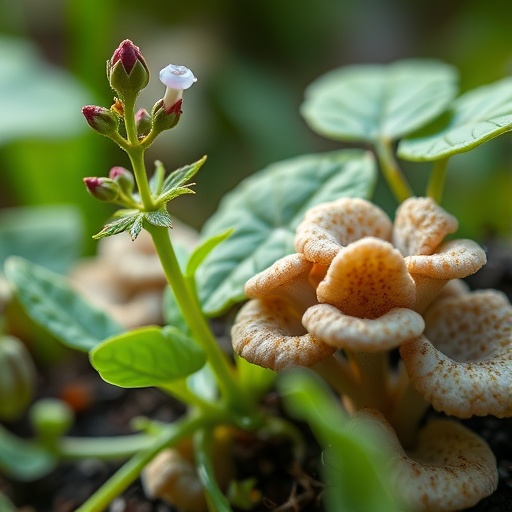
In a groundbreaking study published in “Discover Sustainability,” researchers delved into the intricate relationships between bacteria, fungi, and plant health, shedding light on the ecological and agricultural significance of these interactions. This research underscores the pivotal role that soil microbiomes play in enhancing plant resilience to stressors, providing a comprehensive overview of the mechanisms that mediate these beneficial effects.
The study emphasizes that soil microorganisms, particularly bacteria and fungi, are not mere inhabitants of the soil ecosystem; they constitute a dynamic network that influences plant growth and health. The intricate symbiosis between roots and microbes leads to enhanced nutrient uptake, disease resistance, and even stress tolerance in plants. Such connections are crucial, especially in the context of sustainable agriculture, where maximizing yield while minimizing environmental impact is increasingly imperative.
Researchers introduced the concept of plant-microbe interactions as central to ecological balance. Through a nuanced understanding of these connections, we are witnessing a new era in agricultural practices that lean towards sustainability. The ability of plants to thrive in diverse and often challenging environments can largely be attributed to these microbial assistants that operate silently below the surface.
Among the highlighted mechanisms is the concept of nutrient cycling facilitated by bacteria and fungi. These microorganisms break down organic materials in the soil, making essential nutrients like nitrogen and phosphorus more accessible to plants. In turn, plants exude root exudates that foster microbial growth, creating a reciprocal relationship vital for soil health. This exchange not only boosts plant vigor but enhances soil fertility, setting the stage for robust ecosystems.
Fungal interactions, particularly those involving mycorrhizal fungi, play an essential role in this symbiotic relationship. These fungi form intricate networks with plant roots, extending their reach into the soil and unlocking nutrients that would otherwise be unavailable. This process not only improves nutrient uptake but also enhances water absorption, equipping plants to withstand drought conditions—a critical advantage in our changing climate.
The study also sheds light on the significance of bioindicators in assessing soil health. By monitoring specific microbial communities, researchers can predict plant performance and diagnose environmental stressors. This approach marks a significant advancement in our ability to manage agricultural land sustainably, offering farmers real-time insights into soil conditions and plant health.
Another intriguing aspect of the study is the role of microbial diversity. Diverse microbial communities are more resilient and provide a buffer against environmental stressors. This biodiversity contributes to the stability of plant systems, ensuring that they can adapt to changing conditions while maintaining productivity. The findings suggest that preserving microbial diversity in soil is essential for long-term agricultural success and environmental health.
Furthermore, the researchers explored the potential of utilizing microbial inoculants in agriculture. These biopreparations, composed of beneficial bacteria and fungi, can be applied to crops to enhance growth and resilience. With a growing emphasis on organic farming and natural solutions, this approach aligns with the global trend towards sustainable agricultural practices that eschew chemical fertilizers and pesticides.
As our understanding of plant-microbe interactions deepens, the implications for pest management also become apparent. Beneficial microbes can outcompete harmful pathogens, preventing disease outbreaks and reducing the need for chemical interventions. This natural form of pest control not only reduces costs but also minimizes the ecological footprint of farming practices.
The research emphasizes a transformative perspective on agricultural practices. By recognizing the interconnectedness of plants and microorganisms, farmers can adopt holistic approaches that prioritize ecosystem health. This shift in mindset is essential for achieving sustainable agricultural practices that support food security while protecting the environment.
Moreover, the study highlights the urgency of integrating microbial health into policy discussions on sustainable agriculture. Government and agricultural organizations must consider the role of soil microbiomes in shaping agricultural guidelines and practices. Promoting awareness and education on the significance of these microbial communities can empower farmers to adopt more sustainable techniques.
As the world grapples with the challenges of climate change, these findings offer promising solutions for building resilient agricultural systems. Harnessing the power of bacteria and fungi not only enhances plant health but also contributes to climate adaptation strategies. By fostering strong plant-microbe relationships, we can bolster food production in the face of environmental stressors.
In conclusion, Hnini et al.’s comprehensive exploration of bacterial and fungal mediation in plant health opens new avenues for sustainable agriculture. The intricate interplay between microbes and plants offers a wealth of opportunities for enhancing agricultural productivity while fostering environmental stewardship. This research serves as a clarion call for embracing the natural ecosystems that support our food systems, allowing us to cultivate a healthier planet for future generations.
Hnini, M., Oubohssaine, M., Rabeh, K. et al. Mechanisms of bacterial and fungal mediation in plant health and their ecological and agricultural significance.
Discov Sustain 6, 1055 (2025). https://doi.org/10.1007/s43621-025-01469-2
Cite Scienmag News
Roger Howard. (October 10, 2025). Bacteria and Fungi: Key Players in Plant Health. Scienmag. https://scienmag.com/bacteria-and-fungi-key-players-in-plant-health/
Roger Howard. "Bacteria and Fungi: Key Players in Plant Health." Scienmag, 10 October 2025, https://scienmag.com/bacteria-and-fungi-key-players-in-plant-health/. Accessed 4 September 2026.
Roger Howard. "Bacteria and Fungi: Key Players in Plant Health." Scienmag. October 10, 2025. https://scienmag.com/bacteria-and-fungi-key-players-in-plant-health/


