


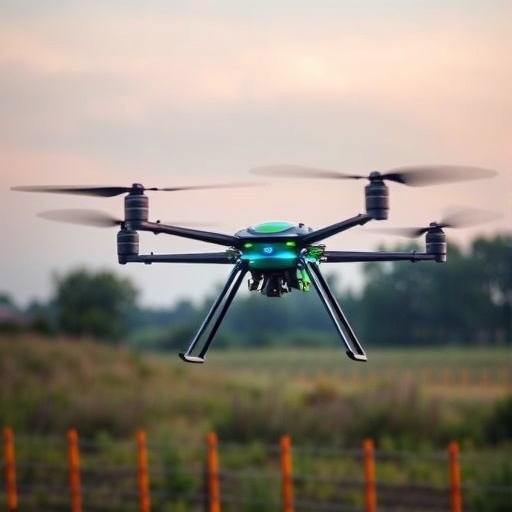
In the ongoing global battle against mosquito-borne diseases, scientists have unveiled a groundbreaking innovation poised to revolutionize how we monitor and mitigate the spread of these perilous vectors. The study titled “An autonomous intelligent mosquito sentinel for field-deployed surveillance,” published recently in Communications Engineering, introduces an unprecedented autonomous device that harnesses advanced artificial intelligence and robotics to detect, identify, and analyze mosquito populations directly in the field with remarkable precision and minimal human intervention.
Mosquitoes are vectors for a swath of deadly diseases, including malaria, dengue fever, Zika virus, and yellow fever, which collectively affect hundreds of millions of people annually. Traditional mosquito surveillance methods involve labor-intensive processes such as manual trapping, morphological identification under microscopes, and laborious lab-based pathogen analysis. However, these techniques suffer from delayed data collection, limited spatial coverage, and are often hampered by logistical challenges in remote or hazardous environments. The new autonomous mosquito sentinel offers a scalable solution, capable of real-time deployment and continuous monitoring with heightened efficiency.
At the core of this innovation lies a sophisticated integration of sensor technologies and machine learning algorithms, embodied in a compact, ruggedized device designed for the rigors of outdoor environments. This sentinel autonomously attracts mosquitoes using species-specific stimuli mimicking human scents and thermal signatures. Once mosquitoes approach, advanced optical and acoustic sensors capture detailed biometric data, while embedded AI models classify mosquito species in situ with unprecedented accuracy. This ability to distinguish key vectors from non-harmful species dynamically transforms the landscape of entomological surveillance.
To enable field deployment, the sentinel’s design emphasizes energy autonomy through solar panels and low-power electronics, ensuring it can operate continuously in remote regions without frequent human maintenance. Its modular architecture allows easy upgrades of sensing components and AI firmware over-the-air, facilitating swift adaptation to emerging mosquito species and pathogens. The data collected is wirelessly transmitted to cloud platforms, where epidemiologists and public health officials can analyze trends in real time, enabling rapid response strategies.
The interdisciplinary team behind this sentinel melded expertise in entomology, robotics, and artificial intelligence to surmount longstanding technical barriers. Among the significant challenges was creating AI models capable of species identification in variable environmental conditions such as fluctuating light and temperature, which often distort sensor readings. By employing convolutional neural networks trained on an extensive dataset of mosquito wingbeat patterns and morphological features, the system achieves an identification accuracy surpassing 95%, rivaling or exceeding human experts.
Beyond species identification, the sentinel performs crucial analyses of mosquito population dynamics, activity patterns, and breeding hotspot identification. Its continuous presence in the field captures temporal fluctuations that episodic manual sampling misses, enriching public health datasets with fine-grained spatiotemporal resolution. This wealth of data not only informs vector control measures like targeted pesticide application but also enhances epidemiological modeling to predict outbreak likelihoods with higher fidelity.
Another remarkable aspect of this technology is its scalability and cost-effectiveness. The sentinel’s components leverage off-the-shelf hardware augmented by bespoke software, enabling mass production at a fraction of the expense associated with traditional field research equipment. This affordability opens the door for widespread deployment across mosquito-endemic regions in low- and middle-income countries, where disease burdens are often highest and surveillance infrastructure weakest.
Moreover, the system’s autonomous nature minimizes human exposure to disease vectors during data collection, bolstering researcher safety and reducing logistical challenges in conflict zones or ecologically sensitive habitats. Its durable construction withstands harsh weather, insect interference, and physical wear, ensuring uninterrupted operation over seasons, a vital feature for longitudinal studies tracking effects of climate change on vector behavior and distribution.
The study also highlights the sentinel’s potential adaptability to other vector-borne diseases. By modifying attractant stimuli and retraining AI models on alternate insect species such as ticks or sandflies, the platform could become a versatile tool for monitoring multiple vectors simultaneously. This flexibility sets a new benchmark in vector surveillance technology and underscores the transformative impact of AI-driven ecological monitoring.
Early field trials conducted in diverse ecosystems—from tropical rainforests to urban peripheries—validated the sentinel’s performance, revealing not only high fidelity in mosquito species detection but also novel insights into mosquito activities correlating with human behavioral patterns and microclimatic variables. These findings underscore the technology’s capacity to uncover subtle ecological dynamics previously obscured by conventional sampling methods.
In light of increasing global concern about emerging infectious diseases and vector habitats shifting due to climate change, this autonomous mosquito sentinel offers a timely and technologically sophisticated approach to surveillance. Its seamless amalgamation of AI, robotics, and ecological science epitomizes the cutting edge of digital public health interventions aimed at proactively managing vector-borne threats before epidemics escalate.
Moving forward, the researchers envision deploying networks of interconnected sentinels forming ‘smart’ ecological grids, capable of real-time data fusion and predictive analytics on a continental scale. Integration with satellite monitoring and mobile health platforms could further enhance surveillance granularity and public engagement. Collaborative international efforts will be vital to maximize the sentinel’s impact across varied epidemiological landscapes.
This technological advance redefines what is possible in entomological surveillance, shifting the paradigm from reactive to anticipatory disease vector management. By empowering health authorities with timely, precise, and actionable data, the autonomous intelligent mosquito sentinel promises to significantly reduce the burden of vector-borne diseases worldwide, potentially saving millions of lives through smarter, data-driven interventions.
As this technology matures, it stands poised to catalyze broader applications in precision ecology, environmental monitoring, and biodiversity conservation. The sentinel’s synthesis of artificial intelligence and biology exemplifies the profound potential unlocked when emerging technologies are harnessed to solve pressing global health challenges. This is a landmark achievement signaling the dawn of a new era in autonomous environmental sensing and disease control.
In conclusion, the autonomous intelligent mosquito sentinel embodies a pivotal advance at the nexus of technology and public health. By delivering real-time, high-resolution insights into vector populations with minimal human labor and exceptional accuracy, it heralds a transformative shift in how scientists, policymakers, and communities confront mosquito-borne diseases. Its deployment worldwide could mark a decisive step toward effective, sustainable control of some of humanity’s deadliest foes.
Cite Scienmag News
Denise Maddox. (May 14, 2026). Autonomous Intelligent Mosquito Sentinel Enhances Field Surveillance. Scienmag. https://scienmag.com/autonomous-intelligent-mosquito-sentinel-enhances-field-surveillance/
Denise Maddox. "Autonomous Intelligent Mosquito Sentinel Enhances Field Surveillance." Scienmag, 14 May 2026, https://scienmag.com/autonomous-intelligent-mosquito-sentinel-enhances-field-surveillance/. Accessed 4 September 2026.
Denise Maddox. "Autonomous Intelligent Mosquito Sentinel Enhances Field Surveillance." Scienmag. May 14, 2026. https://scienmag.com/autonomous-intelligent-mosquito-sentinel-enhances-field-surveillance/


