


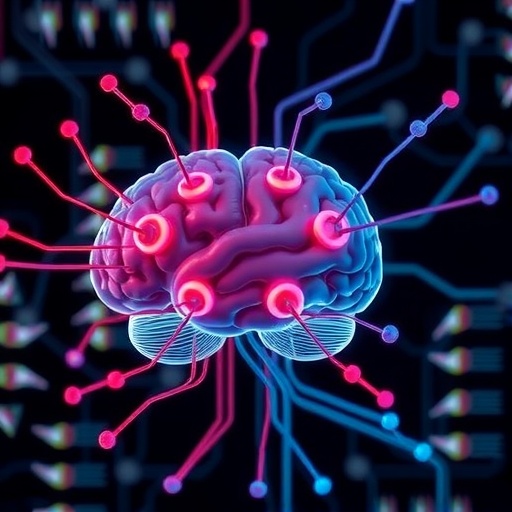
A groundbreaking new study from NYU Langone Health has illuminated the complex ways in which the brain manages to store multiple memories without blending or erasing vital pieces of past information. This discovery centers on an intriguing subset of neurons within the hippocampus, an area known for its role in memory formation. Researchers found that approximately 25% of these hippocampal CA1 neurons act as hubs that facilitate the seamless transmission of information from one region of the brain to another, effectively functioning like a biological switchboard managing countless memory signals.
For decades, neuroscientists have grappled with the paradox of how the brain maintains a delicate balance between adaptability and stability—retaining established memories while accommodating new information. This study provides fresh insights into this dilemma by exploring the neural interplay along pathways between the hippocampus and the neocortex. Specifically, the focus was on the CA3 and CA1 regions of the hippocampus and their communication with the retrosplenial cortex, a crucial site involved in navigation and spatial memory recall.
The CA3 region is known to send rapid and fluid streams of information, and, remarkably, the research demonstrated that most of these incoming signals converge on a small cohort of CA1 neurons. These same neurons then process and relay information to the retrosplenial cortex, but in a distinctly different firing pattern, which creates an independent outgoing communication channel. This dual functionality allows the neurons to multiplex incoming and outgoing signals without blending them, preserving the clarity of each memory trace.
This complex system can be likened to an advanced electronic switchboard that directs multiple phone calls without their lines crossing, ensuring that new experiences are integrated into the brain’s map without disrupting existing knowledge. The retrosplenial cortex benefits from this arrangement by maintaining a stable representation of the environment—essential for spatial navigation—while the hippocampal regions continue adapting and learning from the ongoing stream of experiences.
Dr. Joaquín Gonzalez, a postdoctoral fellow and co-lead author of the study, emphasized the significance of this firing pattern adjustment: “Instead of recruiting new neurons for every novel experience, the brain modifies the firing patterns of a stable cellular core, thereby organiz-ing information effectively and safeguarding previously encoded memories.” This mechanism highlights the brain’s remarkable ability to adapt dynamically while retaining long-term memory integrity.
Interestingly, the study also uncovered that these pivotal CA1 neurons are not confined to processing information during active waking hours—they remain engaged during sleep, participating in sharp-wave ripple events that are critical for memory consolidation. This nocturnal activity is believed to involve the replay and reinforcement of memory traces, further stabilizing learning while the brain rests.
The persistence of activity in these core neurons during sleep suggests a continuous information relay between the hippocampus and cortex, facilitating the integration of memories into long-term storage. By employing the same neural architecture for both daytime encoding and nighttime replay, the brain ensures that its memory network remains both flexible and coherent.
Dr. Mihály Vöröslakos, another postdoctoral researcher on the team, highlighted the methodological breakthrough that made this discovery possible: “Our ability to simultaneously record hundreds of individual neurons across multiple connected brain regions in freely moving mice was instrumental. This approach revealed the nuanced patterns of communication that traditional recording methods could not detect.”
Moreover, the study’s findings carry potential implications beyond basic neuroscience. The analogy between neural switchboards and artificial intelligence systems underlines a key challenge in AI—catastrophic forgetting—where machines lose previously learned information upon training on new tasks. By understanding how the mammalian brain protects old memories while learning new ones, scientists hope to inspire the development of next-generation AI technologies that can continuously learn without forgetting.
Dr. György Buzsáki, co-senior author and a renowned neuroscience expert, suggested that this research might shed light on neurodegenerative conditions such as Alzheimer’s disease, where memory circuits deteriorate. “Our discovery of a ‘memory switchboard’ within the hippocampus could provide vital clues about the early mechanisms of memory failure in such diseases,” Dr. Buzsáki remarked.
The experiment involved training six mice to traverse a linear track rewarded at both ends with water. As the animals moved, high-density electrode arrays captured the simultaneous neural activity across hippocampal and cortical regions, while behavioral tracking allowed researchers to correlate precise brain signals with physical navigation and exploration.
Further analysis during sleep revealed that while the original patterns of activity were replayed, they mutat-ed dynamically within and between the hippocampus and neocortex, underscoring a sophisticated neural choreography that supports memory consolidation and flexibility concurrently.
Despite the advances, the authors caution that extrapolation to human brain function requires further research. The controlled environment of the study and differences between species mean that confirming the presence of similar switchboard mechanisms in humans remains an open question.
As they look to the future, the research team plans to explore whether comparable subspace communication channels exist in other areas of the brain responsible for diverse types of memory processing. Such investigations could lead to a more comprehensive neural map of memory architecture, with profound impact for both neuroscience and artificial intelligence.
This research was supported by several grants from the National Institutes of Health, highlighting the critical role of federal funding in fostering cutting-edge brain science. The collaborative effort included leading neuroscientists and scholars from NYU Langone Health and NYU Grossman School of Medicine.
By unlocking new dimensions of how individual neurons coordinate complex memory signals, this study offers unprecedented insights into one of biology’s most enduring mysteries—how the brain manages to be both ever-changing and enduring, preserving the richness of past experience while embracing the potential of new learning.
Keywords
Memory, Long term memory, Memory formation, Memory processes, Spatial memory, Sleep, Hippocampal neurons, CA1 cells, CA3 cells, Hippocampus, Hippocampal circuits, Artificial intelligence
Cite Scienmag News
Cassandra Pierce. (June 3, 2026). Newly Discovered ‘Switchboard’ Enables the Brain to Create New Memories While Preserving Old Ones. Scienmag. https://scienmag.com/newly-discovered-switchboard-enables-the-brain-to-create-new-memories-while-preserving-old-ones/
Cassandra Pierce. "Newly Discovered ‘Switchboard’ Enables the Brain to Create New Memories While Preserving Old Ones." Scienmag, 3 June 2026, https://scienmag.com/newly-discovered-switchboard-enables-the-brain-to-create-new-memories-while-preserving-old-ones/. Accessed 4 September 2026.
Cassandra Pierce. "Newly Discovered ‘Switchboard’ Enables the Brain to Create New Memories While Preserving Old Ones." Scienmag. June 3, 2026. https://scienmag.com/newly-discovered-switchboard-enables-the-brain-to-create-new-memories-while-preserving-old-ones/


