

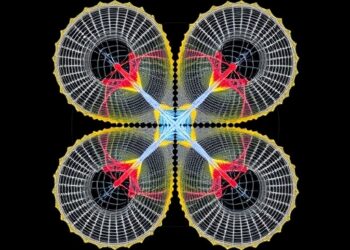
Scientists Analyze Four-Body Central Configurations Through Pair-Space Methods
Four bodies locked in a gravitational dance may look chaotic, but a new mathematical analysis shows that some of the...

Four bodies locked in a gravitational dance may look chaotic, but a new mathematical analysis shows that some of the...
August 25, 2026, Mountain View, California—A young planetary system may look peaceful from a distance, but new observations from NASA’s...
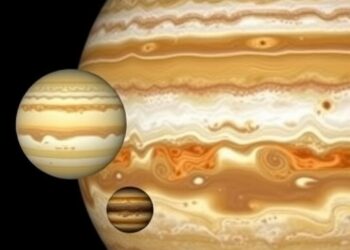
The Galilean satellites—Io, Europa, Ganymede and Callisto—may look like four neighboring worlds, but together they preserve one of the most...
A new cosmological study is putting one of the most deeply rooted assumptions in modern physics under fresh observational pressure:...
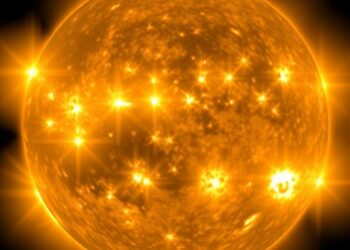
For nearly two decades, a small instrument orbiting the Sun has been quietly hunting one of the most chemically bizarre...
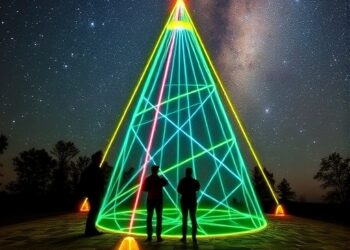
A new study is turning one of the strangest ideas in relativity into a powerful bridge between spacetime physics and...
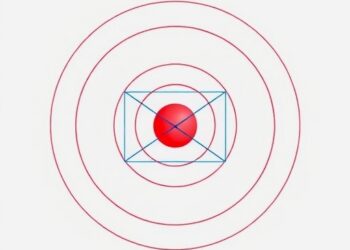
A new study has brought an unexpectedly familiar shape into one of celestial mechanics’ most demanding laboratories: the rose. In...

A new study from Stanford researchers proposes an explanation for one of the most puzzling discoveries in exoplanet science: how...
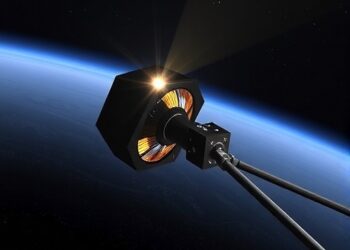
This article presents ShortSCOPE, a compact optical force-balanced seismometer designed for planetary missions. Key points Purpose: Detect seismic activity and...
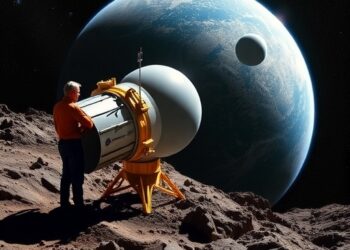
A new optical seismometer designed for the Moon and small asteroids could transform how scientists listen to worlds beyond Earth....


Embark on a thrilling journey of discovery with Scienmag.com—your ultimate source for cutting-edge breakthroughs. Immerse yourself in a world where curiosity knows no limits and tomorrow’s possibilities become today’s reality!