


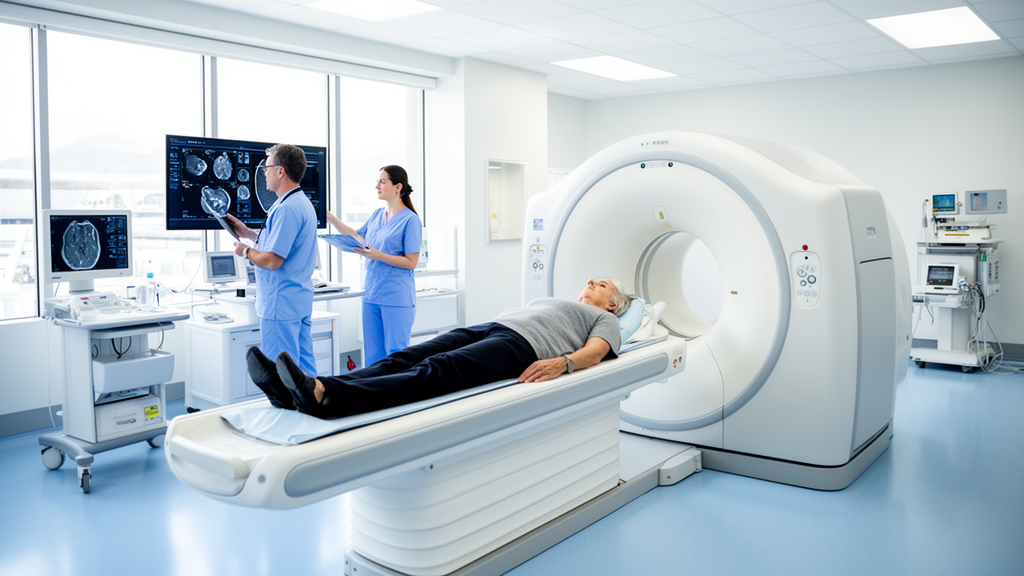
Pancreatic cancer remains one of the most lethal malignancies in modern medicine, with the vast majority of cases diagnosed at an advanced stage when curative treatment is no longer possible. Against this grim backdrop, Australian researchers have launched an ambitious nationwide surveillance program designed to catch the disease in its earliest, most treatable stages among people who carry an elevated inherited risk. The Australian Pancreatic high-RIsk ScrEening (APRISE) program, described in a study protocol published in BMC Cancer, is a prospective multicentre observational study that will follow individuals with familial or genetic predisposition to pancreatic cancer for up to ten years, generating the kind of real-world evidence that has been missing from the national conversation about who should be screened, how, and at what cost.
The clinical rationale for APRISE rests on a stark epidemiological reality. Pancreatic ductal adenocarcinoma, the most common form of the disease, is typically diagnosed late because early-stage tumours produce few or no symptoms, and the deep retroperitoneal location of the pancreas makes it difficult to image. Five-year survival rates remain among the lowest of any major cancer. Yet studies conducted in people with strong family histories or pathogenic germline mutations have shown that surveillance can detect lesions at earlier stages, when surgical resection offers a realistic chance of cure. International bodies, including the International Cancer of the Pancreas Screening Consortium, have issued guidelines recommending structured surveillance for individuals whose risk is substantially elevated above the general population. What has been lacking, particularly in Australia, is prospective evidence on whether such surveillance is feasible across a geographically dispersed, mixed public-private health system, and what clinical, psychological, and economic consequences it produces.
APRISE addresses that gap directly. The program enrols adults whose risk stems from inherited predisposition, encompassing carriers of pathogenic variants in genes such as BRCA1, BRCA2, PALB2, CDKN2A, STK11, MLH1, MSH2, MSH6, EPCAM, ATM, and PRSS1, as well as individuals with strong family histories meeting defined criteria. Recruitment operates through both clinical referral pathways at participating hospitals and self-referral, broadening access beyond traditional specialist networks. The study spans an extraordinary breadth of Australian health services, with investigators based at public institutions including Royal Melbourne Hospital, Royal Prince Alfred Hospital, Princess Alexandra Hospital, Royal Adelaide Hospital, Royal Perth Hospital, and Canberra Hospital, alongside private facilities such as Epworth, Cabrini, Chris O’Brien Lifehouse, and Sydney Adventist Hospital, extending from Launceston in Tasmania to Sir Charles Gairdner in Western Australia.
The surveillance protocol itself follows international consensus standards while adding distinctly Australian dimensions. After enrolment and written informed consent, participants undergo a baseline assessment followed by annual surveillance imaging, either magnetic resonance imaging of the pancreas or endoscopic ultrasound, for up to ten years. MRI offers non-invasive, radiation-free visualisation of pancreatic ducts and parenchyma, making it well suited to repeated annual use, while endoscopic ultrasound provides high-resolution imaging and the ability to sample suspicious lesions with fine-needle aspiration. The two modalities are complementary: MRI excels at detecting ductal changes and cystic lesions such as intraductal papillary mucinous neoplasms, whereas EUS is particularly sensitive for small solid masses and allows immediate tissue acquisition. When clinically significant findings emerge, they are reviewed by multidisciplinary teams of gastroenterologists, surgeons, radiologists, and oncologists, ensuring that decisions about further investigation or intervention are made with specialist consensus rather than by individual clinicians in isolation.
Beyond imaging, APRISE is designed to capture dimensions of surveillance that earlier studies often neglected. Participants complete psychosocial questionnaires at baseline and throughout follow-up, allowing researchers to quantify the anxiety, uncertainty, and quality-of-life impacts of living under annual surveillance, an issue that has weighed heavily on debates about screening programs for other cancers. The study also systematically documents healthcare utilisation, referral patterns, and geographic access, recognising that a surveillance program only works if people can actually reach it. Participants may consent to linkage with Medicare Benefits Schedule and Pharmaceutical Benefits Scheme administrative data, giving researchers an objective, population-wide record of the investigations, procedures, and prescriptions that surveillance generates, including the downstream consequences of false-positive findings that trigger additional testing.
An optional blood sample collection adds a forward-looking dimension to the program. Serum and plasma banked prospectively from participants, some of whom will remain cancer-free and some of whom will go on to develop pancreatic cancer, constitute an invaluable resource for biomarker discovery. Because samples are collected before diagnosis in those who develop disease, they enable researchers to identify molecular signatures, whether circulating tumour DNA, protein markers, or inflammatory signals, that precede clinical detection. This biobank could ultimately underpin the development of blood-based early detection tests that complement or eventually reduce reliance on imaging, a goal shared by international efforts such as the Pancreatic Cancer Early Detection Consortium.
The scientific logic underlying surveillance of high-risk groups is grounded in pancreatic cancer biology. The disease typically develops through a protracted sequence of precursor lesions, most notably pancreatic intraepithelial neoplasia and intraductal papillary mucinous neoplasms, which can progress over years to invasive carcinoma. This long latency window creates a genuine opportunity for interception, but only if the lesions can be seen. In the general population, the low prevalence of these precursors means that population-wide imaging would generate overwhelming numbers of false positives, exposing vast numbers of people to unnecessary procedures and anxiety. Restricting surveillance to individuals whose genetic or familial risk multiplies their baseline probability by tenfold or more shifts the risk-benefit calculus dramatically, making the expected benefit of early detection far more likely to outweigh the harms of overdiagnosis and intervention.
Ethical and governance frameworks for APRISE reflect the seriousness of the undertaking. The study received approval from the Monash Health Human Research Ethics Committee and is conducted in accordance with the National Health and Medical Research Council National Statement on Ethical Conduct in Human Research and the International Council for Harmonisation Good Clinical Practice guidelines. All participants provide written informed consent before any study-specific assessment, with separate optional consent for blood collection and administrative data linkage. The trial is registered with the Australian New Zealand Clinical Trials Registry under identifier ACTRN12624000421538, registered on 8 April 2024, ensuring transparency and public accountability for the program’s conduct and reporting.
Funding for APRISE comes from a coalition of philanthropic and government sources, including the Epworth Medical Foundation, Pankind – Pancreatic Cancer Australia, the Viridian Foundation, the Janko Inge Foundation, individual donors, and the Victorian Government through the Victorian Cancer Agency. This funding model, blending charity, philanthropy, and state support rather than relying on a single commercial sponsor, reflects the reality that pancreatic cancer has historically attracted disproportionately low research investment relative to its mortality burden. The involvement of consumer advisors and a dedicated steering committee and working group in the study’s design signals an attempt to build a program that is responsive to patient priorities as well as scientific ones.
The stakes for APRISE extend well beyond the individuals it enrols. If the program demonstrates that structured annual surveillance with MRI or endoscopic ultrasound is feasible, clinically productive, and psychologically tolerable across Australia’s heterogeneous health landscape, it will provide the evidentiary foundation for national guidance and potentially for publicly funded surveillance models. If it reveals barriers, whether geographic, financial, or psychological, those findings will be equally valuable, redirecting policy toward solutions that make early detection genuinely accessible. Either way, the prospective data, biobanked samples, and linked administrative records generated over the coming decade will position Australia as a significant contributor to the global effort to transform pancreatic cancer from an almost uniformly fatal diagnosis into one that can be caught, treated, and increasingly survived.
Subject of Research: A prospective multicentre surveillance program for pancreatic cancer early detection in individuals with familial or genetic risk in Australia
Article Title: The Australian Pancreatic high-RIsk ScrEening (APRISE) program: protocol for a prospective multicentre surveillance study of individuals at increased risk of pancreatic cancer
Article References: Poh, A. R., Pietrzak, H., De Losa, R., Garcia, R., Heriot, N., Le, C. P., Johns, A. L., Stewart, M., Metz, A. J., APRISE Investigators, Bonnichsen, M., Buckle, A., Croagh, D., Fanning, S., Fazal, W., Fisher, L., Goel, A., Gupta, S., Karim, S., … Zhang, L. (2026). The Australian Pancreatic high-RIsk ScrEening (APRISE) program: protocol for a prospective multicentre surveillance study of individuals at increased risk of pancreatic cancer. BMC Cancer. https://doi.org/10.1186/s12885-026-17137-1
Image Credits: AI Generated
DOI: 10.1186/s12885-026-17137-1
Keywords: pancreatic cancer, cancer screening, APRISE program, early detection, surveillance, MRI, endoscopic ultrasound, genetic risk, familial cancer, biomarker research, Australia, clinical trial protocol
Cite Scienmag News
Nathaniel Bowman. (October 16, 2026). Australia Launches Nationwide APRISE Surveillance Program to Detect Pancreatic Cancer Early in High-Risk Individuals. Scienmag. https://scienmag.com/australia-launches-nationwide-aprise-surveillance-program-to-detect-pancreatic-cancer-early-in-high-risk-individuals/
Nathaniel Bowman. "Australia Launches Nationwide APRISE Surveillance Program to Detect Pancreatic Cancer Early in High-Risk Individuals." Scienmag, 16 October 2026, https://scienmag.com/australia-launches-nationwide-aprise-surveillance-program-to-detect-pancreatic-cancer-early-in-high-risk-individuals/. Accessed 16 October 2026.
Nathaniel Bowman. "Australia Launches Nationwide APRISE Surveillance Program to Detect Pancreatic Cancer Early in High-Risk Individuals." Scienmag. October 16, 2026. https://scienmag.com/australia-launches-nationwide-aprise-surveillance-program-to-detect-pancreatic-cancer-early-in-high-risk-individuals/


