Thursday, October 29, 2026
Science
No Result
View All Result
  • Login
  • HOME
  • SCIENCE NEWS
  • CONTACT US
  • HOME
  • SCIENCE NEWS
  • CONTACT US
No Result
View All Result
Scienmag
No Result
View All Result
Home Science News Cancer

Atrial fibrillation strikes more often after allogeneic than autologous stem cell transplants

October 28, 2026
in Cancer, Medicine
Drew Townsend
By Drew Townsend Scienmag Editorial Profile - Cell Biology
Reading Time: 2 mins read
0
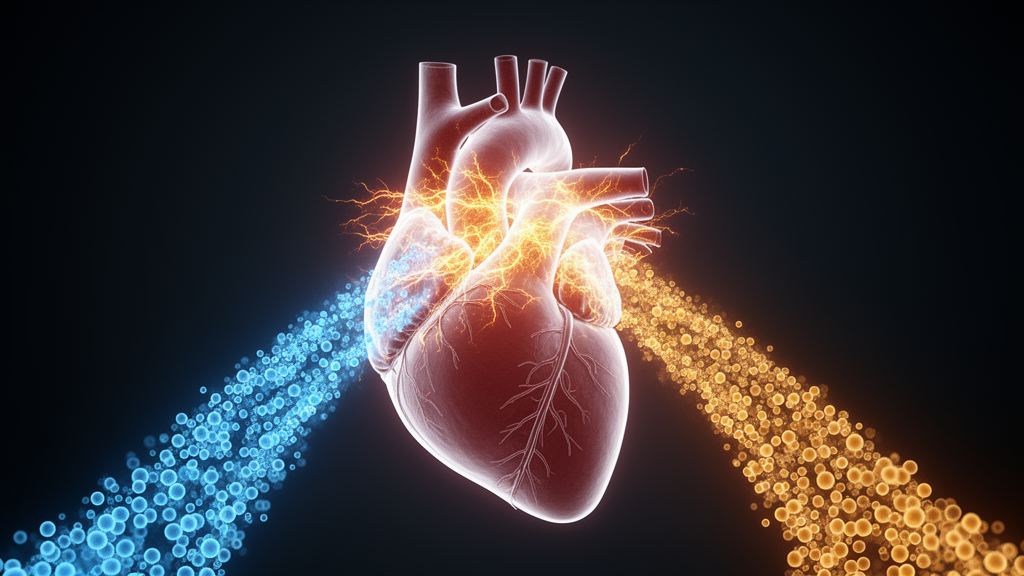
Atrial fibrillation strikes more often after allogeneic than autologous stem cell transplants

Atrial fibrillation strikes more often after allogeneic than autologous stem cell transplants

65
SHARES
587
VIEWS
Share on FacebookShare on Twitter
ADVERTISEMENT

Atrial fibrillation, the most common acute cardiovascular complication after hematopoietic cell transplantation, develops more often within the first 90 days in recipients of donor-derived (allogeneic) transplants than in patients receiving their own cells (autologous transplants), according to a large retrospective cohort study published in the journal Cardio-Oncology.

Among this group, atrial fibrillation occurred in 6.3 percent of allogeneic recipients compared with 4.3 percent of autologous recipients, a difference that was statistically significant (Gray’s test P < 0.001).

The study population was middle-aged to older adults. The median age was 54 years, with a range of 18 to 82, among allogeneic recipients, and 59 years, with a range of 18 to 78, among autologous recipients.

In allogeneic recipients, two factors were associated with increased risk of early-onset atrial fibrillation. Patients aged 50 years or older had more than twice the risk of younger patients, with an adjusted sub-distribution hazard ratio of 2.85 (P < 0.0001). A lower Karnofsky performance score, below 80 on the standard 100-point scale of functional status, was also associated with increased risk, with an adjusted hazard ratio of 1.69 (P = 0.03).

In autologous recipients, three factors were linked to elevated risk. Older age carried an adjusted hazard ratio of 2.49 (P = 0.006), a Karnofsky performance score below 80 carried an adjusted hazard ratio of 2.41 (P = 0.0001), and obesity was associated with an adjusted hazard ratio of 1.68 (P = 0.015).

The authors conclude that cumulative incidence of atrial fibrillation within 90 days after HCT is higher in allogeneic than in autologous transplant patients, and that recipients who are older, have a lower Karnofsky performance score, or have obesity face an increased risk of early-onset AF after transplantation.

The findings come from a retrospective cohort design, which can identify associations but cannot establish causation. The analysis was limited to patients without pre-existing arrhythmia, cardiac disease, or valvular heart disease, so the results apply to recipients who were free of these conditions before transplant. The published version is an early-release, peer-reviewed accepted manuscript that may be subject to further edits before the final version of record.

Subject of Research: Incidence and risk factors for early-onset atrial fibrillation after allogeneic and autologous hematopoietic stem cell transplantation

Article Title: Atrial fibrillation in allogeneic and autologous hematopoietic stem cell transplant recipients: incidence and clinical implications

Article References: Cai, L., Ma, H., Chiu, K., Cunningham, C., & Taplitz, R. (2026). Atrial fibrillation in allogeneic and autologous hematopoietic stem cell transplant recipients: incidence and clinical implications. Cardio-Oncology. https://doi.org/10.1186/s40959-026-00574-z

Image Credits: AI Generated

DOI: 10.1186/s40959-026-00574-z

Keywords: atrial fibrillation, hematopoietic cell transplant, allogeneic transplant, autologous transplant, cardio-oncology, retrospective cohort study, risk factors, Karnofsky performance score, obesity, transplant complications, Atrial, fibrillation

Cite Scienmag News

Drew Townsend. (October 28, 2026). Atrial fibrillation strikes more often after allogeneic than autologous stem cell transplants. Scienmag. https://scienmag.com/atrial-fibrillation-strikes-more-often-after-allogeneic-than-autologous-stem-cell-transplants/
Drew Townsend. "Atrial fibrillation strikes more often after allogeneic than autologous stem cell transplants." Scienmag, 28 October 2026, https://scienmag.com/atrial-fibrillation-strikes-more-often-after-allogeneic-than-autologous-stem-cell-transplants/. Accessed 29 October 2026.

Drew Townsend. "Atrial fibrillation strikes more often after allogeneic than autologous stem cell transplants." Scienmag. October 28, 2026. https://scienmag.com/atrial-fibrillation-strikes-more-often-after-allogeneic-than-autologous-stem-cell-transplants/

Tags: allogeneic transplantallogeneic vs autologous stem cell transplantsatrialAtrial Fibrillationatrial fibrillation after hematopoietic cell transplantationautologous transplantcardio-oncologycardiotoxicity in stem cell transplant patientscardiovascular complications in hematopoietic stem cell transplantationcomparison of cardiacearly-onset atrial fibrillation in transplant recipientsfibrillationfunctional status and age as predictors of cardiac riskhematopoietic cell transplantimpact of age and performance status on cardiac complicationsKarnofsky performance scoreobesityretrospective cohort studyretrospective cohort study on transplant-related atrial fibrillationrisk factorsrisk factors for post-transplant atrial fibrillationtransplant complications
Share26Tweet16
Previous Post

Mathematical model with memory effects targets banana bunchy top virus spread

Next Post

CT scans and simulations reveal how freeze–thaw cycles crack concrete from the inside

Related Posts

Metagenomics Tracks China’s Unculturable Pig Pathogen Across Global Strains
Biology

Metagenomics Tracks China’s Unculturable Pig Pathogen Across Global Strains

October 29, 2026
Sweat Sensors Move Closer to Needle-Free Glucose Monitoring for Children
Biotechnology

Sweat Sensors Move Closer to Needle-Free Glucose Monitoring for Children

October 29, 2026
Digital health helps rural African clinics, but only where health systems are ready
Medicine

Digital health helps rural African clinics, but only where health systems are ready

October 29, 2026
Insurance Type, Not Illness, Predicted Rehab Stay Length After Knee Surgery in Beijing
Medicine

Insurance Type, Not Illness, Predicted Rehab Stay Length After Knee Surgery in Beijing

October 29, 2026
Hybrid and Synthetic Vesicles Aim to Fix Extracellular Vesicle Therapy’s Biggest Flaws
Medicine

Hybrid and Synthetic Vesicles Aim to Fix Extracellular Vesicle Therapy’s Biggest Flaws

October 29, 2026
One in Three Dutch Workers Cuts Hours Before Retirement, Study Finds
Medicine

One in Three Dutch Workers Cuts Hours Before Retirement, Study Finds

October 29, 2026
Next Post
CT scans and simulations reveal how freeze–thaw cycles crack concrete from the inside

CT scans and simulations reveal how freeze–thaw cycles crack concrete from the inside

  • Mothers who receive childcare support from maternal grandparents show more optimized

    Mothers who receive childcare support from maternal grandparents show more parental warmth, finds NTU Singapore study

    27656 shares
    Share 11059 Tweet 6912
  • University of Seville Breaks 120-Year-Old Mystery, Revises a Key Einstein Concept

    1061 shares
    Share 424 Tweet 265
  • Bee body mass, pathogens and local climate influence heat tolerance

    682 shares
    Share 273 Tweet 171
  • Researchers record first-ever images and data of a shark experiencing a boat strike

    546 shares
    Share 218 Tweet 137
  • Groundbreaking Clinical Trial Reveals Lubiprostone Enhances Kidney Function

    531 shares
    Share 212 Tweet 133
Science

Embark on a thrilling journey of discovery with Scienmag.com—your ultimate source for cutting-edge breakthroughs. Immerse yourself in a world where curiosity knows no limits and tomorrow’s possibilities become today’s reality!

RECENT NEWS

  • Metagenomics Tracks China’s Unculturable Pig Pathogen Across Global Strains
  • Blockchain Shield Uses Smart Contracts to Block DDoS Attacks on Servers
  • Brewery Waste Biochar Traps E. coli in Sand Filters, Lab Study Shows
  • Research report: Femtosecond laser-induced relaxation dynamics in ferromagnetic films

Categories

  • Agriculture
  • Anthropology
  • Archaeology
  • Athmospheric
  • Biology
  • Biotechnology
  • Blog
  • Bussines
  • Cancer
  • Chemistry
  • Climate
  • Earth Science
  • Editorial Policy
  • Marine
  • Mathematics
  • Medicine
  • Pediatry
  • Policy
  • Psychology & Psychiatry
  • Science Education
  • Science News
  • Social Science
  • Space
  • Technology and Engineering

Subscribe to Blog via Email

Enter your email address to subscribe to this blog and receive notifications of new posts by email.

Join 5,151 other subscribers

© 2025 Scienmag - Science Magazine

Welcome Back!

Login to your account below

Forgotten Password?

Retrieve your password

Please enter your username or email address to reset your password.

Log In
No Result
View All Result
  • HOME
  • SCIENCE NEWS
  • CONTACT US

© 2025 Scienmag - Science Magazine

Discover more from Science

Subscribe now to keep reading and get access to the full archive.

Continue reading