


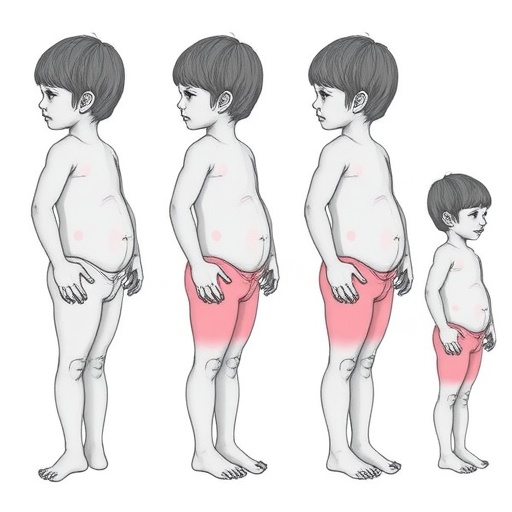
Atopic dermatitis is often described as a skin disease, but a new study suggests that its effects may be visible far beyond the itchy rashes and inflamed patches that define it. Research published in Pediatric Research examines whether different patterns, or “phenotypes,” of atopic dermatitis during childhood are linked to distinct long-term trajectories in body mass index. The work by Y. Kuniyoshi adds to growing evidence that chronic inflammatory conditions in early life can interact with growth, behavior, sleep, treatment, and metabolism in ways that unfold over many years.
The central idea is that atopic dermatitis is not a single, uniform condition. Some children develop symptoms briefly and then improve, while others experience recurring or persistent disease. The age at which eczema begins, the severity of flare-ups, and whether symptoms continue into later childhood can all differ substantially. By separating children into clinically meaningful phenotypes, researchers can move beyond the simple question of whether a child has atopic dermatitis and instead ask how the timing and persistence of the disease may relate to later development.
To investigate this relationship, the study follows body mass index, or BMI, across the life course rather than relying on a single measurement. BMI is calculated by dividing body weight in kilograms by height in meters squared, but in children it must be interpreted according to age and sex because bodies are constantly growing. Researchers therefore use age-standardized BMI values and longitudinal models to identify trajectories—patterns of change that may include stable growth, gradual increases, or acceleration at particular stages of childhood and adolescence.
This approach is important because a one-time BMI reading can conceal meaningful differences in development. Two children may have the same BMI at age eight, yet one may have followed a steady growth curve while the other has recently moved upward after years of lower values. Trajectory analysis can reveal these shifts and can help researchers determine whether particular atopic dermatitis phenotypes are associated with later changes in weight status. The study’s focus is therefore not simply obesity at a particular age, but the evolving relationship between skin disease and physical growth.
Several biological pathways could plausibly connect atopic dermatitis with BMI development, although an observational study cannot establish that eczema directly causes weight gain or weight loss. Atopic dermatitis involves dysfunction of the skin barrier and activation of immune pathways, including signaling molecules known as cytokines. Persistent inflammation may influence appetite, energy regulation, and other metabolic processes. At the same time, the relationship could operate in the opposite direction or be influenced by shared factors: adipose tissue can produce inflammatory mediators, and children with higher body fat may be more likely to experience certain inflammatory skin conditions.
Sleep is another possible link. Itching often intensifies at night, and children with active atopic dermatitis may wake frequently, sleep less, or experience fragmented rest. Poor sleep can affect hormones involved in hunger and satiety, alter daytime activity, and contribute to emotional distress. A child who is tired because of chronic itching may be less physically active, while disrupted sleep can also affect family routines and eating patterns. These behavioral and environmental changes could influence BMI trajectories even if the skin inflammation itself is not the direct cause of altered growth.
Treatment may add another layer of complexity. Topical corticosteroids are widely used to control atopic dermatitis and, when used correctly under medical guidance, are considered an important and effective therapy. However, families may vary in how consistently they apply medication, and severe disease may require additional treatments. The illness can also influence diet, activity, and daily routines. In some families, concerns about food-triggered flares lead to restrictive diets, while in others, attempts to comfort a child with chronic discomfort may affect eating patterns. Such factors make it essential to interpret associations carefully rather than treating them as evidence of a simple cause-and-effect chain.
The study’s phenotype-based design may help explain why previous research on atopic dermatitis and body weight has produced mixed findings. If all children with eczema are analyzed as one group, transient and persistent cases are combined, potentially diluting differences between them. A child whose symptoms resolve early may have a very different long-term profile from a child who experiences years of recurrent inflammation, severe itching, and disrupted sleep. By tracking these patterns separately, the research offers a more precise framework for identifying which children might need closer monitoring of growth, nutrition, sleep, and overall well-being.
The findings also carry a practical message for pediatric care. Monitoring a child with atopic dermatitis should involve more than examining the skin at each appointment. Clinicians may also need to ask about nighttime itching, sleep quality, physical activity, dietary restrictions, emotional stress, and changes in growth. At the same time, the study does not suggest that every child with eczema is destined to develop an unhealthy BMI. Growth naturally varies, and BMI is only a screening measure, not a direct assessment of body fat, fitness, or health. Any concern about a child’s weight should be evaluated in the context of the complete growth chart and broader medical history.
More research will be needed to determine whether improving atopic dermatitis changes long-term BMI trajectories or whether both conditions are partly driven by common biological and social influences. Future studies could combine repeated clinical assessments with measurements of inflammation, sleep, physical activity, diet, medication exposure, and the skin microbiome. Such work may eventually distinguish the effects of disease severity from the effects of family environment or treatment. For now, Kuniyoshi’s analysis underscores a broader lesson in pediatric medicine: early-life conditions can leave patterns that emerge gradually, and understanding those patterns may lead to more personalized care for children whose skin, sleep, growth, and metabolism are closely connected.
Cite Scienmag News
Daisy Hatcher. (August 21, 2026). Atopic Dermatitis Phenotypes Linked to Long-Term Body Mass Index Trajectories. Scienmag. https://scienmag.com/atopic-dermatitis-phenotypes-linked-to-long-term-body-mass-index-trajectories/
Daisy Hatcher. "Atopic Dermatitis Phenotypes Linked to Long-Term Body Mass Index Trajectories." Scienmag, 21 August 2026, https://scienmag.com/atopic-dermatitis-phenotypes-linked-to-long-term-body-mass-index-trajectories/. Accessed 3 September 2026.
Daisy Hatcher. "Atopic Dermatitis Phenotypes Linked to Long-Term Body Mass Index Trajectories." Scienmag. August 21, 2026. https://scienmag.com/atopic-dermatitis-phenotypes-linked-to-long-term-body-mass-index-trajectories/


