


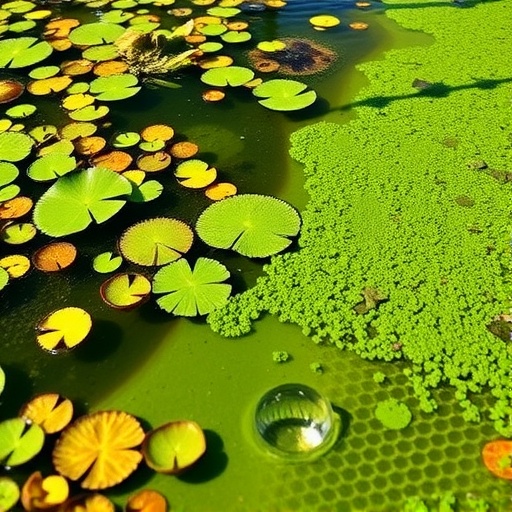
A recent study conducted by researchers Swanepoel and Janse van Vuuren has shed light on a pressing environmental issue in South Africa: water quality in the Vaal River barrage. With the increasing threats of pollution and climate change, understanding and tackling the various factors affecting water quality is paramount. The research employs an innovative approach by applying an algal problem index to gauge the health of aquatic ecosystems, showcasing a significant advancement in environmental monitoring techniques.
Water pollution poses one of the most significant threats to aquatic life and human health globally. Various pollutants, including heavy metals, organic compounds, and excess nutrients, can result in harmful algal blooms that disrupt ecosystem balance and degrade water quality. The Vaal River barrage, which is crucial for providing water to a large portion of South Africa, has its waters subjected to various anthropogenic pressures. Recognizing this, the researchers aimed to develop a practical index to assess the impact of these disturbances.
The algal problem index formulated in this study provides a comprehensive method for evaluating water conditions based on prevailing algal species and their relative abundance. This index is particularly important because different algal species signify varying levels of water quality and can indicate nutrient loading, pollution levels, and overall ecosystem health. Swanepoel and Janse van Vuuren disaggregated algal species into harmful and beneficial categories, allowing for a nuanced understanding of the limitations and capabilities of water bodies.
Field studies played an essential role in the assessment, where samples were collected from various locations along the Vaal River barrage. By analyzing these samples, the researchers determined the prevalent algal species and compared the data to established water quality criteria. This comparison allowed them to validate the algal problem index, thereby ensuring its efficacy as a reliable assessment tool. The detailed methodology employed included advanced computational techniques to analyze the collected data, which resulted in significant insights into the river’s ecological status.
The findings from this research have broad implications not just for the Vaal River but also for similar water bodies in regions facing water quality degradation. The algal problem index can serve as a model for other ecosystems striving to monitor and improve water quality. Its flexibility and adaptability make it a potent tool for policymakers and environmental managers focusing on sustainable water resource management.
As the study reflects on the changing patterns of water quality, it highlights the need for ongoing monitoring and timely amelioration efforts. Algal blooms can lead to several detrimental effects, including the release of toxins that harm both aquatic organisms and humans who rely on these water sources for daily use. The researchers made a strong case against complacency in environmental oversight, stressing that regular assessments are crucial to preemptively deal with rising algal populations and associated risks.
Furthermore, the study discusses the socio-economic impacts of water quality issues. For communities that depend on the Vaal River not only for drinking water but also for irrigation and recreational activities, algal blooms can spell disaster. The researchers emphasize that public awareness and education on the importance of maintaining water quality can empower communities to take an active role in conservation efforts. Invoking community participation in environmental monitoring could create a more engaged and informed populace, contributing to better water management strategies.
Another noteworthy aspect of the research is its alignment with broader scientific and environmental goals. The findings advocate for integrated watershed management practices that consider both the ecological and social dimensions of water use. With water scarcity looming as a major challenge globally, the focus on sustainable practices is vital not only for human survival but also for preserving biodiversity.
The application of the algal problem index underscores the necessity for interdisciplinary collaboration as well. Scientists from various fields, including ecology, hydrology, and social sciences, can work together to tackle complex water quality issues. This integrative approach can help in devising novel strategies to mitigate pollutants and enhance the resilience of aquatic systems against future challenges.
Swanepoel and Janse van Vuuren’s research contributes significantly to the existing body of knowledge, providing a critical framework for evaluating and responding to the nuances of water quality. As local and global pressures continue to mount, the call for innovative solutions becomes ever more urgent. The implications of their work could pave the way for further studies that embrace technology and community engagement to foster a more holistic understanding of aquatic ecosystems.
In conclusion, the application of an algal problem index to the Vaal River barrage is an exemplary case of actionable science that directly addresses a vital environmental issue. This research recognizes the complex interplay between ecological health and human well-being, thereby advocating for immediate attention and concerted efforts toward improving water quality. By enhancing our understanding of algal dynamics, we can better protect vital water resources and ensure their sustainability for future generations.
Swanepoel, A., Janse van Vuuren, S. Application of an algal problem index in evaluating water quality in the Vaal River barrage, South Africa.
Environ Monit Assess 198, 24 (2026). https://doi.org/10.1007/s10661-025-14880-z
Cite Scienmag News
Violet Maxwell. (December 14, 2025). Assessing Water Quality with Algal Problem Index. Scienmag. https://scienmag.com/assessing-water-quality-with-algal-problem-index/
Violet Maxwell. "Assessing Water Quality with Algal Problem Index." Scienmag, 14 December 2025, https://scienmag.com/assessing-water-quality-with-algal-problem-index/. Accessed 3 September 2026.
Violet Maxwell. "Assessing Water Quality with Algal Problem Index." Scienmag. December 14, 2025. https://scienmag.com/assessing-water-quality-with-algal-problem-index/


