


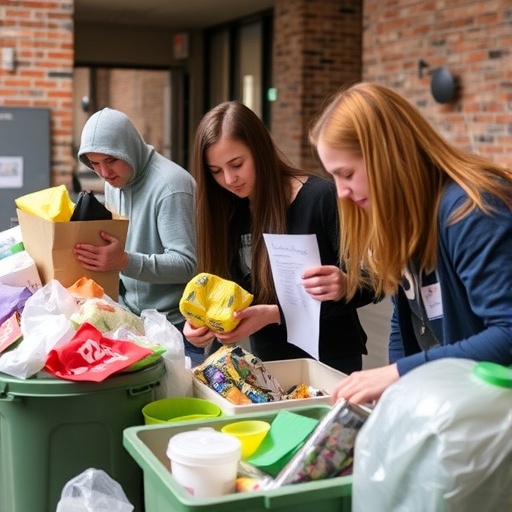
In an era marked by rapid environmental changes and the escalating crisis of waste management, the role of educational institutions in fostering sustainable practices has gained unprecedented significance. A recent study conducted by Uzorka and Olaniyan, published in the journal Discover Sustainability, sheds light on the transformative impact of student-led waste reduction initiatives in university environments. This research not only underscores the potential for student engagement in sustainability efforts but also reveals the nuances of implementing effective waste management strategies on campus.
The study explores how student-led initiatives can serve as catalysts for cultural shifts within university settings, promoting a more profound understanding of waste reduction among peers. In many cases, students are not only the recipients of sustainability education but also active participants in its dissemination, driving home the message that individual actions can contribute to collective impacts. By positioning students as agents of change, the research highlights the importance of student ownership in fostering a culture of sustainability.
Through a combination of surveys, interviews, and case studies, Uzorka and Olaniyan meticulously analyze various programs across different universities that have engaged students in waste reduction efforts. These initiatives vary widely, from composting campaigns to recycling drives, each tailored to the unique context and culture of the respective institution. A critical takeaway from the study is that no single approach fits all; the success of these initiatives often hinges on their ability to resonate with the student body.
One of the more compelling findings reveals that students are often more receptive to initiatives that they have a hand in shaping. Involving students in the design and implementation phases of waste reduction projects yields a higher level of commitment and participation. This highlights the essential factor of ownership that students feel towards these initiatives, which directly correlates with their effectiveness in reducing waste on campus.
The study further delves into the challenges faced by these student-led initiatives. Institutional bureaucracies, funding limitations, and a lack of institutional support can stifle student efforts, regardless of their enthusiasm and commitment to change. This is where the role of university administrations becomes critical. By providing the necessary resources and support, universities can enhance the impact of student initiatives, enabling a more extensive reach and effectiveness.
Interestingly, the research also brings to light the role of technology in modern waste reduction initiatives. Digital platforms and social media can amplify outreach efforts, allowing student campaigns to engage a wider audience and foster community involvement. By harnessing these tools, students can create networks that not only enhance their initiatives but also promote a sustainable culture on campus.
Another noteworthy aspect of the study focuses on the educational outcomes associated with participating in these initiatives. Students involved in waste reduction activities report heightened awareness of sustainability issues and greater knowledge about waste management techniques. Such experiences not only augment their academic pursuits but also equip them with practical skills that are invaluable in their future careers. This multifaceted approach to education emphasizes experiential learning as a significant component of a comprehensive educational experience.
In terms of measuring effectiveness, the study presents various metrics that can be utilized to evaluate the success of these initiatives. Analyzing the volume of waste diverted from landfills, engagement levels among students, and feedback from the campus community provides a tangible framework for assessing impact. Conducting these evaluations regularly can inform future strategies, ensuring that initiatives remain relevant and effective over time.
Importantly, the research underscores a growing trend among universities globally to adopt more sustainable practices. As institutions strive to meet environmental sustainability goals, the integration of student-led initiatives into their broader sustainability frameworks becomes increasingly vital. This collaboration not only enhances the effectiveness of waste reduction efforts but also nurtures a generation of environmentally conscious citizens.
Furthermore, the study invokes a broader conversation about corporate responsibility and the role of universities as stewards of the environment. By actively engaging in waste reduction, universities not only contribute to local sustainability efforts but also set an example for other organizations. This ripple effect can foster a culture of sustainability that extends beyond campus boundaries, influencing local businesses and communities.
As we continue to confront the challenges posed by climate change and environmental degradation, the findings from Uzorka and Olaniyan’s research serve as a hopeful reminder of the potential that resides within student bodies. The agency of young people in addressing these pressing issues cannot be underestimated. The proactive approaches taken by students can lead to innovative solutions that have the power to reshape societal norms regarding waste consumption and management.
In conclusion, the findings from this study are a clarion call for universities to invest in student-driven waste reduction initiatives. By prioritizing sustainability education and empowering students to lead the charge, educational institutions can foster a more sustainable future. The commitment to waste reduction on campuses may very well serve as a template for broader societal change, demonstrating the profound impact that engaged and informed citizens can have on the environment. It is through these grassroots movements that a sustainable culture can flourish, ultimately leading to a brighter, more sustainable world.
Uzorka, A., Olaniyan, A.O. Evaluating the effectiveness of student-driven waste reduction initiatives in university settings.
Discov Sustain (2025). https://doi.org/10.1007/s43621-025-02496-9
Cite Scienmag News
Violet Maxwell. (January 2, 2026). Assessing Student-Led Initiatives for Waste Reduction in Universities. Scienmag. https://scienmag.com/assessing-student-led-initiatives-for-waste-reduction-in-universities/
Violet Maxwell. "Assessing Student-Led Initiatives for Waste Reduction in Universities." Scienmag, 2 January 2026, https://scienmag.com/assessing-student-led-initiatives-for-waste-reduction-in-universities/. Accessed 3 September 2026.
Violet Maxwell. "Assessing Student-Led Initiatives for Waste Reduction in Universities." Scienmag. January 2, 2026. https://scienmag.com/assessing-student-led-initiatives-for-waste-reduction-in-universities/


