


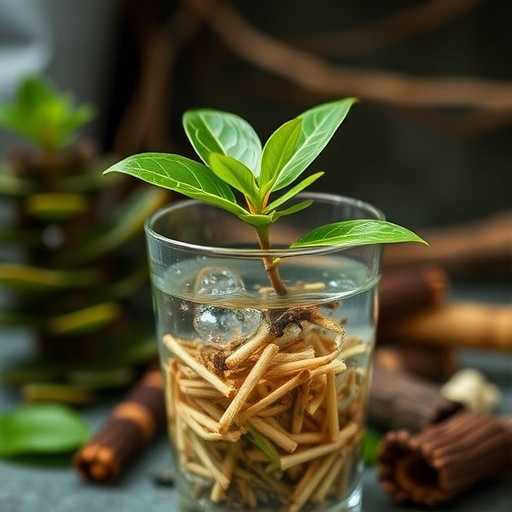
A groundbreaking study conducted at the Institute of Science and Technology of São Paulo State University (ICT-UNESP) in São José dos Campos, Brazil, has revealed that seeds of the Moringa oleifera tree, commonly known as moringa or white acacia, hold significant promise for the removal of microplastics from water. This discovery opens a new frontier in sustainable water treatment, leveraging nature’s own mechanisms to combat one of the most insidious environmental pollutants of our time. The research was recently published in ACS Omega, a respected journal by the American Chemical Society, underscoring the scientific rigor behind these findings.
Moringa oleifera, native to India but now thriving in many tropical regions worldwide, has long been valued for its nutritional and medicinal properties. Traditionally, its seeds and leaves serve as food, but scientists have progressively uncovered their utility beyond human consumption. For years, researchers have experimented with moringa seeds for traditional water purification, but this study takes an important step forward by specifically assessing their capacity to tackle microplastics — tiny plastic particles that have infiltrated aquatic ecosystems and pose significant threats to both environmental and human health.
The critical finding of the study is that saline extracts from moringa seeds induce a coagulation effect in water that is comparable to aluminum sulfate, a conventional chemical used in water treatment facilities. Coagulation is a vital preliminary process in water purification, which works by neutralizing charges on microplastic particles. These particles, ordinarily repelling each other and the filtration medium due to their negative surface charge, cluster together into larger aggregates or flocs that can be physically filtered out. Remarkably, the moringa seed extract demonstrated even superior efficacy in more alkaline water conditions, showing potential advantages over chemical coagulants.
Gabrielle Batista, the lead author and a postgraduate student in Civil and Environmental Engineering at FEB-UNESP, highlighted the significance of this development, noting that moringa seed extract performs the essential coagulation role while offering a more environmentally friendly alternative to aluminum sulfate. The latter, despite its widespread use, has associated drawbacks, such as increasing dissolved organic matter in treated water, which complicates further treatment and raises costs. Moringa oleifera’s natural extract, on the other hand, can potentially reduce the dependency on such chemicals, especially in rural or small community water systems where cost-effectiveness and sustainability are paramount.
The research team, led by Professor Adriano Gonçalves dos Reis, is actively advancing this work through a FAPESP-funded project titled “Direct and In-Line Filtration for the Removal of Microplastics from Drinking Water.” This project explores scalable, in-line filtration processes that integrate coagulation directly before filtration, optimizing the removal of microplastics from drinking water supplies. The approach is particularly suited for clear, low-turbidity water sources, where extensive pretreatment is unnecessary, making it a practical option for various applications.
The methodology involves a process where a coagulant, either moringa seed extract or aluminum sulfate, is introduced into water contaminated with polyvinyl chloride (PVC) microplastics. The particles undergo coagulation, forming flocs large enough to be trapped when water passes through sand filters. The research utilized Jar Tests, a laboratory technique replicating water treatment plant conditions on a small scale, to evaluate and compare the performances of moringa extract and aluminum sulfate. Both materials produced flocs of similar size and microplastic removal efficiencies, confirming moringa’s viable role as a natural coagulant.
Electron microscopy played a pivotal role in assessing outcomes. Scanning Electron Microscopy (SEM) provided detailed images and enabled precise counting of microplastic particles before and after treatment. This high-resolution imaging confirmed substantial microplastic reduction post-coagulation and filtration. Moreover, high-speed cameras and laser beam measurements were employed to analyze the dynamic behavior and size distribution of the flocs formed during treatment, with findings indicating that moringa seed extract effectively facilitates particle aggregation on par with traditional coagulants.
Importantly, the research team went beyond laboratory contamination models and tested the moringa seed extract on natural water samples sourced from the Paraíba do Sul River, which provides drinking water to São José dos Campos. Encouragingly, preliminary results indicate that moringa’s coagulating properties remain efficacious amidst the complexities of natural water, containing diverse types and amounts of particulate and dissolved matter. This bodes well for real-world applicability and suggests that moringa seed extract could be integrated into existing water treatment schemes.
Addressing sustainability concerns, the study underscores the increasing regulatory and public health scrutiny surrounding aluminum and iron-based coagulants. These traditional compounds are non-biodegradable, leave toxic residues, and could elevate risks related to chronic diseases. Moringa oleifera, being a biodegradable and natural product, offers a safer and greener alternative for coagulation. These environmental and health advantages position moringa not only as a practical reagent but also as a strategic component in the global move toward eco-friendly water purification technologies.
Another noteworthy aspect of the study is the potential accessibility of moringa seed extract. Unlike chemical coagulants, which require industrial-scale production and distribution, moringa seeds can be processed locally, even homemade in certain situations. This enhances the feasibility of deploying this technology in developing regions and isolated communities, where access to commercial water treatment chemicals is limited. The straightforward preparation of moringa seed extract using saline solutions enables decentralized water purification initiatives without compromising effectiveness.
The implications of this research extend beyond mere microplastic removal. With the ubiquity of microplastics and the growing awareness of their adverse impacts—ranging from ingestion by aquatic fauna to potential bioaccumulation in humans—water treatment innovations are urgently needed. Moringa-based coagulation aligns with broader trends in sustainable environmental engineering, where nature-inspired solutions provide multifunctional benefits, including biodegradability, low toxicity, and minimal environmental footprint.
While moringa seed extract shows exceptional promise, the team notes that further studies are required to fine-tune operational parameters, evaluate long-term effects, and verify large-scale feasibility. Challenges remain in quantifying scalability, understanding interactions with different water chemistries, and ensuring consistent coagulant quality from natural seed sources. Nonetheless, the convergence of experimental success, environmental compatibility, and socio-economic benefits propels moringa oleifera as a frontrunner in next-generation water treatment technology.
In conclusion, the innovative application of Moringa oleifera seeds to coagulate and filter microplastics from drinking water presents an environmentally sustainable and effective alternative to conventional chemical coagulants. This advancement supports global efforts to address microplastic contamination using naturally derived materials and has the potential to revolutionize water treatment practices, particularly within communities where access to traditional chemicals is constrained. As research continues, moringa’s integration into water purification systems may emerge as a vital tool in safeguarding human health and aquatic ecosystems from plastic pollution.
News Publication Date: 19-Jan-2026.
Web References:
References:
Batista, G., Gonçalves dos Reis, A., Godoy, L. G. R., et al. Removal of Microplastics from Drinking Water Using Moringa oleifera Seed Extract. ACS Omega, 2026.
Keywords
Microplastics, Water treatment, Moringa oleifera, Coagulation, Natural coagulants, Sustainable water purification, Aluminum sulfate alternative, Environmental engineering, Drinking water filtration, Emerging pollutants, Ecological water management, Polymer contamination.
Cite Scienmag News
Denise Maddox. (April 16, 2026). Asian Plant Common in Brazil Demonstrates Promise for Microplastic Removal from Water. Scienmag. https://scienmag.com/asian-plant-common-in-brazil-demonstrates-promise-for-microplastic-removal-from-water/
Denise Maddox. "Asian Plant Common in Brazil Demonstrates Promise for Microplastic Removal from Water." Scienmag, 16 April 2026, https://scienmag.com/asian-plant-common-in-brazil-demonstrates-promise-for-microplastic-removal-from-water/. Accessed 3 September 2026.
Denise Maddox. "Asian Plant Common in Brazil Demonstrates Promise for Microplastic Removal from Water." Scienmag. April 16, 2026. https://scienmag.com/asian-plant-common-in-brazil-demonstrates-promise-for-microplastic-removal-from-water/


