


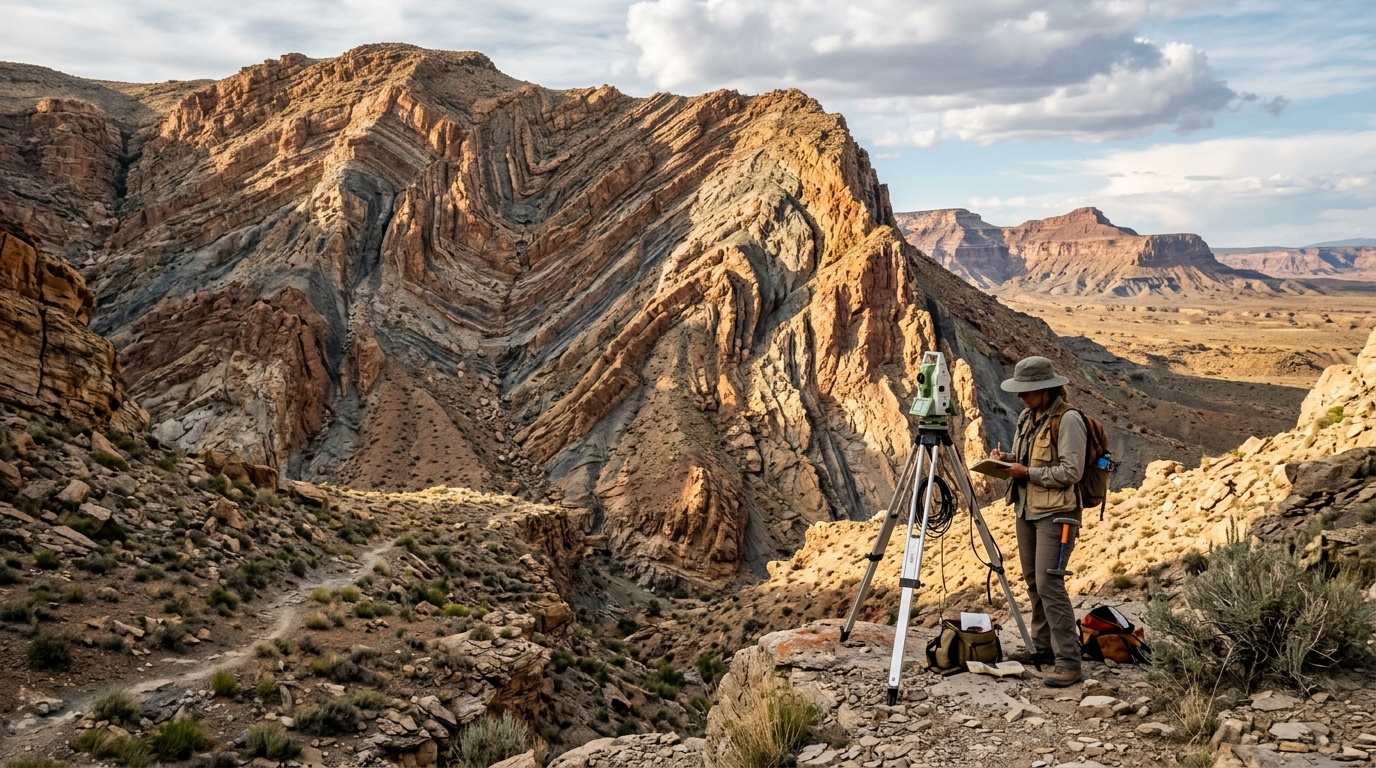
A fundamental transformation is underway across the geological sciences as artificial intelligence and big data analytics reshape how researchers interpret complex terrestrial phenomena. In an editorial published in Frontiers in Earth Science under the Geochemistry section, researchers Yongzhang Zhou of Sun Yat-sen University, Xiaogang Ma of the University of Idaho, Renguang Zuo of the China University of Geosciences, and Hui Yang of the China University of Mining and Technology present a comprehensive assessment of this technological evolution. The editorial accompanies a dedicated special topic issue designed to showcase recent advances in the development and practical application of intelligent computational tools across diverse geoscientific disciplines. By deploying intelligent algorithms capable of extracting concealed patterns from massive Earth datasets, investigators are achieving higher precision and improved decision-making across scientific discovery pipelines. These computational breakthroughs now inform critical domains including the study of Earth’s evolution, subsurface geological modeling, environmental monitoring, hazard mitigation, and strategic resource exploration worldwide.
The historical development of artificial intelligence within geoscience reflects a distinct paradigm transition rather than a simple series of incremental software adjustments. Early computational efforts in the field relied predominantly on static expert systems that codified human rules, which subsequently transitioned into empirical, data-driven machine learning models capable of identifying statistical patterns. Today, the discipline has progressed toward sophisticated physics-informed and knowledge-data dual-driven methodologies that seamlessly integrate theoretical domain knowledge with high-capacity algorithmic architectures. This ongoing progression fundamentally redefines how geoscientists and computational engineers conduct their daily investigation, analysis, and interpretation of multidisciplinary datasets. The editorial emphasizes that integrating big data analytics with cutting-edge machine learning algorithms redefines the operational standards of modern geological workflows. By highlighting emerging methodologies across data science, machine learning, and generative artificial intelligence, the collection addresses long-standing challenges associated with harmonizing, synthesizing, and interpreting highly heterogeneous geoscientific information gathered across varied observation platforms.
This special issue also marks a significant institutional milestone, commemorating the tenth anniversary of the Committee on Artificial Intelligence and Big Data for Geosciences. Established in 2016 under the auspices of the Chinese Society for Mineralogy, Petrology and Geochemistry, the committee was inaugurated under the leadership of Professor Zhou Yongzhang, an awardee of the prestigious IAMG Felix Chayes Prize. This establishment represented the earliest organized effort in China to systematically promote artificial intelligence and big data research within mineralogy, petrology, and geochemistry, positioning it among the pioneering professional bodies worldwide. The committee subsequently consolidated pedagogical foundations by publishing the authoritative textbook Big Data Mining and Machine Learning for Earth Science in 2018. The accelerating expansion and sustained momentum of this academic discipline were prominently demonstrated in April 2026, when the tenth China Conference on Artificial Intelligence and Big Data for Geosciences convened in Hefei, attracting more than 1,200 participating researchers and industry specialists.
Comprising eighteen original research contributions, the special collection concentrates on three transformative operational areas: the intelligent prospecting of solid metal deposits, the intelligent evaluation of sedimentary reservoirs, and the intelligent prediction of complex Earth processes and geological systems. The analytical approaches detailed across these contributions span traditional machine learning techniques, advanced deep learning networks, structured knowledge graphs, and large language models, illustrating both the breadth and technical depth of contemporary intelligent geoscience. In the realm of solid metal exploration, intelligent prospecting frameworks are driving major operational efficiencies by combining artificial intelligence, machine learning, and advanced remote sensing technologies. These unified computational systems synthesize extensive geological, geophysical, and geochemical datasets to detect concealed mineralization signatures with exceptional analytical precision. Predictive algorithms systematically refine drill-target selection, thereby reducing overall exploration expenditures, shortening project timelines, and substantially mitigating the surface environmental footprints historically associated with invasive exploratory drilling operations.
Several featured studies provide concrete demonstrations of how advanced machine learning enhances mineral discovery in structurally complex mining regions. Wang and colleagues addressed the interpretability limitations of convolutional neural networks by integrating SHAP values and partial dependence plots to investigate iron ore distribution in northwestern China. Focusing on the Yemaquan iron ore concentration area within Qinghai Province, their explainable model identified apparent resistivity as the primary controlling variable governing local iron ore mapping, successfully delineating multiple high-potential prospective targets. In parallel, Zhao and collaborators demonstrated the utility of large language models for accelerating knowledge engineering in critical metal exploration. Their study established a domain-guided framework to rapidly construct knowledge graphs for tungsten deposits, applying the methodology directly to the Dajishan Tungsten Mine in China. The resulting system demonstrated that coupling large language models with specialized geological knowledge markedly accelerates the synthesis of unstructured geological literature while unlocking deeper contextual reasoning for prospecting indicator extraction.
Complementary investigations in the collection address spatial uncertainty and multi-physics coupling to delineate concealed mineral resources. Zeng and co-authors developed a co-simulation framework coupling Plurigaussian simulation with turning bands algorithms to jointly model ore grade and lithology in gold deposits. By explicitly capturing both auto-correlations and cross-correlations among geological variables, their stochastic three-dimensional models accurately reproduce orebody geometry, lithological controls, and internal spatial heterogeneity under conditions of geological uncertainty. Addressing deep mineral exploration along the Sanshandao-Haiyu gold belt, Shan and colleagues coupled FLAC3D geomechanical numerical simulations with machine learning architectures. Through a custom-developed programmatic interface, their workflow integrated chemical reaction kinetics with strain calculations to compute mineralization rates, subsequently combining fault morphology, volumetric strain, and mineralization rates across four predictive comparative models that delineated two high-priority prospective targets. Furthermore, Gao and co-authors introduced a Content-Position Attention mechanism within knowledge graphs, achieving high entity extraction accuracy to support cross-regional resource management.
The second thematic focus of the special issue centers on the intelligent evaluation of sedimentary reservoirs, which is transforming hydrocarbon exploration and subsurface management. Contemporary reservoir evaluation methodologies synthesize multi-scale datasets, including wireline well logs, high-resolution core photographs, seismic attribute volumes, and depositional analogs, to predict critical petrophysical parameters such as porosity and permeability. The research papers in this domain highlight how unsupervised deep learning architectures, hybrid physical-mathematical inversion schemes, semantic-guided reservoir simulations, and experimental data augmentation substantially improve predictive precision. These integrated computational workflows provide rapid, automated, and highly reproducible analytical pipelines that minimize human subjective bias and alleviate burdensome computational overhead. By delivering robust characterization frameworks, these intelligent systems enable dynamic reservoir management and enhance exploration efficacy even in complex, data-scarce geological settings where conventional interpretive approaches frequently struggle to constrain spatial variability and petrophysical uncertainties.
The third primary domain focuses on the intelligent prediction of dynamic Earth processes and natural geological systems, where researchers integrate spaceborne remote sensing, surface geophysical monitoring, and in-situ sensor streams. When ingested by convolutional and recurrent neural networks, these vast spatiotemporal datasets enable increasingly reliable forecasting of hazardous phenomena such as earthquakes, volcanic eruptions, landslides, and broad surface deformations. To advance beyond purely empirical statistical correlations, hybrid methodologies directly embed physical conservation laws into deep learning frameworks, while ensemble modeling and Bayesian inference provide rigorous uncertainty quantification for operational risk assessments. Over longer geological timescales, generative models and digital twin simulations reconstruct paleoenvironments and simulate future hydrological, erosional, and sediment transport responses under climate forcing. Contributions such as the investigation by Li and colleagues illustrate how foundation models, bidirectional recurrent networks, and physics-informed algorithms yield actionable forecasts across diverse Earth science challenges, spanning groundwater dynamics, atmospheric carbon dioxide monitoring, rock mechanics, and geotechnical stability.
Despite these transformative achievements, the editorial cautions that significant technical bottlenecks continue to challenge the widespread adoption of artificial intelligence throughout the geosciences. Data heterogeneity and data scarcity represent a primary obstacle, as geoscientific records originate from disparately formatted seismic surveys, well logs, satellite rasters, and laboratory assays of varying quality and resolution. Crucial prospective regions frequently lack sufficient verified training labels, creating severe risks of algorithmic overfitting when training deep neural networks. Furthermore, the persistent black-box nature of many complex architectures creates an interpretability barrier, making it difficult for practicing geologists to validate machine predictions against established physical laws before committing capital to high-stakes drilling campaigns or public hazard warnings. Additionally, spatial and temporal generalization remains an unresolved challenge, as models trained on specific geological basins frequently fail when transferred to different tectonic settings, lithological assemblages, or fluid regimes, underscoring ongoing limitations in transfer learning and domain adaptation.
Looking toward the future, the editorial authors outline four vital research frontiers necessary to establish a mature, reliable, and equitable foundation for intelligent geoscience. First, the field must advance physics-informed and hybrid modeling paradigms that embed fundamental conservation laws of mass, momentum, and energy directly into neural network architectures, ensuring physically consistent predictions and enhanced extrapolation. Second, researchers must prioritize the construction of multi-modal Earth system foundation models pre-trained on diverse imagery, time series, and scientific text to serve as unified backbones for downstream analytical tasks. Third, integrating artificial intelligence with continuous sensor telemetry and high-performance computing will facilitate real-time digital twins of subsurface reservoirs, volcanic systems, and dynamic coastal environments for adaptive management and hazard intervention. Finally, fostering human-artificial intelligence collaboration through intuitive visual analytics, natural language query interfaces, open-source software libraries, and democratized cloud platforms will ensure that researchers globally can transparently query, evaluate, and deploy intelligent geoscientific technologies.
Subject of Research: Artificial intelligence and big data mining applications in geoscience
Article Title: Editorial: Big data mining and artificial intelligence in earth science
Article References: Zhou, Y., Ma, X. M., Zuo, R., & Yang, H. (2026). Editorial: Big data mining and artificial intelligence in earth science. Frontiers in Earth Science, 14, Article 1990976. https://doi.org/10.3389/feart.2026.1990976
Image Credits: AI Generated
DOI: 10.3389/feart.2026.1990976
Keywords: Geoscience, Artificial Intelligence, Big Data Mining, Mineral Exploration, Machine Learning, Reservoir Evaluation, Geological Modeling, Knowledge Graphs, Editorial, data, mining, artificial
Cite Scienmag News
Blake Davidson. (November 9, 2026). Artificial Intelligence and Big Data Reshape Modern Geoscience Research and Exploration. Scienmag. https://scienmag.com/artificial-intelligence-and-big-data-reshape-modern-geoscience-research-and-exploration/
Blake Davidson. "Artificial Intelligence and Big Data Reshape Modern Geoscience Research and Exploration." Scienmag, 9 November 2026, https://scienmag.com/artificial-intelligence-and-big-data-reshape-modern-geoscience-research-and-exploration/. Accessed 22 November 2026.
Blake Davidson. "Artificial Intelligence and Big Data Reshape Modern Geoscience Research and Exploration." Scienmag. November 9, 2026. https://scienmag.com/artificial-intelligence-and-big-data-reshape-modern-geoscience-research-and-exploration/




