


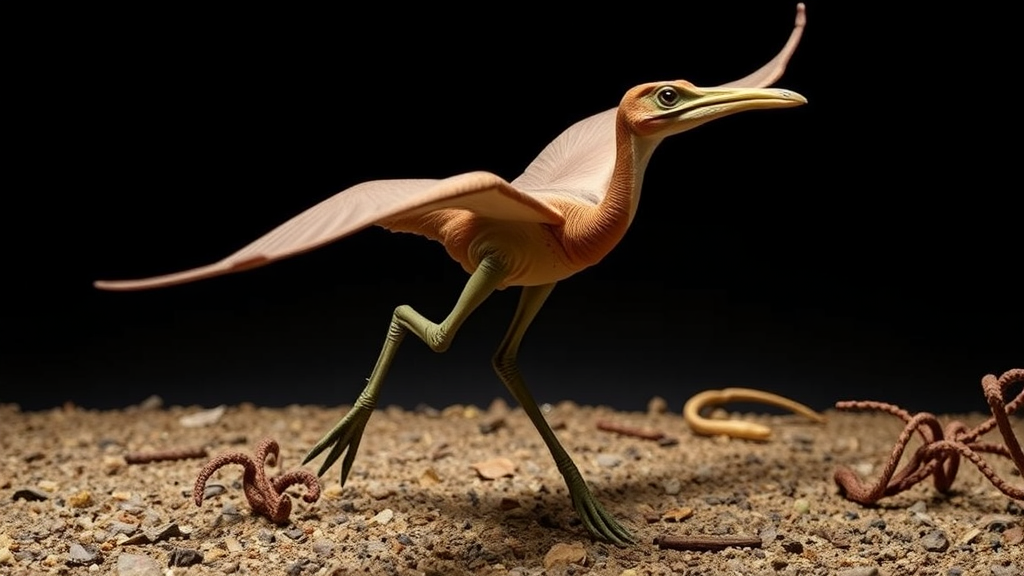
The most famous fossil in the world is finally telling scientists how it actually lived. In a sweeping new review published in Discover Ecology, paleontologists Jingmai K. O’Connor and Alexander D. Clark of the Field Museum of Natural History have assembled more than a century and a half of evidence about Archaeopteryx, the oldest known bird, and arrived at a portrait of an animal that was neither a clumsy glider nor a fully modern flyer, but something in between: a generalist bird that foraged on the ground, climbed with grasping hands, perched only incipiently, and flew in short, energy-limited bursts across the semi-arid islands of Late Jurassic Germany.
Archaeopteryx, preserved in the exquisite 150-million-year-old Solnhofen limestones of southern Germany, remains the most phylogenetically basal bird relevant to understanding the evolutionary leap from terrestrial dinosaur to powered flyer. Although the slightly younger Chinese bird Baminornis has narrowed the gap, Archaeopteryx still brackets the critical transition better than any other taxon. The authors argue that interpreting its anatomy requires separating the signal of its environment from the signal of its ancestry, especially when compared with the non-volant avialan Anchiornis, which lived in the hot, humid forests of the Yanliao Biota rather than the bushy, conifer-dominated, seasonally wet Solnhofen archipelago.
The case for flight rests on a suite of features that distinguish Archaeopteryx sharply from its closest non-flying relatives. Its feathered wing surfaces are proportionately larger than in Anchiornis, Zhenyuanlong, or Caudipteryx, and its primary feathers show vane asymmetry within the range of living flying birds. Crucially, newly described specimens, especially the best-preserved and painstakingly prepared Chicago specimen FMNH PA 830, preserve large tracts of tertial feathers that close the gap between the wing and the body created by the elongated humerus, a gap that would have disrupted lift in non-avian pennaraptorans. Bone density and humeral cross-sectional geometry also fall within the range of extant volant birds, most closely resembling those that use short-distance flapping flight.
Yet the flight was unmistakably limited. The shoulder joint, with its laterally oriented glenoid on a fused, axe-shaped scapulocoracoid, restricted the upward sweep of the wing, capping the power of the downstroke. No specimen preserves an ossified sternum, the anchor of the main flight muscles in modern birds, and the long, shallow deltopectoral crest of the humerus suggests low-frequency wingbeats akin to flap-gliding. The authors reconstruct a flight stroke powered differently than in living birds, possibly involving the deltoid complex for the upstroke and a pectoralis attaching to a coracoclavicular membrane or short cartilaginous sternum. As a result, Archaeopteryx most likely could not launch from a standstill; it probably needed a running start, an elevated perch, or the reliable coastal headwinds of its island habitat, a trick many modern seabirds still exploit for bounding flight.
The hindlimbs tell an equally nuanced story. The leg proportions match terrestrial rather than cursorial locomotion, similar to galliform birds that run only when threatened, while preserved foot pads and scales indicate soft tissues predominantly adapted for walking. But the first toe, the hallux, was reversed, absent in closely related non-avian dinosaurs, giving the foot an incipient grasping ability suited to gripping branches and rocks. Analysis of pedal claw curvature remains contentious, with different quantification methods yielding terrestriality, arboreality, or both, and the authors suggest the claws may simply have served multiple roles. Digit II, notably, lacks the hyperextension features of dromaeosaurids, removing another supposed link to raptorial behavior.
The hands, however, were fully equipped for climbing. Curved, laterally compressed manual claws with well-developed flexor tubercles, originally inherited from grasping predatory ancestors, were likely exapted for scansorial locomotion. Soft tissue traces in the Chicago specimen reveal that the major and minor digits were separate rather than ligamentously bound, and the well-preserved articular surfaces of the minor digit indicate it was mobile, supporting a grasping function while the rigid major digit held the flight surface. The authors also revive the possibility of wing-assisted incline running, the behavior in which living birds flap their way up steep slopes, though they caution that Archaeopteryx’s shoulder musculature differed enough that any such behavior would have deviated from the modern version.
Diet remains one of the most provocative questions. No stomach contents are known, but the Chicago Archaeopteryx preserves three feeding-related structures previously unknown outside birds: a primitive bill-tip organ inferred from neurovascular openings at the tip of the snout, choanal oral papillae, and an ossified basihyal indicating a mobile tongue. Together these point to precision feeding on small, energy-rich foods such as insects, seeds, and grains, in stark contrast to the whole-prey carnivory of its closest relatives. Reduced tooth counts and unserrated, basally bulbous teeth reinforce the shift. The seasonal Solnhofen climate, marked by dry spells punctuated by bursts of rain that triggered germination and insect emergence, would have favored exactly the kind of omnivorous generalist that could exploit shifting, multi-trophic food resources through the year.
Life history adds a final layer of strangeness. All known specimens fit a single growth curve and were actively growing at death, suggesting protracted development like that of other early birds, with sexual maturity reached before somatic maturity. Even the smallest, most immature individual, the Chicago specimen, preserves fully developed wing feathers, implying that flight was possible from early in life. Reproduction must be inferred from relatives: ground nests with partially embedded, colored, asymmetrical eggs and precocial hatchlings seem most likely, with nesting close to foraging grounds given limited aerial range. The scleral ring indicates a diurnal, bright-light-adapted animal, and the complete plumage, with eleven primaries and open, fluffy body feathers, may have been black and white, a disruptive pattern suited to open, well-lit terrain.
Perhaps the most haunting insight concerns how Archaeopteryx came to be fossilized at all. It is the most common theropod in the Solnhofen limestones, while every other theropod is known from a single specimen, and the authors attribute this not to abundance but to the animal’s large wings, which acted as sails. All the preserved individuals were immature and presumably inexperienced, suggesting they were caught in storms and blown out over the sea, their feathered airfoils carrying them fatally seaward. Even in death, the wings that made it the first flyer on Earth shaped its fate. In life, the review concludes, Archaeopteryx occupied a unique ecological niche that no living bird or non-avian dinosaur can replicate, spending its time on the ground, in the foliage, and in the air, its body a mosaic of inheritance and innovation shaped by the very dawn of flight.
Subject of Research: The ecology, locomotion, diet, and life history of the earliest known flying dinosaur, Archaeopteryx, from the Late Jurassic Solnhofen limestones.
Article Title: The ecology of Archaeopteryx
Article References: O’Connor, J. K., & Clark, A. D. (2026). The ecology of Archaeopteryx. Discover Ecology, 2(1), Article 12. https://doi.org/10.1007/s44396-026-00026-z
Image Credits: AI Generated
DOI: 10.1007/s44396-026-00026-z
Keywords: Archaeopteryx, paleontology, origin of flight, Solnhofen, Late Jurassic, avian evolution, Anchiornis, wing-assisted incline running, paleoecology, feathered dinosaurs, Chicago specimen, early birds
Cite Scienmag News
Gavin Prescott. (September 20, 2026). Archaeopteryx Revealed as a Ground-Foraging Generalist With Incipient Flight. Scienmag. https://scienmag.com/archaeopteryx-revealed-as-a-ground-foraging-generalist-with-incipient-flight/
Gavin Prescott. "Archaeopteryx Revealed as a Ground-Foraging Generalist With Incipient Flight." Scienmag, 20 September 2026, https://scienmag.com/archaeopteryx-revealed-as-a-ground-foraging-generalist-with-incipient-flight/. Accessed 4 October 2026.
Gavin Prescott. "Archaeopteryx Revealed as a Ground-Foraging Generalist With Incipient Flight." Scienmag. September 20, 2026. https://scienmag.com/archaeopteryx-revealed-as-a-ground-foraging-generalist-with-incipient-flight/


