


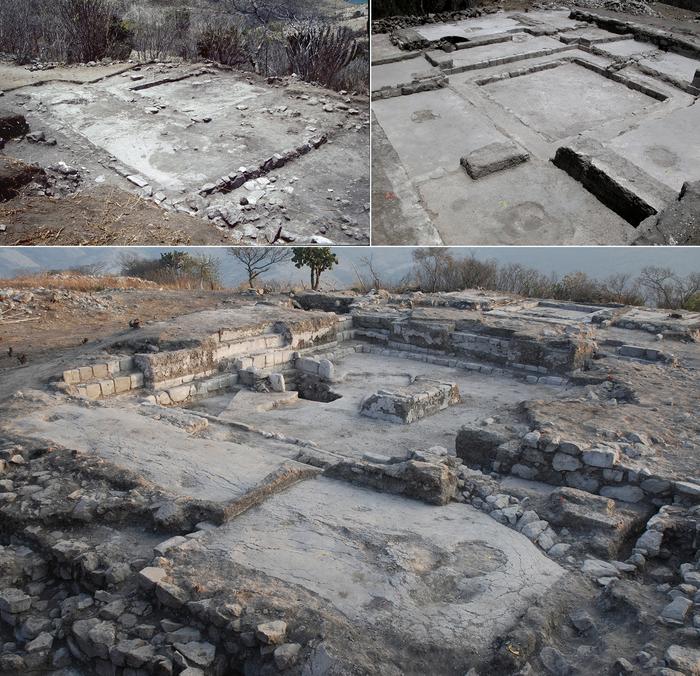
In a compelling synthesis of archaeological data, new research published in the journal Proceedings of the National Academy of Sciences (PNAS) reveals the intricate dynamics of wealth inequality as traced through the sizes of houses across various civilizations over the last 10,000 years. This study, spearheaded by Gary Feinman, the MacArthur Curator of Mesoamerican, Central American, and East Asian Anthropology at the Field Museum in Chicago, delves into how house size serves as a proxy for economic inequality throughout human history. By analyzing over 50,000 houses derived from archaeological records across more than 1,000 sites worldwide, the research challenges long-standing assumptions about the inevitability of inequality and offers new insights into the factors shaping socioeconomic landscapes.
In the contemporary context, where the wealth gap between the affluent and the underprivileged continues to widen, understanding the historical patterns of economic disparity is critical. The study underscores that while significant inequality has been a persistent feature of human societies, its manifestation is not uniform or preordained. When examined closely, the variations in house size distributions indicate shifts influenced by cultural, political, and environmental factors that can either exacerbate or mitigate wealth disparities. This nuanced understanding emphasizes that inequality is not a mere artifact of societal evolution but a complex interplay of historical decisions and governance structures.
Central to the findings is the use of the Gini coefficient, a standard metric measuring inequality from 0 indicating complete equality to 1 indicating maximum inequality. By calculating Gini coefficients for the various sites studied, the researchers were able to gauge economic disparity across different times and social contexts. Notably, the study illustrates how traditional narratives surrounding the rise of social complexity and economic inequality—primarily drawn from familiar historical instances in ancient Greece and Rome or medieval Europe—fall short of accounting for the rich tapestry of human experience concerning socioeconomic stratification.
Feinman articulates that the data reveals a spectrum of inequality that varies not only across geographical locations but also within different periods in history. As populations expanded and societies became more complex, the expectation has traditionally been that inequality would rise in tandem; however, the evidence suggests a more complicated relationship wherein increases in population size do not straightforwardly correlate with heightened economic disparity. This variability prompts a reevaluation of historical models that have long been used to explain the rise of inequality, insisting instead that human choice and institutional governance play pivotal roles in shaping these outcomes.
The implications of this research extend beyond mere historical analysis; they invite a critical reflection on contemporary societal structures. If inequality is not an inescapable consequence of larger societies and hierarchical governance, as Feinman suggests, it opens a dialogue about the current mechanisms that could be leveraged to promote equity. By recognizing that higher degrees of inequality can be counterbalanced through strategic human decisions, policymakers can glean lessons from the past that inform present-day efforts to create more equitable systems.
Furthermore, the study advocates for a shift in focus towards the less explored dimensions of social structures, accounting for how communities have navigated resource distribution and governance over millennia. This exploration reveals that wealth inequality can indeed be mitigated by cooperation, thoughtful governance, and community-oriented policies. Highlighting case studies from various locales, the research showcases how different societies have implemented mechanisms that might reduce inequality, tempering the belief that disparities will always be entrenched.
Thus, Feinman’s study presents an unprecedented empirical dataset that contributes significantly to our understanding of wealth distribution in the context of archaeology and anthropology. The approach adopted by the researchers empowers future inquiries to build on these findings, adopting a more diverse range of perspectives when analyzing economic behaviors across cultures and epochs. Such research not only enriches our grasp of historical patterns, but also offers substantial richness to ongoing discussions about equity and governance in contemporary times.
Historical narratives surrounding inequality often suffer from oversimplification. By presenting a more granular view, the study advocates for new methodologies in documenting and interpreting social disparities. This involves a more thoughtful analysis of the archaeological record, which can yield a wealth of insights pertaining to material culture, social organization, and economic conditions. The synthesis of such information serves to enhance comprehension of how societies functioned in the past, shedding light on potential paths forward in addressing modern economic inequalities.
In summation, the research led by Feinman demonstrates a critical intersection of archaeology, economics, and social theory, providing a robust framework for understanding the dynamics of inequality across time and space. The insights garnered from this archaeological exploration reveal that the determinants of wealth disparity are multifaceted and influenced by various societal forces, calling into question established narratives and encouraging a reexamination of how we perceive the evolution of social structures throughout history.
Ultimately, the investigation reaffirms that understanding the roots of inequality requires a comprehensive approach that encompasses not just material wealth but also the myriad of choices and systems that shape human experience. This approach can foster a more informed discourse surrounding economic policies that aspire toward greater equity and may even influence the ways societies confront and negotiate social disparities in the future.
Through this study, scholars and policymakers alike are reminded that the narratives we construct about our past inevitably shape our visions for the future. By embracing the complexity of human experience and acknowledging the variability in economic inequality throughout history, we pave the way for innovative solutions to address the pressing challenges of our time.
Cite Scienmag News
Courtney Benton. (April 14, 2025). Archaeologists Analyze 50,000 Ancient Houses to Uncover the Roots of Inequality – Discoveries Suggest It’s Not Inevitable. Scienmag. https://scienmag.com/archaeologists-analyze-50000-ancient-houses-to-uncover-the-roots-of-inequality-discoveries-suggest-its-not-inevitable/
Courtney Benton. "Archaeologists Analyze 50,000 Ancient Houses to Uncover the Roots of Inequality – Discoveries Suggest It’s Not Inevitable." Scienmag, 14 April 2025, https://scienmag.com/archaeologists-analyze-50000-ancient-houses-to-uncover-the-roots-of-inequality-discoveries-suggest-its-not-inevitable/. Accessed 3 September 2026.
Courtney Benton. "Archaeologists Analyze 50,000 Ancient Houses to Uncover the Roots of Inequality – Discoveries Suggest It’s Not Inevitable." Scienmag. April 14, 2025. https://scienmag.com/archaeologists-analyze-50000-ancient-houses-to-uncover-the-roots-of-inequality-discoveries-suggest-its-not-inevitable/


