


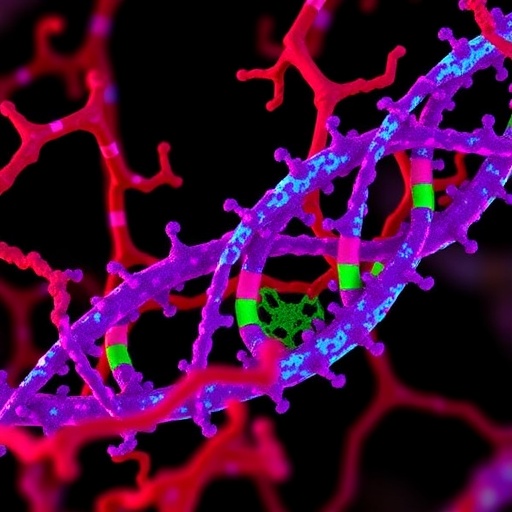
In a groundbreaking advancement that may revolutionize our understanding of human parturition, the 2026 study led by Chen, Long, Wang, and colleagues elucidates a sophisticated molecular mechanism controlling labor onset. Published in Nature Communications, this research reveals how the enzyme AOC1 modulates labor initiation through a cascade involving spermidine-induced autophagy of placental trophoblast cells, mediated by the hypusination of the eukaryotic initiation factor 5A (EIF5A). This discovery opens new avenues for tackling complications related to premature or delayed labor, potentially transforming obstetric care.
For decades, scientists have sought to delineate the precise molecular triggers and regulators of labor. While hormonal pathways involving oxytocin and prostaglandins are well-characterized, the intracellular molecular events within placental cells that precipitate childbirth have remained elusive. Chen et al. shed light on this by focusing on autophagy, a highly conserved cellular degradation mechanism that maintains cellular homeostasis by destroying damaged organelles and proteins. Their research underscores that autophagy in placental trophoblast cells is not a mere housekeeping process but a critical determinant of labor timing.
Central to their findings is AOC1, or amine oxidase copper containing 1, an enzyme traditionally known for catalyzing the oxidative deamination of biogenic amines. The study demonstrates that AOC1 expression in placental trophoblast cells elevates sharply as labor onset nears. This escalation promotes the metabolism of spermidine, a polyamine implicated in myriad cellular functions including proliferation and survival. Intriguingly, spermidine serves as a key activator of autophagy in these cells, bridging metabolic activity with structural cellular remodeling vital for triggering labor.
Chen and colleagues meticulously detailed how spermidine induces autophagy via a post-translational modification called hypusination, which occurs specifically on EIF5A. EIF5A is a unique initiation factor essential for the translation of specific mRNAs, and its hypusination—attachment of the unusual amino acid hypusine—is governed by spermidine availability. This selective modification enables the translation of autophagy-related proteins, thereby facilitating an intracellular environment conducive to labor initiation. Thus, spermidine acts as both a metabolic substrate and a signaling molecule, linking enzymatic activity with translational control.
A profound insight from this work lies in the dual role of placental trophoblast cells, which not only mediate nutrient and gas exchange but also serve as active biochemical signalers orchestrating labor. Through spermidine-induced autophagy, these cells undergo programmed cellular remodeling that appears imperative for releasing labor signals into maternal circulation. This represents a paradigm shift, conceptualizing the placenta as an endocrine organ intricately tuned by autophagic dynamics to regulate the timing of birth.
The study employed an impressive array of cutting-edge techniques, including CRISPR-Cas9-mediated gene editing to silence AOC1 in trophoblast cultures, which resulted in marked impairment of autophagic flux and delayed labor onset in murine models. Live-cell imaging and electron microscopy provided visual confirmation of autophagosome formation dynamics dictated by spermidine levels. Furthermore, mass spectrometry-based proteomics identified autophagy-related proteins whose synthesis depends critically on hypusinated EIF5A, solidifying the mechanistic link between metabolism, autophagy, and translational regulation.
Moreover, the team conducted extensive transcriptomic analyses revealing that disruption of this AOC1-spermidine-EIF5A axis leads to aberrant expression of genes involved in inflammation, extracellular matrix remodeling, and hormonal signaling pathways critical for successful parturition. This suggests that the identified molecular cascade acts as a central integrator of diverse physiological pathways necessary for labor, highlighting its potential as a target for therapeutic intervention.
One of the most compelling translational implications of this research pertains to preterm birth, a leading cause of neonatal morbidity and mortality worldwide. By modulating AOC1 activity or manipulating spermidine levels, it may become feasible to regulate autophagy in placental cells, thus fine-tuning labor timing. Such therapeutic strategies could mitigate risks associated with premature labor or labor dystocia, improving outcomes for both mother and child.
The authors also explored clinical correlations by analyzing placental samples from term and preterm deliveries, finding significantly reduced AOC1 expression and impaired EIF5A hypusination in preterm placentas. This correlation not only supports the mechanistic model but also positions these molecules as potential biomarkers for predicting labor abnormality risks. Future clinical assays based on these findings could revolutionize prenatal diagnostics.
Importantly, this study invites further exploration into the broader physiological roles of polyamines like spermidine in human reproduction and their systemic effects during pregnancy. Given spermidine’s established benefits in aging and cellular health, understanding its modulation within the placenta may unveil links between maternal nutrition, metabolic states, and pregnancy outcomes. This cross-disciplinary interest could spark novel nutritional and pharmacological interventions.
In closing, the work by Chen et al. represents an elegant fusion of molecular biology, obstetrics, and transformative bioengineering approaches. Their insight into the AOC1-spermidine-EIF5A pathway redefines the placental trophoblast as an active molecular participant in labor initiation through spermidine-induced autophagy. This breakthrough not only fills a long-standing knowledge gap but also heralds a new era of precision medicine aimed at safeguarding healthy childbirth.
As this elegant molecular dance comes into sharper focus, the possibility of manipulating autophagic flux in placental cells to optimize labor timing moves closer to reality. Future research spurred by these discoveries may empower clinicians with unprecedented control over the birthing process, ultimately reducing pregnancy-associated risks and enhancing neonatal health worldwide.
Chen and colleagues’ pioneering research stands as a blueprint for interrogating the nuanced molecular crosstalk orchestrating complex reproductive events. In illuminating the cryptic code governing labor onset, they remind us that even the most familiar biological milestones harbor hidden molecular symphonies awaiting discovery. The ripple effects of their findings promise to resonate far beyond obstetrics, influencing cell biology, translational medicine, and reproductive science for years to come.
Cite Scienmag News
Ophelia Keating. (June 22, 2026). AOC1 Controls Labor via Spermidine-Driven Autophagy. Scienmag. https://scienmag.com/aoc1-controls-labor-via-spermidine-driven-autophagy/
Ophelia Keating. "AOC1 Controls Labor via Spermidine-Driven Autophagy." Scienmag, 22 June 2026, https://scienmag.com/aoc1-controls-labor-via-spermidine-driven-autophagy/. Accessed 3 September 2026.
Ophelia Keating. "AOC1 Controls Labor via Spermidine-Driven Autophagy." Scienmag. June 22, 2026. https://scienmag.com/aoc1-controls-labor-via-spermidine-driven-autophagy/


