


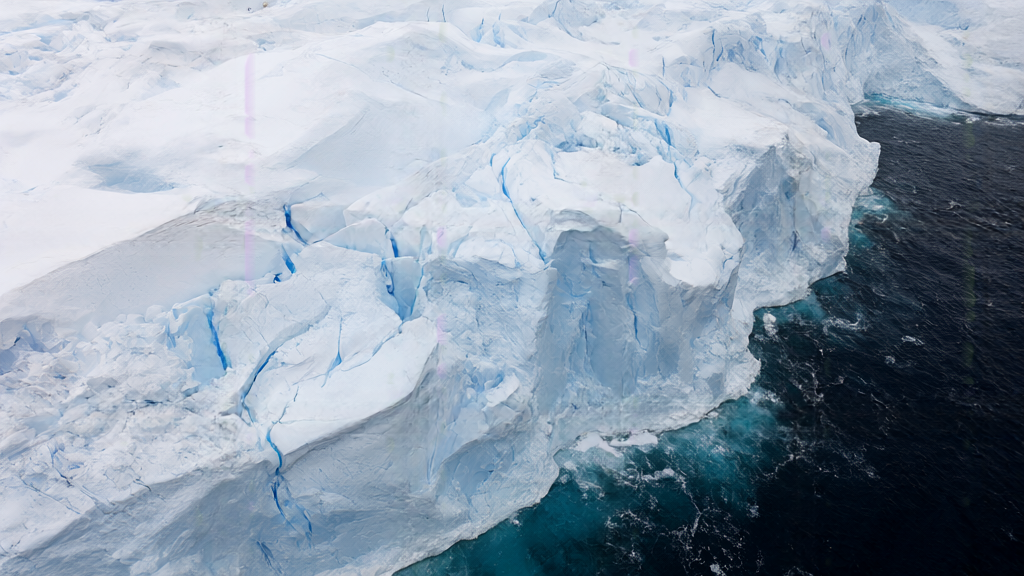
Approximately 90 percent of the world’s ice is stored in Antarctica, making the stability of these ice sheets a primary factor in global sea level rise. While modern satellite technology has significantly improved the monitoring of ice movements and surface changes, significant blind spots remain in our understanding of the continent’s coastal regions. Dr. Thorsten Seehaus from the Institute of Geography at Friedrich-Alexander-Universität Erlangen-Nürnberg (FAU) highlights that critical information regarding ice thickness and the topography of the ocean floor beneath ice shelves is largely unavailable from space-based observations. This lack of data creates substantial uncertainties in scientific models used to predict future sea level changes.
A recent international study, coordinated by the RINGS group of the Scientific Committee on Antarctic Research (SCAR), brings together 80 researchers from 16 countries to summarize current findings on the interactions between ice, ocean, atmosphere, and the subsurface in the Antarctic coastal zone. The research team, comprising experts in glaciology, oceanography, geophysics, and atmospheric sciences, identified major gaps in knowledge, particularly concerning the bed topography. These blind spots mean that even highly developed models of the ice sheet can produce inaccurate results when assessing ice movements and potential melt scenarios.
The Antarctic coastline is described as a closely interconnected system where ice lying on the ocean floor meets the ocean. In this environment, small changes can have a huge impact on the overall stability of the ice sheet. Dr. Seehaus explains that ice loss in Antarctica is predominantly caused by the interaction between the ice and the surrounding ocean, as well as by ice discharge at the edges of the ice sheet, rather than by ice melting on the surface. This distinction is crucial for understanding the mechanisms driving current and future sea level rise.
Processes occurring close to the grounding zone, the point at which the ice rises from the ocean floor and begins to float, may trigger counter-reactions that accelerate ice loss. Understanding these dynamics is essential for accurate modeling. However, when assessing ice movements, it is crucial to know whether the subsurface rises or falls on the approach to the sea. Without precise data on this bed topography, models cannot accurately simulate how ice flows and responds to oceanic conditions, leading to potential inaccuracies in long-term projections.
The study emphasizes that the lack of data on ice thickness and bed topography along the coasts and underneath ice shelves is a significant barrier to reliable prediction. These areas are difficult to observe from space, necessitating direct measurement through field expeditions. The interconnected nature of the system means that changes in one component, such as ocean temperature or current patterns, can have cascading effects on ice stability. Therefore, a comprehensive understanding of the subsurface topography is vital for capturing the full complexity of these interactions.
Geographers from FAU have been actively involved in addressing these data gaps through several expeditions to the Antarctic peninsula, a region in the northwest of the continent. In collaboration with the Alfred Wegener Institute in Bremerhaven and research partners from Argentina, these teams have measured the thickness of the ice sheet using airplanes and helicopters. These field measurements provide the ground-truth data necessary to validate and improve satellite-based models. The data collected from these expeditions helps to fill in the blind spots that remote sensing technologies cannot reach.
Future projects, including collaborations with partners from South America, are currently in the pipeline with the aim of closing gaps in knowledge concerning ice thickness and the topography of coastal regions. Dr. Seehaus notes that such cooperations are important because no single country has the resources to provide comprehensive data for the entire Antarctic region. International collaboration is therefore essential to build a complete picture of the ice sheet’s behavior and its potential impact on global sea levels.
The study explicitly states that central coordination of international research projects is essential to avoid data gaps and duplicate data collection. By coordinating efforts, the scientific community can create an evidence-based framework for improved projections of sea levels. This coordinated approach ensures that resources are used efficiently and that data from different regions and teams can be integrated into a cohesive global model. Such a framework is critical for policymakers and scientists who rely on these projections to plan for and mitigate the effects of rising sea levels.
As the climate continues to change, the need for accurate and reliable data on Antarctic ice dynamics becomes increasingly urgent. The findings from this international study underscore the importance of continued investment in field research and international cooperation. By addressing the current blind spots in our understanding of the Antarctic coastal zone, scientists can improve the accuracy of their models and provide more reliable predictions for the future. This work is a vital step toward understanding the complex interactions that drive ice loss and its global consequences.
Subject of Research: Earth Science
Article Title: Ice loss in the Antarctic: Numerous blind spots
Article References: Ice loss in the Antarctic: Numerous blind spots. (n.d.). Original publication
Image Credits: AI Generated
DOI: Not provided
Keywords: Antarctica, Ice Sheet, Sea Level Rise, Glaciology, Climate Change, FAU Erlangen-Nürnberg, SCAR, loss, Antarctic, Numerous, blind, spots
Cite Scienmag News
Violet Maxwell. (October 2, 2026). Antarctic Ice Loss Predictions Hindered by Critical Data Gaps in Coastal Zones. Scienmag. https://scienmag.com/antarctic-ice-loss-predictions-hindered-by-critical-data-gaps-in-coastal-zones/
Violet Maxwell. "Antarctic Ice Loss Predictions Hindered by Critical Data Gaps in Coastal Zones." Scienmag, 2 October 2026, https://scienmag.com/antarctic-ice-loss-predictions-hindered-by-critical-data-gaps-in-coastal-zones/. Accessed 4 October 2026.
Violet Maxwell. "Antarctic Ice Loss Predictions Hindered by Critical Data Gaps in Coastal Zones." Scienmag. October 2, 2026. https://scienmag.com/antarctic-ice-loss-predictions-hindered-by-critical-data-gaps-in-coastal-zones/


