


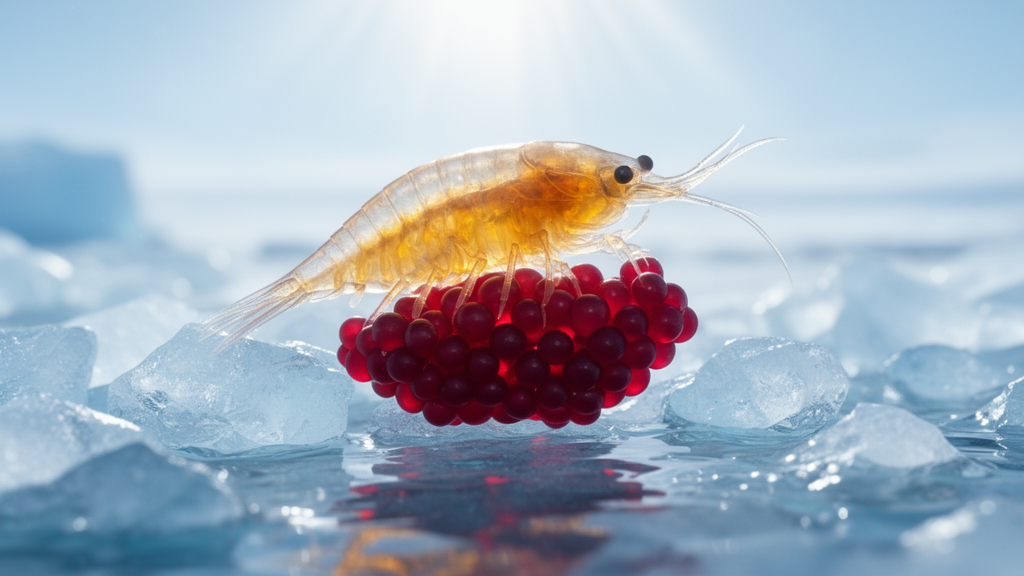
A field study of the calanoid copepod Boeckella poppei in temporary freshwater ponds on Livingston Island reported a sex- and reproductive-state-associated difference in body pigmentation. Mature egg-carrying females were almost transparent, while their egg sacs ranged from red to dark orange. Males and non-ovigerous females had dark orange or red bodies with pigments distributed evenly. The authors described this as the first report of sexually manifested pigmentation variation in the species.
The researchers sampled two adjacent temporary, turbid freshwater ponds on permafrost sediments on 7 February 2020. The ponds were at 62.63622°S, 60.35117°W and an altitude of 23 metres above sea level. Dense flocculation of microalgae and diatoms covered their bottoms and edges, while colloidal inorganic particles originating from glacier activity gave the water very low transparency.
Depth was limited to 10–12 centimetres in pond 1 and 5–6 centimetres in pond 2, allowing solar radiation to reach the bottoms. The two ponds also differed in other measured conditions. Water temperature was 7.6°C in pond 1 and 9.1°C in pond 2; both had zero salinity. Dissolved oxygen was 8.4 mg per dm³ in pond 1 and 9.5 mg per dm³ in pond 2, while conductivity was 82 and 131 μS per cm, respectively.
Specimens were collected with a hand-held net with 50-micrometre mesh after the pond water was intensively mixed. The animals were transported alive to the laboratory at the Bulgarian Antarctic Base, immobilised in highly diluted ethanol and photographed. Males, females and copepodites were separated according to developmental stage and morphological features. Body pigmentation was assessed visually in approximately 100 individuals, including males and females, from each pond.
All mature females among the studied specimens displayed the characteristic pattern: an almost completely depigmented body paired with intensely coloured egg sacs. Ingested algae containing high concentrations of pigments remained clearly visible in their guts. In contrast, the studied males and non-ovigerous females had evenly distributed pigments that produced dark orange or red coloration. The observations therefore associated the conspicuous pattern with mature egg-carrying females rather than with all members of the population.
The authors noted that reddish coloration in copepods is associated with carotenoids synthesised from beta-carotene in algae used as food. Carotenoid pigmentation and compounds such as mycosporine-like amino acids have been studied as photoprotective adaptations in polar and alpine environments. The source article cites previous measurements of very high free-astaxanthin concentrations in calanoid copepods from clear, fishless Himalayan alpine lakes, where pigment concentrations were inversely related to the depth refuge available and were lowest in a turbid, glacier-fed lake.
p>Because the Livingston Island ponds were only 5–12 centimetres deep, the authors stated that downward migration to deeper water was not possible. They also judged that the copepods were likely to remain exposed to ultraviolet radiation despite the ponds’ high turbidity. Earlier work on B. poppei populations around the Antarctic Peninsula demonstrated photoprotection but associated limited efficiency of enzymatic DNA repair with the low temperatures prevailing in Antarctic lakes.
The researchers interpret the concentration of accumulated pigments in egg sacs as a possible strategy for protecting progeny from damaging ultraviolet radiation. They regard ovogenesis as a sensitive stage in the copepod life cycle because ultraviolet radiation can cause teratogenic effects and morphological abnormalities incompatible with individual survival. The proposed link between the pigmentation pattern and enhanced progeny survival is an interpretation, not a result directly tested in the two sampled ponds.
The study is limited to visual assessment of two nearby ponds and a sample of approximately 100 individuals per pond, and it did not chemically identify the pigments or measure the mechanisms responsible for their accumulation in egg sacs. The authors state that further studies are needed to establish pigment types and accumulation mechanisms. They also propose that the observed plasticity may facilitate the species’ survival and colonisation of newly formed freshwater habitats following retreat of permanent ice cover, and suggest that B. poppei could be a useful indicator of environmental change in Antarctica.
Subject of Research: An observational field study of reproductive-state-associated pigmentation in the Antarctic freshwater copepod Boeckella poppei.
Article Title: Sexually-manifested variations in pigmentation of Boeckella poppei ( Copepoda , Calanoida ) from Livingston Island (Maritime Antarctica)
Article References: Pandourski, I., Evtimova, V., & Kenderov, L. (2022). Sexually-manifested variations in pigmentation of Boeckella poppei (Copepoda, Calanoida) from Livingston Island (Maritime Antarctica). BioRisk, 17, 263-269. https://doi.org/10.3897/biorisk.17.75988
Image Credits: AI Generated
Keywords: Boeckella poppei, Antarctic copepods, egg-sac pigmentation, carotenoids, ultraviolet radiation, freshwater ponds, Livingston Island, field study, Sexually-manifested, variations, pigmentation, Boeckella
Cite Scienmag News
Gavin Prescott. (October 20, 2026). Antarctic copepod field study documents depigmented egg-carrying females with pigmented egg sacs. Scienmag. https://scienmag.com/antarctic-copepod-field-study-documents-depigmented-egg-carrying-females-with-pigmented-egg-sacs/
Gavin Prescott. "Antarctic copepod field study documents depigmented egg-carrying females with pigmented egg sacs." Scienmag, 20 October 2026, https://scienmag.com/antarctic-copepod-field-study-documents-depigmented-egg-carrying-females-with-pigmented-egg-sacs/. Accessed 20 October 2026.
Gavin Prescott. "Antarctic copepod field study documents depigmented egg-carrying females with pigmented egg sacs." Scienmag. October 20, 2026. https://scienmag.com/antarctic-copepod-field-study-documents-depigmented-egg-carrying-females-with-pigmented-egg-sacs/


