


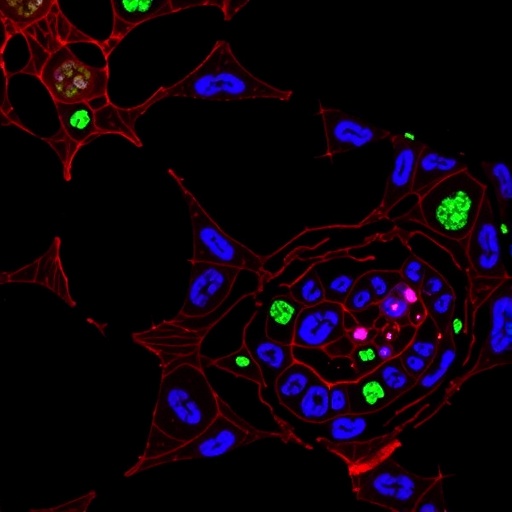
In a significant breakthrough that could reshape the landscape of brain cancer therapy, recent research has spotlighted Annexin A2 as a pivotal regulator of glioma progression and a promising target for innovative treatments. Glioma, a notoriously aggressive and treatment-resistant form of brain tumor, continues to challenge clinicians and scientists alike, urging the scientific community to delve deeper into its molecular underpinnings. The study conducted by Liu, W., Zhao, X., Regmi, M., and colleagues, published in Medical Oncology in 2025, illuminates the multifaceted role of Annexin A2 in glioma biology, unveiling novel therapeutic avenues that could potentially transform patient outcomes.
Gliomas represent the most common primary brain tumors, encompassing a heterogeneous group with vast differences in malignancy and prognosis. The complexity of their cellular architecture and their ability to evade conventional therapies underscore the necessity for targeted molecular interventions. Annexin A2, a calcium-dependent phospholipid-binding protein, has emerged as a critical player mediating cellular processes fundamental to tumor growth, invasion, and resistance mechanisms. This protein’s dual functionality within the cellular membrane and cytoplasm renders it a dynamic regulator in cancer cell biology, which the current study explored with unprecedented depth.
Central to the investigative efforts was the elucidation of Annexin A2’s influence on glioma cell fate, encompassing proliferation, apoptosis, migration, and invasion. By employing comprehensive in vitro and in vivo models, the researchers meticulously dissected how Annexin A2 orchestrates signaling cascades that favor tumor survival and dissemination. Their findings revealed that elevated Annexin A2 expression correlates with aggressive tumor phenotypes, offering insights into why certain gliomas are particularly recalcitrant to existing therapies.
Beyond expression analysis, the study delved into the mechanistic pathways modulated by Annexin A2. The protein was shown to interact with key molecular partners involved in cell motility and extracellular matrix degradation, processes essential for tumor infiltration into adjacent brain tissue. Of particular interest was Annexin A2’s regulation of the plasminogen activation system, which facilitates proteolytic activity on the tumor cell surface, enhancing invasion and angiogenesis. This dimension positions Annexin A2 not merely as a passive marker but as an active driver of malignancy.
Therapeutic implications arising from these discoveries are profound. Targeting Annexin A2 function or expression could disrupt the malignant cascade at multiple junctures, impeding tumor proliferation, reducing invasiveness, and sensitizing tumor cells to chemotherapy and radiotherapy. The research team demonstrated that genetic knockdown or pharmacological inhibition of Annexin A2 hampers glioma growth in experimental models, laying the groundwork for the development of Annexin A2-specific therapeutic agents or antibodies.
Moreover, Annexin A2’s potential as a biomarker for glioma prognosis and treatment stratification was underscored. Its expression levels could serve as a predictive indicator for tumor aggressiveness and patient survival, enabling more personalized therapeutic approaches. The integration of Annexin A2 assessment into clinical practice may refine diagnostic accuracy and optimize treatment regimens, addressing the current unmet need for reliable molecular predictors in glioma management.
The broader implications of Annexin A2’s regulatory functions extend to the tumor microenvironment, where it influences immune cell infiltration and cytokine profiles. These interactions create a context wherein gliomas can suppress anti-tumor immunity, complicating efforts to harness immunotherapy effectively. The study’s insights into Annexin A2-mediated immunomodulation open new intersections between targeted molecular therapies and immune checkpoint strategies, heralding the possibility of synergistic treatment paradigms.
From a technical standpoint, the researchers employed cutting-edge techniques such as CRISPR-Cas9 mediated gene editing and high-resolution live-cell imaging to visualize Annexin A2 dynamics in real time. These methodologies enabled an unprecedented temporal and spatial understanding of Annexin A2 activity within glioma cells, charting a precise map of its functional domains and interaction networks. The granularity of these data sets paves the way for rational drug design aimed at allosteric modulation or disruption of key protein interfaces.
Furthermore, transcriptomic and proteomic analyses provided comprehensive profiling of downstream effectors influenced by Annexin A2. This systems-level approach revealed synergistic networks involving focal adhesion kinase, integrins, and matrix metalloproteinases, emphasizing how Annexin A2 serves as a nodal point integrating diverse oncogenic signals. The identification of these pathways offers multiple avenues for combinatorial therapeutic interventions, potentially overcoming the adaptive resistance often observed in glioma treatment.
Interestingly, the study also explored the role of Annexin A2 in glioma stem-like cells, a subpopulation characterized by enhanced tumorigenicity and treatment resistance. Annexin A2 was found to sustain the self-renewal and undifferentiated state of these cells, implicating it in the maintenance of the tumor’s regenerative potential. Targeting Annexin A2 may therefore not only shrink established tumors but also prevent relapse by eradicating these resilient cell reservoirs.
Clinical translation of these findings will necessitate rigorous validation in patient-derived xenografts and early-phase clinical trials. The development of Annexin A2 inhibitors, whether small molecules, monoclonal antibodies, or novel modalities such as RNA interference, represents a burgeoning frontier in glioma therapeutics. Collaborative efforts between academia, industry, and clinical researchers are vital to accelerate these endeavors and bring transformative treatments to patients.
The research by Liu and colleagues epitomizes the increasingly sophisticated understanding of cancer as a complex interplay of genetic, proteomic, and microenvironmental factors. Annexin A2 emerges not only as a key molecular regulator but as a linchpin for orchestrating glioma behavior. These insights hold promise not just for glioma but may have relevance for other solid tumors where Annexin A2 shows aberrant expression and function.
As the quest to conquer glioma persists, the identification and targeting of Annexin A2 herald a new chapter in precision oncology. With sustained investigation and innovative therapeutic development, the grim prognosis historically associated with glioma may be challenged, bringing hope to patients afflicted with this devastating disease. The integration of molecular biology, cutting-edge technology, and clinical insight embodies the future path toward defeating one of the deadliest cancers confronting humanity.
Cite Scienmag News
Nathaniel Bowman. (August 6, 2025). Annexin A2: Key Regulator and Therapy Target in Glioma. Scienmag. https://scienmag.com/annexin-a2-key-regulator-and-therapy-target-in-glioma/
Nathaniel Bowman. "Annexin A2: Key Regulator and Therapy Target in Glioma." Scienmag, 6 August 2025, https://scienmag.com/annexin-a2-key-regulator-and-therapy-target-in-glioma/. Accessed 3 September 2026.
Nathaniel Bowman. "Annexin A2: Key Regulator and Therapy Target in Glioma." Scienmag. August 6, 2025. https://scienmag.com/annexin-a2-key-regulator-and-therapy-target-in-glioma/


