

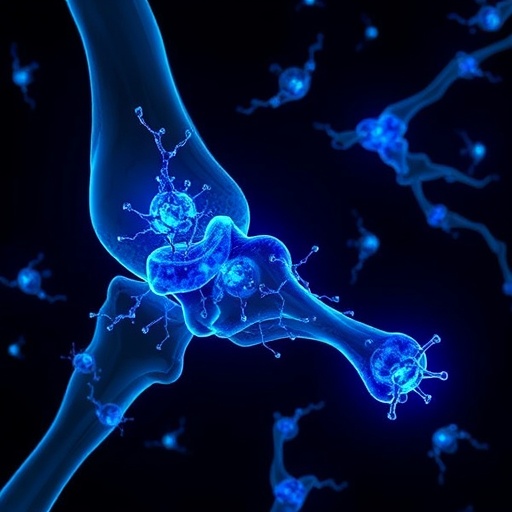
In a groundbreaking discovery poised to transform the understanding of bone repair mechanisms, researchers have identified a specialized population of stem cells residing in the fibrous layer of the periosteum that plays an instrumental role in sensing inflammation and orchestrating fracture healing. This novel insight, detailed in the recent Cell Research publication by Jiang et al., reveals the dynamic and pivotal functions of Angptl7-positive periosteal stem cells, redefining paradigms about cellular response to bone injury and inflammation.
The periosteum, a dense connective tissue layer enveloping bones, has long been recognized as a crucial contributor to skeletal regeneration. However, the cellular identities and mechanisms underlying its regenerative potential have remained elusive. Jiang and colleagues utilized advanced lineage tracing and transcriptomic analyses to characterize a subpopulation of stem cells within the fibrous layer of the periosteum marked by the expression of angiopoietin-like 7 (Angptl7). These cells exhibit unique molecular signatures that endow them with the capacity to detect inflammatory cues triggered by injury.
Upon fracture induction, Angptl7-positive periosteal stem cells rapidly sense the inflammatory microenvironment, characterized by a complex milieu of cytokines and immune mediators. This detection initiates a carefully coordinated cascade of signaling events, mobilizing these stem cells and promoting their differentiation into osteoblasts and chondrocytes—the essential cellular architects of new bone and cartilage. Intriguingly, this fibrous-layer niche serves as a critical communication hub, integrating inflammatory signals with regenerative responses to effectively restore skeletal integrity.
The study delineates how these stem cells interact bidirectionally with immune cells residing at the injury site, shaping a microenvironment conducive to regeneration. The authors demonstrated that the stem cells express receptors sensitive to key inflammatory mediators such as TNF-α and IL-6, enabling a finely tuned response that modulates both their proliferation and differentiation. Notably, the temporal dynamics of Angptl7-positive cell activation correlate closely with the phases of inflammation and repair, underscoring their role as sentinel stem cells that bridge immune signaling and tissue regeneration.
This discovery challenges the longstanding view that bone repair is primarily driven by stem cells residing within the bone marrow or the cambium layer of the periosteum. Instead, it introduces the fibrous layer as a pivotal, previously underappreciated microenvironment harboring functionally distinct stem cells. The functional specialization of these Angptl7-positive periosteal stem cells highlights the importance of spatially distinct stem cell niches in orchestrating complex tissue repair processes.
Moreover, transcriptomic profiling revealed enriched pathways in Angptl7-positive cells related to extracellular matrix remodeling, angiogenesis, and immune regulation. These findings suggest that beyond their progenitor roles, these cells actively modulate the stromal landscape to create a conducive regenerative niche. This multifaceted functionality may offer new avenues for therapeutic intervention, aiming to enhance endogenous repair mechanisms or develop cell-based regenerative therapies.
The implications of this research extend beyond fracture healing. Bone injuries coupled with chronic inflammation, such as non-union fractures or osteomyelitis, often represent clinical challenges due to impaired regenerative responses. By elucidating the mechanisms through which periosteal stem cells sense and respond to inflammatory cues, this study paves the way for novel strategies to modulate inflammation and harness stem cell function for improved clinical outcomes.
Technologically, the investigators employed state-of-the-art single-cell RNA sequencing coupled with genetic models enabling the selective ablation and fate mapping of Angptl7-expressing cells in murine models. These sophisticated approaches provided unprecedented granularity in dissecting the cellular hierarchies and dynamics in fracture healing. The data convincingly illustrate that disruption of Angptl7-positive cell activity leads to delayed fracture repair and impaired callus formation, confirming their indispensable role.
An intriguing aspect uncovered by the study is the temporal plasticity of Angptl7-positive periosteal stem cells. These cells exhibit the ability to oscillate between quiescent and activated states tightly linked to inflammatory stimuli, revealing an elegant injury-sensing mechanism evolved to balance stem cell activation with tissue homeostasis. This homeostatic balance prevents aberrant bone formation while ensuring rapid repair when necessary, highlighting a sophisticated regulatory system governed by inflammatory microenvironmental cues.
Jiang and colleagues also explored the molecular mediators facilitating crosstalk between immune cells and periosteal stem cells. They identified a network of chemokines and growth factors secreted upon fracture-induced inflammation that act as chemoattractants and activators of the Angptl7-positive cells. Among these, CXCL12 and VEGF emerged as critical factors driving stem cell recruitment and neovascularization, respectively, underpinning the coordinated orchestration of cellular and vascular components essential for effective bone regeneration.
This study’s findings usher in a paradigm shift regarding the cellular and molecular orchestration of fracture repair. Recognizing the fibrous-layer Angptl7-expressing periosteal stem cells as sentinels that sense injury-induced inflammation opens up innovative clinical possibilities. Targeting these cells or their signaling pathways could yield new treatments to accelerate bone healing, particularly in elderly or osteoporotic patients who suffer from compromised regenerative capacity.
Beyond therapeutic potentials, this research enriches the fundamental biological understanding of the skeletal system as an integrated organ that couples immune surveillance and regenerative capabilities through specialized stem cell niches. The periosteum emerges not merely as a structural shell but as a dynamic and versatile tissue that integrates biomechanical, inflammatory, and regenerative signals to preserve bone health and function.
Future investigations inspired by this work will likely focus on delineating the molecular mechanisms governing Angptl7 expression regulation, characterizing downstream effectors mediating stem cell activation, and exploring how systemic inflammatory states influence periosteal stem cell responsiveness. Such studies will expand the translational feasibility of manipulating these cells to treat a broad spectrum of skeletal disorders.
In summary, Jiang et al.’s landmark study identifies fibrous-layer resident Angptl7-positive periosteal stem cells as critical mediators that sense injury-associated inflammation and orchestrate fracture repair through coordinated differentiation and immune modulation. This discovery reshapes current paradigms of skeletal regeneration, spotlighting the periosteal fibrous layer as a vital niche integrating inflammation and repair signaling in bone healing. Their findings hold transformative potential to inspire next-generation regenerative therapies targeting recalcitrant fractures and other orthopedic conditions.
Intriguingly, this stem cell subset integrates the roles of inflammation sensing and progenitor function seamlessly, exemplifying nature’s intricate design to ensure rapid and robust tissue restoration. As research continues to unravel the interplay between inflammation and regeneration, the insights offered by this study will undoubtedly catalyze innovations in regenerative medicine and orthopedics, improving patient outcomes and opening new frontiers in tissue engineering.
Subject of Research: Fibrous-layer resident Angptl7-positive periosteal stem cells and their role in injury inflammation sensing and fracture repair.
Article Title: Fibrous-layer resident Angptl7⁺ periosteal stem cells sense injury inflammation to orchestrate fracture repair.
Article References:
Jiang, B., Xing, W., Xu, X. et al. Fibrous-layer resident Angptl7⁺ periosteal stem cells sense injury inflammation to orchestrate fracture repair. Cell Res (2026). https://doi.org/10.1038/s41422-025-01202-8
Image Credits: AI Generated


