


In a groundbreaking archaeological study led by Professor Avraham Faust of Bar-Ilan University’s Department of General History, compelling new evidence emerges that may transform our understanding of one of ancient Judah’s most pivotal moments: the religious reforms attributed to King Hezekiah. This research, published in the Jerusalem Journal of Archaeology, delves into a remarkable discovery at Tel ‘Eton, a significant Judean site in the Lowlands, challenging long-held debates about religious practice and transformation during the late eighth century BCE.
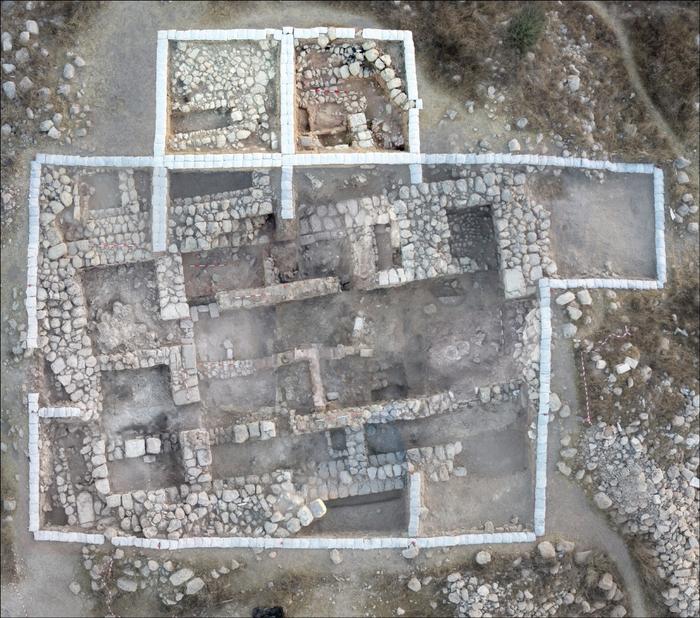
At the heart of this study lies an extraordinary cultic artifact—a massive standing stone, or massebah, measuring approximately 1.4 meters in height and weighing close to 750 kilograms. Unearthed within the confines of what is known as Building 101, or the Governor’s Residency, this imposing artifact was originally positioned in the largest room of the residence, directly opposite the entrance. Its placement ensured prominence and visibility, suggesting a ritualistic significance deeply intertwined with the building’s inhabitants.
Unlike prior archaeological investigations that predominantly focus on public cultic sites or temple grounds, Faust’s research shifts attention to the domestic sphere. This pivot enables a nuanced understanding of religious reform’s impact on everyday life, extending beyond official cultic precincts. The standing stone’s unique positioning in a residential setting opens a novel window into how religious ideologies permeated private homes during a time of profound transformation.
The biblical narrative paints King Hezekiah as a reformer who sought to centralize worship in Jerusalem by eradicating local shrines and transforming the religious landscape of Judah. Yet, until now, tangible archaeological evidence corroborating these sweeping reforms has been elusive or fiercely contested. Faust’s discovery offers a rare, material trace of these changes, capturing the subtle yet decisive ways in which religious practice was renegotiated at the community level.
Central to the study is the remarkable transition the standing stone underwent during its lifetime. Initially venerated in situ, the massebah was later carefully decommissioned—not destroyed or desecrated, but deliberately laid on its side and incorporated into a purpose-built stone platform. This meticulous treatment signals a complex relationship with tradition, where the old cultic object was effectively neutralized in function yet preserved in physical form.
The absence of deliberate damage to the standing stone is particularly telling. It reflects a broader cultural and religious strategy whereby reformers sought to phase out previous forms of worship respectfully, acknowledging the sacredness of objects even while dismantling their ritual roles. This method contrasts sharply with iconoclastic or violent rejections often seen in other historical contexts, suggesting a gradual and perhaps negotiated religious transformation.
Faust’s analysis situates this decommissioning within the broader destruction of Tel ‘Eton by the Assyrian Empire at the century’s end, aligning chronologically with the reign of King Hezekiah. This correlation strengthens the hypothesis that the changes observed were part of a larger, kingdom-wide shift in religious ideology and practice rather than isolated local phenomena.
This investigation also addresses a significant gap in archaeological scholarship: the scarcity of evidence for religious reforms in the domestic realm. By uncovering ritual material culture within private residences, Faust highlights the pervasive nature of religious change, demonstrating that reforms extended well beyond the high places into the intimate spaces of daily life.
Moreover, this study challenges scholars to rethink methodological approaches to ancient religion. The exclusive focus on temples, official venues, and public shrines has obscured a fuller understanding of ancient belief systems. Faust’s work advocates for a broader lens that includes administrative buildings, private homes, and non-ritual architectural contexts to capture a more accurate picture of shifting religious landscapes.
By documenting the careful and respectful removal of a revered cultic object, this study contributes a crucial piece of evidence to the ongoing debate about the historicity and scope of Hezekiah’s reforms. It suggests a sophisticated, multifaceted process of change integrating political, social, and religious dimensions, which reshaped Judahite society in profound ways.
Ultimately, the tale of the standing stone buried for over 2,700 years offers more than a glimpse into ancient ritual; it provides a tangible narrative of cultural adaptation and ideological evolution. Through meticulously excavated material culture, Faust and his team invite us to reconsider how reform movements unfolded at both monumental and mundane levels in ancient Judah, enriching our understanding of this transformative era.
The significance of this research extends beyond biblical archaeology; it serves as a model for exploring how religious reforms, political power, and everyday life intersect in ancient contexts. As such, it opens new avenues for interdisciplinary studies that combine textual analysis, archaeology, and cultural history, illuminating the complexities of belief and identity in ancient civilizations.
As scholars continue to unravel the mysteries of the First Temple period, findings like those at Tel ‘Eton underscore the importance of preserving and studying diverse archaeological contexts. They remind us that history is often written not just in grand monuments but also in the subtle, sometimes invisible shifts that ripple through communities and homes.
News Publication Date: 19-May-2026
Web References:
- Jerusalem Journal of Archaeology publication: https://jjar.huji.ac.il/sites/default/files/jjar/files/jjar09_03_eton_faust.pdf
- Multimedia image source: https://www.eurekalert.org/multimedia/1136205
Cite Scienmag News
Courtney Benton. (June 16, 2026). Ancient Standing Stone Unearthed: 2,700-Year-Old Massebah Offers New Insights into King Hezekiah’s Religious Reforms, Bar-Ilan University Study Finds. Scienmag. https://scienmag.com/ancient-standing-stone-unearthed-2700-year-old-massebah-offers-new-insights-into-king-hezekiahs-religious-reforms-bar-ilan-university-study-finds/
Courtney Benton. "Ancient Standing Stone Unearthed: 2,700-Year-Old Massebah Offers New Insights into King Hezekiah’s Religious Reforms, Bar-Ilan University Study Finds." Scienmag, 16 June 2026, https://scienmag.com/ancient-standing-stone-unearthed-2700-year-old-massebah-offers-new-insights-into-king-hezekiahs-religious-reforms-bar-ilan-university-study-finds/. Accessed 4 September 2026.
Courtney Benton. "Ancient Standing Stone Unearthed: 2,700-Year-Old Massebah Offers New Insights into King Hezekiah’s Religious Reforms, Bar-Ilan University Study Finds." Scienmag. June 16, 2026. https://scienmag.com/ancient-standing-stone-unearthed-2700-year-old-massebah-offers-new-insights-into-king-hezekiahs-religious-reforms-bar-ilan-university-study-finds/


