


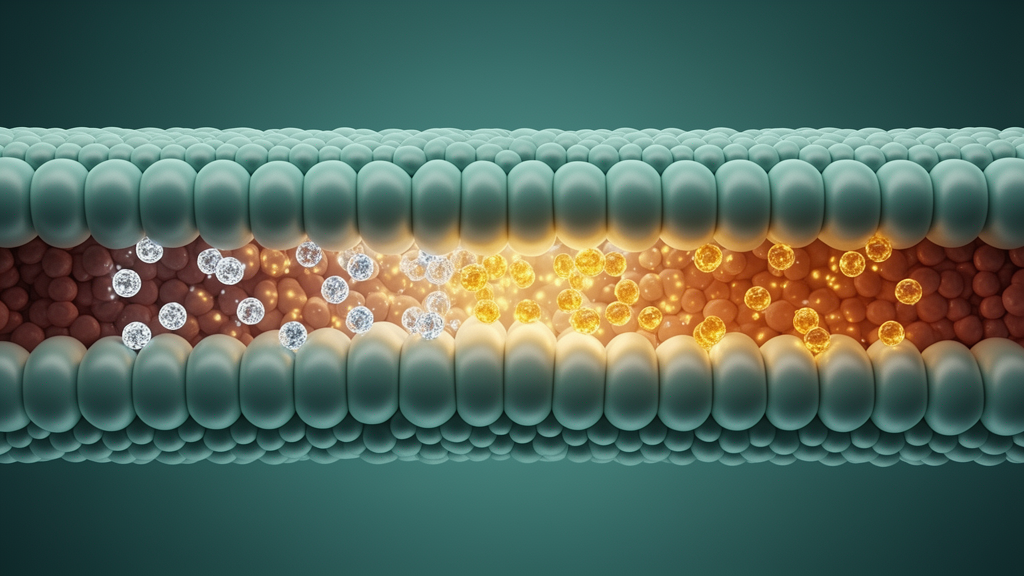
Few compounds in modern neuroscience research carry a résumé quite like borneol. This lipophilic bicyclic monoterpene, extracted from herbs used in traditional Chinese medicine for more than two thousand years, sits at the centre of a puzzle that has divided researchers studying the blood-brain barrier (BBB). In some experiments it appears to repair the barrier; in others it appears to pry it open. A new mini-review published in Frontiers in Drug Delivery by Xiangning Yin and Sarah Ann Thomas of King’s College London argues that this contradiction may be an illusion. When studies are aligned readout by readout, the review concludes, borneol emerges not as a confusingly inconsistent agent but as a context-sensitive modulator whose direction of action is dictated by the state of the barrier it encounters.
The BBB is a specialised neurovascular interface that guards the central nervous system, formed primarily by brain capillary endothelial cells welded together by tight junctions and buttressed by basement membranes, pericytes and astrocytic end-feet. Its restriction operates through distinct phenotypes. The physical barrier, built from tight junctions, limits the paracellular diffusion of ions and small molecules. The selective barrier, comprising influx transporters such as GLUT1, efflux pumps such as P-glycoprotein and the transcytosis machinery, governs transcellular traffic and actively expels many therapeutic compounds. A metabolic barrier can further degrade compounds in transit, although the review notes this aspect has not been systematically examined in the borneol literature and was left outside its scope. Because the desired direction of barrier modulation differs radically by disease, any compound that pushes permeability both ways demands careful scrutiny.
That scrutiny is exactly what the conflicting literature seemed to require. In ischaemic stroke, excessive barrier disruption fuels secondary injury, oedema and inflammatory cell infiltration, so restoring integrity is beneficial. In glioma, by contrast, the problem is the opposite: the intact barrier and blood-tumour barrier (BTB) block drug access, and transient permeability enhancement could improve delivery of chemotherapy. Borneol, remarkably, has been associated with both outcomes. It remains an essential component of classical anti-stroke formulas such as the Angong Niuhuang Pill, a Qing-dynasty preparation still used for acute cerebrovascular disease, and is classified in traditional frameworks as an ‘ushering drug’ that guides co-administered herbs toward the brain. The key question, the review argues, is not whether borneol affects the BBB but how its net effect becomes context-dependent.
The evidence from stroke models points consistently toward restoration. Ischaemia dismantles the barrier through multiple pathways: ATP depletion destabilises ion pumps and tight junctions; calcium overload activates proteases such as calpain that cleave junctional proteins; reactive oxygen species damage junctional components and activate matrix metalloproteinases that degrade the basal lamina; inflammatory cytokines alter permeability; and disruption of the MFSD2A-caveolin-1 axis increases endothelial endocytosis. A review of fifteen preclinical studies found that borneol intervenes at several of these points, restoring ATPase activity, reducing calcium load, boosting antioxidant defences and suppressing inflammatory mediators. In a rat model of middle cerebral artery occlusion, borneol treatment reduced albumin extravasation, and in an oxygen-glucose deprivation co-culture model of human cerebral microvascular endothelial cells with pericytes it reduced horseradish peroxidase transfer, two readouts of macromolecular leakage.
The most mechanistically defined pathway in the stroke context links borneol to the suppression of caveolae-mediated transcytosis via the MFSD2A and caveolin-1 (Cav-1) signalling axis. MFSD2A is a transporter for docosahexaenoic acid that maintains the distinctive lipid composition of brain endothelial membranes and thereby suppresses caveolae formation, while Cav-1 is the structural coat protein required for assembling caveolar vesicles. Under ischaemic conditions, MFSD2A is downregulated and Cav-1 upregulated, driving vesicular transcytosis and macromolecular leakage. Borneol treatment reversed both expression changes and markedly reduced endothelial vesicle counts on transmission electron microscopy. Complementary work in a permanent occlusion model showed reduced serum MMP-9, pointing to parallel protection of the extracellular matrix. The authors caution, however, that the MFSD2A/Cav-1 pathway was first identified through network pharmacology prediction and still awaits direct molecular-level confirmation.
In drug-delivery models, the picture flips. A preclinical pharmacokinetic review found that borneol co-administration increased maximum brain concentrations of twelve co-delivered compounds by 26 to 155 percent and area-under-the-curve values by 38 to 197 percent across intragastric, intranasal, intraperitoneal and intravenous routes. Critically, the effect is dose-dependent, transient and reversible within four to twenty-four hours. In rats given synthetic borneol, electron microscopy showed widening and discontinuity of endothelial tight junctions at four hours, peaking at eight, with junctional structure returning to control appearance by forty-eight hours. Junctional changes in cell monolayers resolved within twenty-four hours of removing the agent, indicating that the loosening depends on continued exposure rather than structural injury.
The clearest molecular insight into this opening mechanism comes from tight-junction dynamics. When mouse brain endothelial cells were treated with borneol at 10 micrograms per millilitre for six hours, transendothelial electrical resistance (TEER) dropped rapidly, most markedly at one hour, then began recovering by four hours. Crucially, total claudin-5 protein levels remained unchanged, but cytoplasmic claudin-5 increased significantly, and immunofluorescence confirmed redistribution of the protein from cell-cell junctions into the cytoplasm. Borneol, in other words, does not destroy a key junctional component; it displaces it from its functional position, weakening the barrier through reorganisation rather than degradation. In blood-tumour barrier studies, borneol lowered TEER, enhanced cisplatin delivery through reversible ZO-1 downregulation, and did not inhibit P-glycoprotein activity when used alone, though one study associated its barrier-opening effect with increased ICAM-1 expression, a marker that promotes leukocyte adhesion and endothelial damage.
The translational stakes are vividly illustrated by nanoparticle work. Borneol co-treatment increased the four-hour transport ratio of paclitaxel-loaded nanoparticles across an in vitro BBB model from 13.11 to 19.33 percent for PEG-coated particles and from 18.38 to 23.85 percent for particles modified with the CGKRK tumour-targeting peptide. In U87MG glioma-bearing mice, fluorescence imaging showed greater brain and tumour accumulation, and mean survival time rose from 17.4 days with saline to 38.9 days with the combination of CGKRK-modified nanoparticles and borneol. L-borneol has also been shown to transiently open the mouse BBB across doses of 100 to 900 milligrams per kilogram, enhance cisplatin brain penetration and extend survival in glioma-bearing animals, establishing the adjuvant concept in vivo.
The review’s decisive analytical move is to compare matched readouts across the two contexts. On TEER, borneol increased resistance in oxygen-glucose-deprived human endothelial monolayers but decreased it rapidly in intact mouse endothelial monolayers. On junctional structure, electron microscopy showed preservation of tight-junction ultrastructure in ischaemic models, whereas intact barriers showed claudin-5 redistribution into the cytoplasm. On macromolecular passage, albumin leakage fell in stroke models while Evans blue albumin entry rose in healthy rats, and endothelial vesicle numbers fell in stroke while nanoparticle transport ratios rose in delivery settings. Although these experiments were not conducted in a single directly comparable design, the directional contrast across matched measures is strikingly consistent: borneol shifts injured barriers toward restoration and intact restrictive barriers toward transient passage.
What remains unresolved, the authors stress, is the upstream regulatory basis of this bidirectionality. Whether the trajectory is governed by inflammatory state, endothelial metabolic stress, baseline barrier integrity or a combination of factors is not yet determined, and no single study has examined borneol under both injured and intact barrier conditions within one design. Substantial heterogeneity in model, species, dose, formulation and timing further complicates interpretation, and risks of transient BBB opening, including neuroinflammation, leukocyte trafficking and oedema, cannot be ignored. Yet this apparent flexibility may be borneol’s most interesting pharmacological property. A barrier-active compound that drives the endothelium in a therapeutically relevant direction depending on pathological context could, if its responsiveness can be brought under sufficient control, offer advantages over rigidly unidirectional agents. The next step is to identify the conditions under which its adaptability becomes a predictable and governable therapeutic property, transforming a two-thousand-year-old adjuvant into a pharmacologically controllable instrument of brain access.
Subject of Research: Context-dependent effects of the monoterpene borneol on blood-brain barrier integrity and permeability
Article Title: Comparative evaluation of borneol as a context‐dependent modulator of blood-brain barrier function: barrier-restorative or permeability-enhancing agent?
Article References: Yin, X., & Thomas, S. A. (2026). Comparative evaluation of borneol as a context‐dependent modulator of blood-brain barrier function: barrier-restorative or permeability-enhancing agent?. Frontiers in Drug Delivery, 6, Article 1934025. https://doi.org/10.3389/fddev.2026.1934025
Image Credits: AI Generated
DOI: 10.3389/fddev.2026.1934025
Keywords: blood-brain barrier, borneol, ischaemic stroke, drug delivery, tight junctions, claudin-5, MFSD2A, caveolin-1, transcytosis, TEER, glioma, traditional Chinese medicine
Cite Scienmag News
Cassandra Pierce. (October 15, 2026). Ancient Remedy Borneol Revealed as a Two-Faced Gatekeeper of the Blood-Brain Barrier. Scienmag. https://scienmag.com/ancient-remedy-borneol-revealed-as-a-two-faced-gatekeeper-of-the-blood-brain-barrier/
Cassandra Pierce. "Ancient Remedy Borneol Revealed as a Two-Faced Gatekeeper of the Blood-Brain Barrier." Scienmag, 15 October 2026, https://scienmag.com/ancient-remedy-borneol-revealed-as-a-two-faced-gatekeeper-of-the-blood-brain-barrier/. Accessed 15 October 2026.
Cassandra Pierce. "Ancient Remedy Borneol Revealed as a Two-Faced Gatekeeper of the Blood-Brain Barrier." Scienmag. October 15, 2026. https://scienmag.com/ancient-remedy-borneol-revealed-as-a-two-faced-gatekeeper-of-the-blood-brain-barrier/


