


In a groundbreaking study that reshapes our understanding of ancient Egyptian society, Yale University researchers have uncovered definitive chemical evidence of opium residues inside an alabaster vessel from their Babylonian Collection. This discovery, led by Andrew J. Koh of the Yale Ancient Pharmacology Program (YAPP), proffers the strongest indication yet that opium use was not merely incidental but potentially integral to daily life in ancient Egypt, extending well beyond medicinal applications.
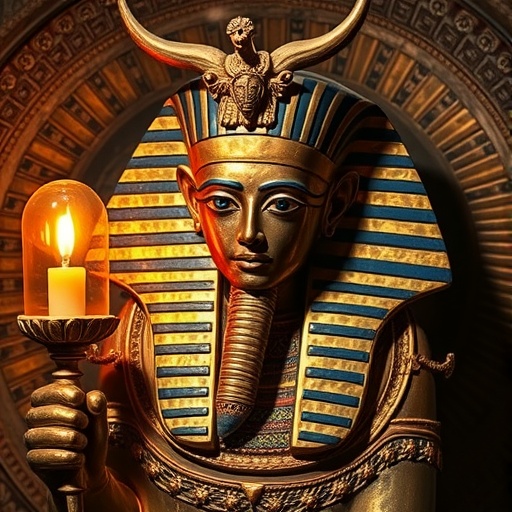
The alabaster vessel, crafted from calcite quarried in Egypt, bears inscriptions in four ancient languages—Akkadian, Elamite, Persian, and Egyptian—linking it to Xerxes I of the Achaemenid Empire, which spanned from 486 to 465 BCE. Such multilingual artifacts are exceedingly rare, with fewer than ten intact inscribed alabaster vessels known worldwide. Notably, similar vessels have been recovered from the famed tomb of Pharaoh Tutankhamun, hinting at the possibility that these iconic relics may contain traces of opiates as well.
YAPP’s advanced residue analysis integrated ethnographic insight with cutting-edge chemical techniques to investigate organic materials preserved within the vase. Over millennia, organic residues tend to degrade, presenting immense analytical challenges. However, their methodical approach identified key opiate alkaloids including noscapine, hydrocotarnine, morphine, thebaine, and papaverine. These compounds serve as unequivocal biomarkers, decisively linking the vessel’s contents to opium use—a breakthrough that substantiates long-held suspicions among historians and archaeologists.
This discovery aligns with earlier findings of opiate residues in Egyptian alabaster containers and Cypriot base-ring juglets excavated from a merchant tomb in Sedment, Egypt, dating back to the New Kingdom period (16th–11th century BCE). The presence of opium across disparate contexts and time periods underscores its ubiquitous role, transcending social classes and suggesting a culturally entrenched pharmacopeia within ancient Egyptian and neighboring civilizations.
The implications extend to the renowned alabaster vessels of Tutankhamun’s Valley of the Kings tomb, which harbor dark aromatic residues. Analysis performed in 1933 by Alfred Lucas, part of Howard Carter’s excavation team, indicated these organics were not typical perfumes or unguents, though he lacked the capability for precise chemical identification. The new study revitalizes this line of inquiry, proposing that the vessels’ contents may indeed have included opium or related preparations, vital enough to be interred with the pharaoh and valuable enough to incite grave robbing attempts.
Beyond pharmacology, the research positions opium as an agent interwoven with the spiritual and ritual fabric of ancient societies. In Mesopotamia, Egypt, the Aegean, and Crete, opium and the poppy plant held ritual significance, evidenced by iconography such as the “poppy goddess” and textual references from the Ebers Papyrus to Hippocrates and Galen’s treatises. This suggests that opium was employed in various spheres ranging from therapeutic to ceremonial, indicating a nuanced and sophisticated understanding of its effects.
YAPP’s transdisciplinary methodology—melding archaeological context with biomolecular science—affords an unparalleled window into antiquity. By probing the chemical signatures of ancient containers, researchers can reconstruct facets of daily life, pharmacology, and socio-religious practices often obscured by the passage of time. The pending analysis of King Tut’s vessels at the Grand Egyptian Museum may unveil further secrets and elucidate the role of opiates in elite ancient Egyptian society.
This study not only enriches historical narratives but also challenges modern perceptions of ancient drug use, revealing that opium was embedded in cultural identities and lived experiences, rather than an accidental or marginal presence. The work underlines the critical importance of technological advancements in residue analysis in unlocking the complex interplay between humans and psychoactive substances across history.
Moreover, the research highlights the significance of legacy artifacts—those long housed in museum collections—as reservoirs of untapped scientific information. Techniques capable of isolating fragile organic residues in these objects enable fresh insights, transforming static relics into dynamic testimonies of prehistoric lives.
The presence of opiate biomarkers in vessels linked to both elites and commoners over centuries underscores a continuum of cultural transmission and adoption. It also raises provocative questions regarding the social functions of opium: Was it a medicinal tool, a sacred elixir, or a recreational substance? The evidence elicits a reassessment of ancient pharmacology, one that integrates ritualistic, medicinal, and possibly hedonistic dimensions.
In conclusion, Yale’s research charts new territory in archeopharmacology, revealing that opium use was a considerable, culturally embedded phenomenon in ancient Egypt and its environs. The intersection of archaeology, chemistry, and ethnography in this study illuminates how psychoactive substances were incorporated into social and spiritual life, offering a more textured, intricate portrayal of antiquity than previously understood.
Web References:
http://dx.doi.org/10.5325/jeasmedarcherstu.13.3.0317
Media Contact:
Bess Connolly
Yale University
elizabeth.connolly@yale.edu
Cell: 203-410-5032
Cite Scienmag News
Courtney Benton. (November 12, 2025). Ancient Opium Use Uncovered: From Xerxes’ Empire to King Tut’s Tomb. Scienmag. https://scienmag.com/ancient-opium-use-uncovered-from-xerxes-empire-to-king-tuts-tomb/
Courtney Benton. "Ancient Opium Use Uncovered: From Xerxes’ Empire to King Tut’s Tomb." Scienmag, 12 November 2025, https://scienmag.com/ancient-opium-use-uncovered-from-xerxes-empire-to-king-tuts-tomb/. Accessed 5 September 2026.
Courtney Benton. "Ancient Opium Use Uncovered: From Xerxes’ Empire to King Tut’s Tomb." Scienmag. November 12, 2025. https://scienmag.com/ancient-opium-use-uncovered-from-xerxes-empire-to-king-tuts-tomb/


