


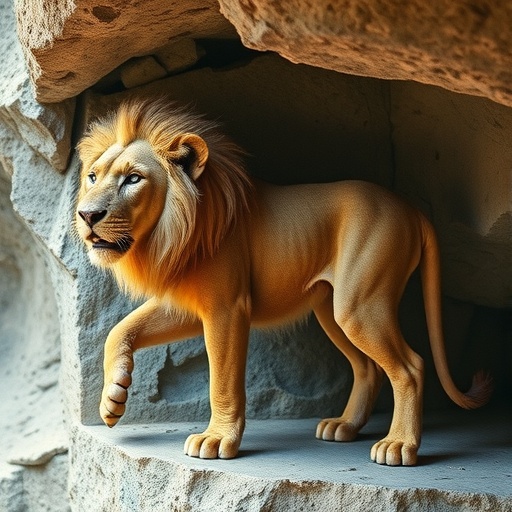
A groundbreaking study recently published in the prestigious journal Cell has illuminated the intricate evolutionary history of the extinct cave lion, shedding new light on this majestic predator’s divergence from modern lions and its dynamic interactions with changing climates over the last million years. Using an unprecedented dataset of 12 ancient genomes from cave lions spanning Eurasia and North America alongside 20 genomes of present-day lions, researchers have unveiled a story of deep evolutionary separation, episodic interbreeding, and remarkable adaptability that challenges long-held assumptions about this prehistoric species.
The international research team, led by scientists at the Centre for Palaeogenetics—an interdisciplinary hub jointly operated by Stockholm University and the Swedish Museum of Natural History—performed comprehensive genomic sequencing on fossilized remains ranging from teeth and bones to exceptionally preserved soft tissue specimens. Notably, the genetic material was extracted from two remarkably intact cave lion cubs found in northeastern Siberia, specimens that have provided a unique molecular window into the past and helped refine radiocarbon dating to approximately 32,000 years before present.
Contrary to the simplified view of cave lions as merely larger or more robust versions of their modern relatives, the genomic evidence reveals a deeply distinct lineage that evolved independently for over a million years. Sophisticated molecular clock analyses indicate that the split between the cave lion lineage and modern lions likely occurred well over 1.5 million years ago—much earlier than prior estimates. This finding highlights a level of evolutionary divergence comparable to other notable carnivore species separations, underscoring the cave lion’s unique biological identity.
Delving into functional genomics, the research identified a suite of genetic mutations exclusive to cave lions, many of which are predicted to influence protein functions related to neurological processes, sensory perception, particularly vision, as well as growth and circulatory system development. These genomic signatures provide a molecular foundation that correlates with archeological and paleontological records, including differences observed in cave art and fossils that imply variations in size, cognitive abilities, behavior, and ecological specialization compared to modern lions.
While the divergence between these two lion lineages was profound, the study uncovers a complex picture of repeated gene flow between cave and modern lions throughout their coexistence. Several episodes of interbreeding were detected spanning tens of thousands of years, albeit contributing a modest yet significant portion to the cave lion gene pool. These hybridization events appear to have been intricately connected to Pleistocene climatic fluctuations, notably periods of extensive glaciation which forced shifts in habitat ranges.
During colder epochs marked by the expansion of ice sheets, the cave lion populations are believed to have migrated southward, overlapping territories with modern lion populations primarily found in Central and Southwest Asia. This geographic and ecological convergence created narrow windows of opportunity for genetic exchange, as demonstrated by the increased presence of modern lion ancestry within cave lion genomes during these climatic phases.
The findings highlight the role of ancient climate dynamics not merely as drivers of habitat transformation but as active facilitators of biological interactions between species that were previously separated. Such episodes of hybridization could have had profound implications for the adaptive capacity and survival strategies of both lineages in response to environmental stressors during the Pleistocene.
Further genomic analyses suggest that the most probable source of modern lion gene flow into cave lion genomes was a now-extinct population of lions inhabiting Southwest Asia, a region that functioned as a crucial biogeographic nexus during periods of glacial maxima. This population acted as a genetic bridge, integrating distant evolutionary trajectories under climate-induced shifts in distribution.
In addition to inter-lineage admixture, the cave lion populations themselves demonstrated high levels of genetic connectivity across vast geographic expanses of Eurasia. This connectivity implies that gene flow among cave lion groups was frequent and widespread, resulting in rapid dissemination of genetic diversity despite the physical barriers posed by the expanding and retreating ice sheets.
This comprehensive genomic portrait of the cave lion not only resolves long-standing debates about its taxonomic status and evolutionary relationship to modern lions but also enriches our understanding of how climatic forces have historically shaped predator evolution and interspecies interaction networks. The study exemplifies the power of paleogenomics to revive the hidden histories encoded in extinct species’ DNA, offering nuanced insights into evolutionary biology and conservation science.
As the field of ancient DNA continues to advance, such integrative approaches combining genetic, paleontological, and climatic data promise to unravel further the complex stories of prehistoric life and their enduring impact on today’s biodiversity.
News Publication Date: 3-Jun-2026
Web References:
DOI: 10.1016/j.cell.2026.05.007
Cite Scienmag News
Juliet Wilcox. (June 3, 2026). Ancient Genomes Uncover the Remarkable History of the Extinct Cave Lion. Scienmag. https://scienmag.com/ancient-genomes-uncover-the-remarkable-history-of-the-extinct-cave-lion/
Juliet Wilcox. "Ancient Genomes Uncover the Remarkable History of the Extinct Cave Lion." Scienmag, 3 June 2026, https://scienmag.com/ancient-genomes-uncover-the-remarkable-history-of-the-extinct-cave-lion/. Accessed 3 September 2026.
Juliet Wilcox. "Ancient Genomes Uncover the Remarkable History of the Extinct Cave Lion." Scienmag. June 3, 2026. https://scienmag.com/ancient-genomes-uncover-the-remarkable-history-of-the-extinct-cave-lion/


