

The enduring partnership between humans and dogs is a defining feature of our shared history, yet the precise origins of this relationship have remained elusive for decades. A groundbreaking new study has now pushed the timeline of dog domestication back significantly, presenting compelling genetic evidence that dogs were living alongside humans as early as 14,000 years ago. This discovery redefines our understanding of the ancient bond between humans and their canine companions and sheds light on the evolutionary processes that gave rise to the first domesticated dogs.
For years, archaeologists and geneticists have debated when and where dogs first diverged from their wolf ancestors to become humanity’s earliest domesticated animals. Previous research was limited by fragmented DNA samples and the inherent difficulty of distinguishing early domesticated dogs from wild wolves based solely on skeletal morphology, as the initial stages of domestication did not produce pronounced physical differences. However, this new study breaks through these obstacles by leveraging whole-genome sequencing techniques on ancient canid remains, allowing researchers to analyze comprehensive genetic information from individuals over 10,000 years old.
The research team, an international coalition of experts from institutions including the University of York and the Natural History Museum in London, examined ancient DNA extracted from animal bone assemblages recovered from archaeological sites at Gough’s Cave in the UK and Pınarbaşı in Türkiye. These sites date to the Late Upper Palaeolithic period, a time long predating the development of agriculture and settled societies, providing direct genomic snapshots of canid populations living in close proximity to hunter-gatherer humans during the final phases of the last Ice Age.
Their genomic reconstructions conclusively identified the remains as those of early domesticated dogs, not wolves, thereby extending the known timeline of dog domestication by more than 5,000 years. This evidence firmly establishes that domestic dogs were not a Neolithic phenomenon linked to farming communities but were already widespread across Western Eurasia during the Palaeolithic. Such findings challenge previous models and suggest that the domestication of dogs represents the earliest known example of animal domestication, preceding the domestication of plants and other animals by several millennia.
Crucially, the study’s holistic approach included isotopic dietary analysis, which provided insights beyond genetics alone. By assessing the ratios of carbon and nitrogen isotopes in the collagen of dog, human, and wolf bones from the same archaeological contexts, researchers could infer the long-term diets and ecological niches occupied by these groups. This revealed that early domestic dogs shared a diet with local humans, especially notable in Pınarbaşı, where dogs consumed significant quantities of fish—mirroring human dietary patterns. The dietary congruence strongly implies intentional feeding and care, underscoring a sophisticated, mutually beneficial relationship between humans and dogs during this early period.
Professor Oliver Craig from the University of York highlighted the challenges inherent in distinguishing the earliest domesticated dogs from wolves, noting that “during the earliest stages of domestication, dogs and wolves were nearly indistinguishable physically, and behavioral traits do not fossilize.” The advent of whole-genome reconstruction overcome these limitations, allowing for definitive classification through genetic signatures rather than morphology alone. This technological innovation marks a significant advance in paleogenomics and archaeology.
Further genomic analyses revealed that early dogs from Gough’s Cave and Pınarbaşı are genetically closer to the ancestors of modern European and Middle Eastern dog breeds than to those from Arctic lineages. This points to the early establishment of major canine lineages across Eurasia around 15,000 years ago. Dr. Lachie Scarsbrook of LMU Munich emphasized this, noting the existence of genetically diverse dog populations spanning vast geographical ranges, from Somerset in Britain to Siberia, suggesting a complex history of domestication, migration, and regional adaptation.
The widespread dispersal of dogs during this era was affirmed by additional identifications of ancient dogs from archaeological sites in Germany, Italy, and Switzerland. These discoveries underscore the extensive integration of dogs within Palaeolithic hunter-gatherer societies, particularly among Epigravettian and Magdalenian cultural groups as the Ice Age waned. The presence of dogs across diverse human communities reflects the significant roles dogs likely played, potentially including hunting assistance, companionship, and protection.
While the specific nature of the early human-dog dynamic remains partially speculative, evidence such as intentional dog burials hints at emotional or symbolic significance attributed to these animals by prehistoric people. The deliberate interment of dogs alongside humans suggests early recognition of their social and cultural value, highlighting a dimension of the relationship that likely transcended utilitarian functions.
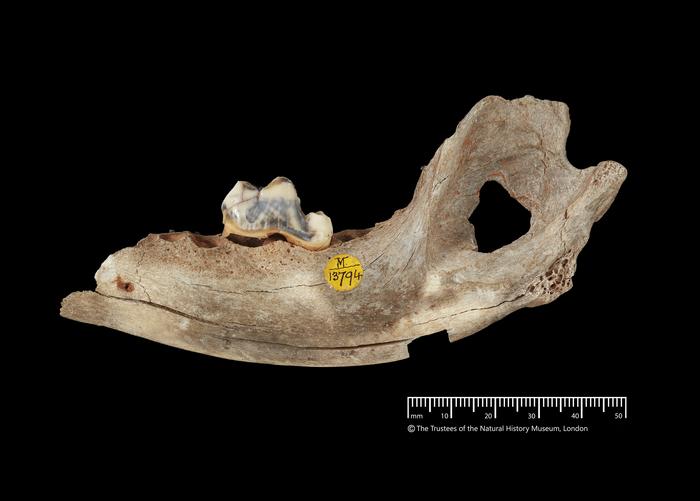
One of the most remarkable specimens—a dog jawbone from Gough’s Cave dating to approximately 15,000 years ago—is now considered the oldest known domesticated dog remain in the UK. This fossil, alongside genetic and dietary data, paints a vivid picture of the deep temporal roots of the human-canine bond. Dr. Sophy Charlton from the University of York remarked that the research “reveals the beginnings of a human and canine bond that continues to this day,” emphasizing the foundational nature of these prehistoric relationships for the lineages of modern dogs.
The study, titled Dogs were widely distributed in Western Eurasia during the Palaeolithic, offers a compelling narrative that reshapes long-held assumptions about domestication timelines and processes. Published in the prestigious journal Nature, it also accompanies related research exploring the broader genetic history of early dogs across Europe, collectively advancing our understanding of how one of humanity’s most beloved companions first became part of our story.
This research not only enriches the scientific community’s knowledge of domestication but has the potential to resonate widely with the public, given the universal appeal of dogs and their longstanding place in human culture. By illuminating our species’ shared journey with dogs over the millennia, this work reminds us of the profound biological and cultural legacies encoded in our relationship with animals, stretching back to the twilight of the Ice Age.
Subject of Research: Early domestication and genetic history of dogs in Western Eurasia during the Palaeolithic period
Article Title: Dogs were widely distributed in Western Eurasia during the Palaeolithic
News Publication Date: (Not explicitly provided in the source)
Web References: https://www.eurekalert.org/multimedia/1121719
References: Published in the journal Nature
Image Credits: The Trustees of the Natural History Museum, London
Keywords: Animal domestication, Archaeology, Canine genetics, Palaeolithic era, Dog domestication, Ancient DNA, Isotopic dietary analysis, Hunter-gatherer societies, Evolution of dogs


