


A groundbreaking interdisciplinary study recently published in the prestigious journal Nature illuminates the intricate population dynamics and agricultural transitions in Argentina’s Uspallata Valley (UV) over the past two millennia. As a southern frontier for the ancient spread of Andean farming, the Uspallata Valley offers a unique lens through which scientists have begun to decode the complex interplay between local hunter-gatherer societies and incoming agricultural practices. This research, integrating ancient human and pathogen genomics, isotopic analyses, archaeology, and paleoclimate data, unfolds a nuanced story of resilience, migration, and cultural endurance amid environmental and social upheavals.
The central inquiry of this study questions the mechanisms behind the expansion of agriculture: did it spread primarily through the movement of farming populations, or did indigenous hunter-gatherers adopt new agricultural techniques via cultural diffusion? Archaeological evidence alone often struggles to differentiate between these scenarios because material culture signatures from both migrations and local adoption can appear remarkably similar. The Uspallata Valley’s position at the margins of ancient Andean agricultural expansion, where farming arrived centuries later than in central domestication hubs, provides a critical case study to tease apart these complex historical processes.
The research team, led by the Microbial Paleogenomics Unit (MPU) at the Institut Pasteur, conducted genome-wide ancient DNA sequencing on 46 individuals whose remains spanned from the pre-agricultural hunter-gatherer era to later maize-farming communities. Remarkably, their results revealed strong genetic continuity across this temporal span. This indicates that local hunter-gatherer populations gradually incorporated maize and other crops into their subsistence strategies, rather than being entirely replaced by migrating agriculturalists. Such continuity challenges the simplistic narrative that farming cultures expanded solely by supplanting indigenous groups.
Further genomic analysis exposed an ancestral genetic component within the southern Andes, previously only inferred from present-day populations. This deep genetic divergence persists in the region, contradicting claims that indigenous descendants in this area were wiped out following the formation of the Argentine nation-state. The preservation of this lineage underscores enduring indigenous presence and resilience in the face of historical colonial and post-colonial pressures.
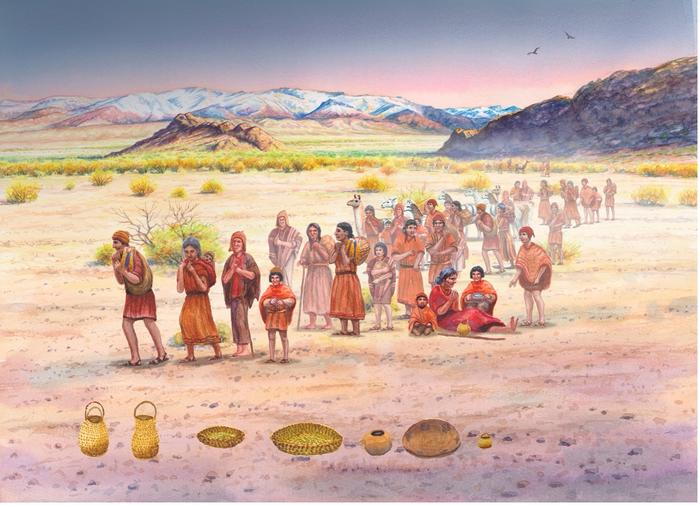
To reconstruct lifeways and mobility, the study employed stable isotope analysis on skeletal remains. Carbon and nitrogen isotopes traced dietary reliance on maize and other crops across individuals’ lifetimes, while strontium isotopes pinpointed residential mobility by reflecting geological signatures specific to different geographic locations. Results showed fluctuating maize consumption over time, suggesting a flexible rather than linear agricultural transition. Intriguingly, between roughly 800 and 600 years ago, the cemetery site of Potrero Las Colonias revealed individuals with remarkably high maize reliance—among the highest documented in the southern Andes—and non-local strontium signatures consistent with migration within a limited geographical area.
Despite their movement, these migrants were genetically related to local populations, belonging to the same broader metapopulation. However, genomic data highlighted sustained demographic decline among them, implying multi-generational stress potentially caused by intertwined environmental, nutritional, and epidemiological challenges. Paleoclimate records point to prolonged periods of climatic instability during this era, which likely exacerbated resource scarcity and heightened vulnerability.
Skeletal analyses further unveiled evidence of nutritional deficiencies and infectious disease during childhood. Most notably, ancient DNA screening detected strains of tuberculosis endemic to pre-contact South America, a groundbreaking finding that pushes the known southern range of this pathogen and raises questions about its transmission routes and environmental drivers. This discovery emphasizes the importance of integrating pathogen genomics into archaeological and anthropological frameworks, revealing another dimension of human adaptation and struggle.
Delving into social structures, the team’s kinship analyses revealed networks predominantly connected through maternal lineages. The persistence of a single mitochondrial haplotype dominating among migrants suggests women played a crucial role in maintaining family continuity and orchestrating kin-based migration strategies. These patterns reflect deliberate, sustained movements over decades, rather than sporadic or forced displacements, highlighting the significance of family ties in navigating societal crises.
Contrary to expectations of conflict, burial practices exhibited peaceful coexistence between resident and migrant groups, with some individuals interred in shared mortuary contexts. This points toward social integration and cooperation, rather than antagonism. The absence of violence further reinforces the view that migration served as an adaptive resilience mechanism to environmental and demographic pressures.
Collectively, the study underscores that the adoption of agriculture in the Andes was neither uniform nor unidirectional. Instead, it was shaped by local ecological conditions, kinship-driven mobility, and adaptive responses to complex crises involving environmental degradation, nutritional stress, and infectious diseases. These insights challenge monolithic narratives of agricultural expansion and highlight the nuanced ways in which ancient communities combined biological, cultural, and social resources to persist through adversity.
Importantly, this research was conducted in close collaboration with the Huarpe Indigenous communities, whose members contributed actively to shaping research questions and interpreting data. Such ethical engagement ensures that scientific narratives respect living descendants and reflect their perspectives, transforming the traditional practice of archaeology and paleogenomics into a more inclusive and reflexive endeavor.
By combining a suite of advanced methodologies—genomics, isotopic chemistry, archaeological excavation, and paleoclimatology—this study provides a comprehensive reconstruction of human history in a region situated at the crossroads of environment and culture. It articulates how kinship-based social networks underpinned mobility and resilience, illuminating long-term strategies for coping with the multifaceted challenges of climate change, food insecurity, and disease.
These findings carry profound implications not only for understanding ancient Andean societies but also for contemporary discussions around indigenous continuity, cultural heritage, and responses to environmental crises. As modern societies grapple with accelerating climate change and emerging health threats, lessons gleaned from these ancestral experiences offer valuable perspectives on adaptability, social cohesion, and survival.
In conclusion, this landmark study published by the MPU at Institut Pasteur and collaborators exemplifies how integrative approaches can transform our understanding of human history. It situates agricultural transitions and population dynamics within the broader tapestry of environmental flux, disease ecology, and social networks. This holistic vision challenges reductionist interpretations and opens new pathways for exploring resilience strategies that remain vital to human futures.
News Publication Date: 18-Mar-2026
Cite Scienmag News
Courtney Benton. (March 18, 2026). Integrative Archaeogenetics Uncovers How Southern Andean Communities Embraced Farming and Survived Crises. Scienmag. https://scienmag.com/integrative-archaeogenetics-uncovers-how-southern-andean-communities-embraced-farming-and-survived-crises/
Courtney Benton. "Integrative Archaeogenetics Uncovers How Southern Andean Communities Embraced Farming and Survived Crises." Scienmag, 18 March 2026, https://scienmag.com/integrative-archaeogenetics-uncovers-how-southern-andean-communities-embraced-farming-and-survived-crises/. Accessed 3 September 2026.
Courtney Benton. "Integrative Archaeogenetics Uncovers How Southern Andean Communities Embraced Farming and Survived Crises." Scienmag. March 18, 2026. https://scienmag.com/integrative-archaeogenetics-uncovers-how-southern-andean-communities-embraced-farming-and-survived-crises/


