


Previous scientific studies have indicated that North American dog lineages were replaced with European ones between 1492 and the present day. To better understand the timing of this replacement, researchers from the University of Illinois Urbana-Champaign and the University of Iowa sequenced mitochondrial DNA from archaeological dogs. Their findings suggest a complex social history of dogs during the early colonial period.

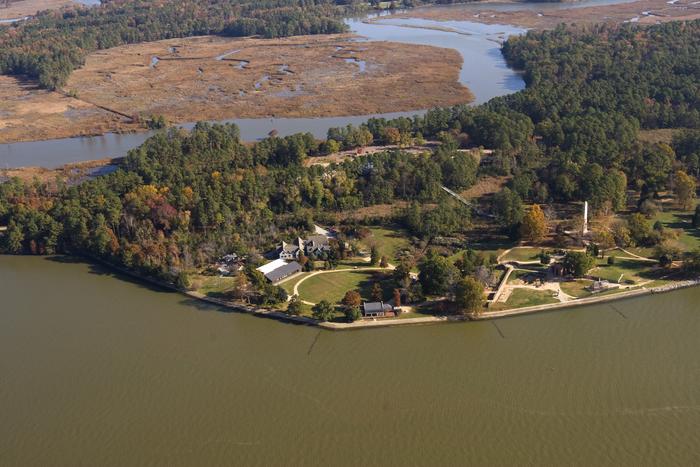
Credit: Jamestown Rediscovery
Previous scientific studies have indicated that North American dog lineages were replaced with European ones between 1492 and the present day. To better understand the timing of this replacement, researchers from the University of Illinois Urbana-Champaign and the University of Iowa sequenced mitochondrial DNA from archaeological dogs. Their findings suggest a complex social history of dogs during the early colonial period.
Europeans and Native Americans valued their dogs as companion animals, using them for similar work and as symbols of identity. Consequently, the dogs reflected the tension between European and Indigenous cultures—the settlers described Indigenous dogs as mongrels to emphasize the perception that Indigenous people did not breed or own their dogs. Indigenous peoples identified European dogs as a direct threat to their existence and took measures to limit the use of European dogs.
“Previous studies had suggested that there were a lot of Indigenous dogs in the continental United States and that they were eradicated,” said Ariane Thomas, a recent PhD graduate of anthropology at the University of Iowa. “We wanted to understand what that entailed: when it happened, were they culled, was it the competition with European dogs, or was it disease?”
The researchers focused on the Jamestown colony in Virginia due to the number of canid remains available at the site and the evidence of Indigenous influence. They worked with Jamestown Rediscovery to identify and analyze 181 canid bones that represented at least 16 individual dogs. Of these, the team selected 22 remains that spanned multiple time points of the early settlement at Jamestown, between 1607 and 1619. They extracted the DNA at the ancient DNA lab in the Core Facilities of the Carl R. Woese Institute for Genomic Biology. The researchers then sequenced the data at the Roy J. Carver Biotechnology Center at Illinois to better understand the ancestry of these dogs.
“This project is a great example of the type of team science that we use at IGB, where people from diverse fields come together to answer questions through the use of complementary skill sets,” said Alida de Flamingh, a postdoctoral researcher in the Malhi (CIS/GSP/IGOH/GNDP) lab.
Based on body size estimates alone, the team discovered that most of the Jamestown dogs weighed between 22-39 lbs, comparable to modern-day beagles or schnauzers. Furthermore, many of the dog bones showed traces of human-inflicted damage, including burning and cut marks.
“The cut marks and other butchery marks we found on them show that some of these dogs were eaten. It implies that when the colonists came over, they didn’t have enough food and they had to rely on the Indigenous dogs in the area,” Thomas said.
Additionally, the DNA sequences demonstrated that at least six of the dogs showed evidence of Indigenous North American ancestry. “Our results show that there were Indigenous dogs in the area and they weren’t immediately eradicated when the Europeans arrived,” Thomas said.
Although the identification of dogs with Indigenous ancestry is not surprising, the results suggest that the colonists and Indigenous tribes may have traded dogs and likely had little concern with possible interbreeding. The researchers are interested in expanding to other sites and obtaining more high-quality DNA samples and reconstructions of dog body size to shed light on whether these dogs had full Indigenous ancestry or whether they were the product of mating with European dogs.
The study “The Dogs of Tsenacomoco: Ancient DNA Reveals the Presence of Local Dogs at Jamestown Colony in the Early Seventeenth Century” was published in American Antiquity and can be found at 10.1017/aaq.2024.25. The work was supported by the National Institutes of Health, the Wenner-Gren Foundation, the University of Illinois Urbana-Champaign, and the University of Iowa.
Journal
American Antiquity
Method of Research
Experimental study
Subject of Research
Animals
Article Title
The Dogs of Tsenacomoco: Ancient DNA Reveals the Presence of Local Dogs at Jamestown Colony in the Early Seventeenth Century
Article Publication Date
22-May-2024
Cite Scienmag News
Gabrielle Wells. (August 16, 2024). Ancient DNA reveals Indigenous dog lineages found at Jamestown, Virginia. Scienmag. https://scienmag.com/ancient-dna-reveals-indigenous-dog-lineages-found-at-jamestown-virginia/
Gabrielle Wells. "Ancient DNA reveals Indigenous dog lineages found at Jamestown, Virginia." Scienmag, 16 August 2024, https://scienmag.com/ancient-dna-reveals-indigenous-dog-lineages-found-at-jamestown-virginia/. Accessed 3 September 2026.
Gabrielle Wells. "Ancient DNA reveals Indigenous dog lineages found at Jamestown, Virginia." Scienmag. August 16, 2024. https://scienmag.com/ancient-dna-reveals-indigenous-dog-lineages-found-at-jamestown-virginia/

