


Islands punch far above their weight in global biodiversity. They cover just 5.3 percent of Earth’s land surface, yet a recent estimate suggests that 31 percent of the world’s plant species are native to islands, with more than 20 percent found nowhere else. At the same time, islands have suffered disproportionate losses: 55 percent of documented vascular plant extinctions have occurred on them. Understanding what drove these changes, and separating natural climate shifts from the ecological footprint of human arrival, has long been one of the central challenges of island palaeoecology. A new assessment published in Frontiers of Biogeography argues that sedimentary ancient DNA, or sedaDNA, could transform how researchers reconstruct these island histories, while also exposing striking geographic and taxonomic biases in the field.
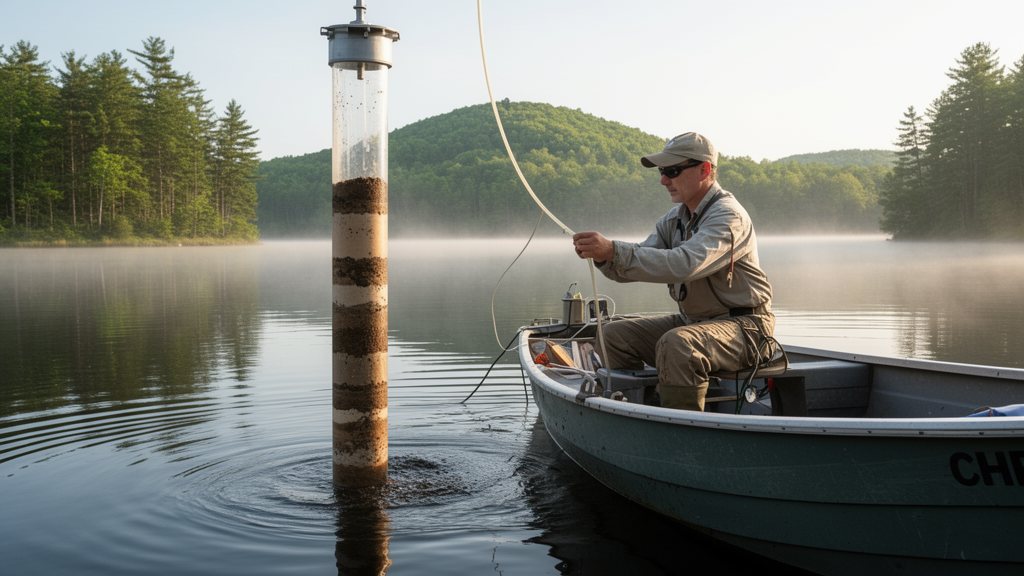
SedaDNA consists of genetic material extracted from chronologically dated sediment sequences, typically cores taken from lake bottoms or wetlands. As sediments accumulate layer by layer, DNA shed by plants, animals and microorganisms becomes trapped in each stratum, creating an archive that can span centuries to millennia. Unlike traditional palaeoecological proxies such as fossil pollen, seeds or charcoal particles, sedaDNA can improve species identification and richness estimates, sometimes resolving taxa that pollen grains cannot distinguish, such as the nearly identical pollen of many grasses. It can also detect organisms poorly represented in the microfossil record, including bryophytes and insect-pollinated forbs, and it has proven valuable for pinpointing the timing of extinction and extirpation events for both animals and plants.
The technique comes in several flavours. Metabarcoding, the most widely used and accessible approach, amplifies a short genomic marker and matches it against reference databases for taxonomic identification. Shotgun metagenomics instead sequences DNA fragments across the whole genome, avoiding PCR amplification biases and recovering very short sequences, an important advantage when working with highly degraded DNA. Target capture enriches DNA from specific taxa using custom-designed probes and has been applied successfully to megafauna and key plant groups such as conifers. Shotgun sequencing and target capture also allow authentication of ancient DNA through characteristic molecular damage patterns. All three methods, however, are constrained by the completeness of the underlying DNA reference databases, the repositories of sequences assigned to named taxa that make identification possible in the first place.
To evaluate the global potential of sedaDNA for island research, the authors of the new study conducted three complementary analyses. They first mapped the geographic and temporal coverage of sedaDNA studies from island ecosystems worldwide. Their literature search identified 46 publications covering just 22 islands, and the majority of these studies, 54.3 percent, focused on the Arctic and Subarctic. Outside the Northern Hemisphere, New Zealand stood out with ten studies. The concentration at high latitudes is no accident: colder climates reduce microbial activity, slowing DNA degradation and increasing the chances of successful recovery, while lower plant diversity and more complete reference libraries raise the odds of accurate identification.
Crucially, the analysis shows that the potential of sedaDNA in warmer regions may have been underestimated. Ancient DNA has been successfully recovered from subtropical and tropical settings, including China, Africa and Indonesia, where a million-year-old island record now exists. Most studies from warm regions, however, derive from continental settings and are typically shorter in temporal extent than Arctic records. Long sedimentary DNA sequences from island systems remain particularly rare, suggesting that temperate and tropical islands, regions of exceptionally high biodiversity, are comparatively underrepresented both in sedaDNA research and in the species-level DNA reference databases needed to interpret the results.
The second analysis quantified these reference gaps. The authors calculated the proportion of chloroplast trnL (UAA) intron P6 loop sequences, the most widely used marker in ancient plant DNA metabarcoding, available in GenBank relative to the vascular floras known from 134 islands and archipelagos, using the Global Inventory of Floras and Traits database. Species-level coverage proved exceptionally high in the Arctic, aided by dedicated regional databases such as ArctBorBryo and PhyloNorway, but declines considerably towards lower latitudes. Tropical islands display a varied pattern: Hawaii shows relatively good coverage, while islands in the Caribbean and parts of the Indian Ocean remain poorly represented. Genus-level coverage across world islands is far more complete, offering promising opportunities to expand island sedaDNA studies even where species-level identification is not yet possible, though high endemism on many tropical islands means that good genus-level coverage may still not fully capture their biodiversity.
The third analysis demonstrates what the technique can achieve when reference coverage is complete and preservation is favourable. Lake Torfdalsvatn in northern Iceland holds a 12,000-year sedaDNA record that tracks the arrival of the Icelandic flora, including species such as Salix, Plantago, Rhodiola rosea and Betula, most of which were present before the Holocene Thermal Maximum in Iceland around 7,900 to 5,500 calibrated years before present. Extended sea ice during earlier periods may even have served as a dispersal vector for many plants. The record then captures the Norse settlement of Iceland around AD 870 and the introduction of sheep, which became central to Icelandic agriculture and exerted considerable grazing pressure on native plant communities.
In new analyses presented in the study, the authors re-amplified DNA from the Torfdalsvatn extracts with mammal-specific primers targeting the mitochondrial 16S rRNA region, applying blocking primers to prevent amplification of human DNA and running extensive negative controls. Sheep were detected in the record at 1,055 calibrated years before present, approximately AD 895, just before a major shift in plant community composition at 950 calibrated years before present. Birch declined, likely due to both grazing and land clearing for building materials, while the shrub Juniperus communis, historically used for fodder and construction, vanished from the record entirely. The forbs Angelica archangelica and Rhodiola rosea, long cultivated in Nordic regions for food and medicine, showed marked declines, possibly due to overgrazing that hindered regeneration.
The Iceland case study also goes beyond taxonomy into functional traits. By combining the molecular data with detailed species-trait lists, the researchers tracked shifts in moisture requirement, light requirement and soil disturbance tolerance over 12,000 years. Species-level declines following Norse settlement and sheep introduction align with broader trait-based shifts towards greater light requirements, drier conditions and increased competitiveness, reflecting more disturbed soils. Intriguingly, the shift appears to have begun between 3,000 and 2,000 years ago, predating Norse settlement, suggesting that climate initiated the change. Following settlement, however, anthropogenic pressures intensified: sedimentation rates and geochemical indicators point to increased soil erosion, which may have contributed to the persistence and intensification of changes already underway.
Looking ahead, the authors argue that expanding sedaDNA studies across multiple islands will make it possible to identify shared responses to climate shifts or human activity, as well as ecological trajectories shaped by isolation and habitat diversity. Emerging approaches add further promise: applying lower similarity thresholds when matching sequences to reference databases could help infer plant extirpations and extinctions, a method already used to identify possible plant extinctions in Siberia and Alaska. SedaDNA is also beginning to be applied in population genetics and phylogeography, enabling researchers to track intraspecific genetic diversity over time. With targeted investment in reference libraries, particularly in biodiverse tropical regions such as Madagascar and New Guinea, and with herbarium specimens offering a shortcut to generating new sequences, sedimentary ancient DNA could soon provide the historical baselines needed to understand, and conserve, the world’s most threatened island biotas.
Subject of Research: Island palaeoecology and sedimentary ancient DNA
Article Title: The potential of sedimentary ancient DNA to increase our understanding of island ecosystem dynamics
Article References: O'Reilly-Berkeley, X., Lammers, Y., Rijal, D. P., Steinbauer, M. J., Schrader, J., Weigelt, P., Kreft, H., Alsos, I. G., & Nogué, S. (2026). The potential of sedimentary ancient DNA to increase our understanding of island ecosystem dynamics. Frontiers of Biogeography, 19, Article e175973. https://doi.org/10.21425/fob.19.175973
Image Credits: AI Generated
Keywords: potential, sedimentary, ancient, increase, understanding, island, ecosystem, dynamics, scientific research
Cite Scienmag News
Gabrielle Wells. (October 17, 2026). Ancient DNA in lake sediments reveals hidden histories of island ecosystems. Scienmag. https://scienmag.com/ancient-dna-in-lake-sediments-reveals-hidden-histories-of-island-ecosystems/
Gabrielle Wells. "Ancient DNA in lake sediments reveals hidden histories of island ecosystems." Scienmag, 17 October 2026, https://scienmag.com/ancient-dna-in-lake-sediments-reveals-hidden-histories-of-island-ecosystems/. Accessed 17 October 2026.
Gabrielle Wells. "Ancient DNA in lake sediments reveals hidden histories of island ecosystems." Scienmag. October 17, 2026. https://scienmag.com/ancient-dna-in-lake-sediments-reveals-hidden-histories-of-island-ecosystems/


