


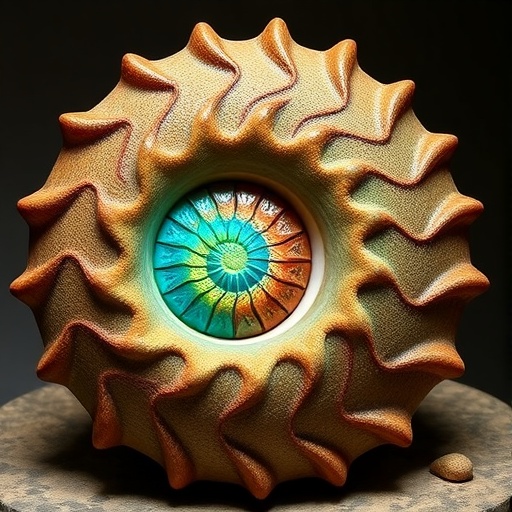
Nautilus, often referred to as a living fossil due to its ancient lineage and minimal evolutionary change over hundreds of millions of years, offers a compelling glimpse into both the history and biology of cephalopods. These externally shelled marine creatures diverged from their more familiar relatives, such as squids and octopuses, over 400 million years ago and were once prolific in Earth’s oceans. Today, however, nautiloids inhabit a limited range primarily in the Southern Indo-Pacific region, surviving as rare remnants of a prehistoric world and classified under CITES appendix II due to concerns about over-exploitation and habitat loss. Despite their iconic status, critical aspects of their biology, especially mechanisms underpinning sex determination, have remained elusive—until now.
Traditionally, cephalopods have been believed to possess a ZZ/Z0 sex determination system, a genetic mechanism where males carry two identical sex chromosomes (ZZ), and females carry only one (Z0). This model, thought to have originated around 480 million years ago, positioned cephalopods among the oldest animals with a conserved sex determination system. This assumption, however, arose largely from indirect evidence and lacked concrete molecular validation, leaving gaps in our understanding of how sex is genetically determined in these complex invertebrates.
Recently, an international consortium of researchers led by Professor David Combosch at the University of Guam, in collaboration with Professor Gonzalo Giribet of Harvard University’s Museum of Comparative Zoology, undertook a comprehensive genomic analysis to revisit this paradigm. Their findings, published in Current Biology, challenge the long-standing assumption by presenting compelling evidence that chambered nautiluses utilize an XX/XY sex determination system. This discovery places nautiloids closer in alignment with humans and many vertebrates, where males are heterogametic (XY), signifying an evolutionary trajectory distinct from that of their cephalopod relatives and other mollusks.
The research team employed cutting-edge genomic techniques, including low-coverage whole-genome sequencing and restriction site-associated DNA sequencing (RAD-seq), to investigate genetic differences across multiple nautilus species and populations. This multi-pronged approach analyzed 28 low-coverage genomes alongside 63 RAD-seq datasets derived from six species, capturing an unprecedented depth of genomic variation. Bayesian statistical modeling, together with detailed assessments of heterozygosity and genome coverage discrepancies between sexes, allowed the researchers to delineate sex-linked genomic regions with remarkable precision.
Through these analyses, the investigators identified a specific DNA segment unequivocally linked to the X chromosome and uncovered five additional genomic scaffolds that exhibited male-specific patterns consistent with Y-linkage. These Y-linked scaffolds collectively harbored 36 genes that demonstrated either male exclusivity or significant enrichment in male individuals. This represents the first documented identification of X- and Y-linked sequences within any cephalopod lineage, thereby marking a watershed moment in the field of molluscan genetics and sex chromosome biology.
Functional annotation of these male-associated genes revealed striking homology to human genes implicated in reproductive tissue development and sex-related phenotypes. This was corroborated by genome-wide association studies and gene ontology enrichment analyses, which further substantiated the involvement of these genes in sex-specific biological functions. Intriguingly, chromosome number four was designated as the X chromosome, refuting earlier assumptions that nautilus sex chromosomes paralleled the Z and W chromosomes found in birds and certain reptiles. This novel insight underscores the dynamic and lineage-specific nature of sex chromosome evolution within mollusks, showcasing remarkable genetic diversity hitherto unappreciated in this ancient clade.
Despite the significance of these discoveries, certain limitations tempered the study’s comprehensiveness. Notably, the absence of chromosome-level genome assemblies for male nautiluses restricted full characterization of Y chromosome architecture and its evolutionary history. This gap highlights an urgent need for high-resolution genomic mapping and epigenetic profiling to unravel the complexities of sex chromosome differentiation in these animals. Nonetheless, the foundational data generated sets the stage for future research aimed at elucidating how sex determination systems have evolved not only in nautiloids but also across broader cephalopod taxa.
Understanding the genetic basis of sex determination in nautiluses carries implications that extend beyond evolutionary biology. Multiple nautilus species face vulnerabilities owing to overharvesting and degradation of their marine habitats, bringing conservation into sharp focus. Insight into their reproductive genetics could inform targeted management strategies by informing breeding programs, population monitoring, and protective regulations. As anthropogenic pressures mount on marine ecosystems, genomic tools offer vital avenues to safeguard biodiversity and maintain ecological resilience.
This groundbreaking study reframes our perspective on the evolutionary pathways governing sex chromosomes within the animal kingdom. It emphasizes how even fundamental biological mechanisms, considered static over deep time, can undergo profound shifts within specific lineages. By revealing the presence of an XX/XY system in nautiluses, scientists now appreciate both the diversity of sex determination tactics and the ongoing evolutionary plasticity shaping life’s genetic blueprint.
Professor Combosch reflected on the study’s broader significance: “Our findings fundamentally alter how we understand cephalopod genetics and illuminate the evolutionary history of some of the ocean’s most enigmatic creatures. This research reminds us that biological systems, no matter how seemingly ancient or conserved, can evolve rapidly and in unexpected directions.”
Future exploration fueled by these findings promises to deepen knowledge of molluscan biology, enhance conservation efforts, and refine evolutionary models of sex chromosome development. As genomic technologies continue to advance, the veil over nautilus genetics is lifting, revealing a complex and dynamic narrative of genetic innovation within one of the Earth’s oldest surviving groups of marine animals.
Cite Scienmag News
Juliet Wilcox. (August 15, 2025). Ancient Cephalopod Unveiled: Nautilus Exhibits Surprising Sex Chromosome System. Scienmag. https://scienmag.com/ancient-cephalopod-unveiled-nautilus-exhibits-surprising-sex-chromosome-system/
Juliet Wilcox. "Ancient Cephalopod Unveiled: Nautilus Exhibits Surprising Sex Chromosome System." Scienmag, 15 August 2025, https://scienmag.com/ancient-cephalopod-unveiled-nautilus-exhibits-surprising-sex-chromosome-system/. Accessed 3 September 2026.
Juliet Wilcox. "Ancient Cephalopod Unveiled: Nautilus Exhibits Surprising Sex Chromosome System." Scienmag. August 15, 2025. https://scienmag.com/ancient-cephalopod-unveiled-nautilus-exhibits-surprising-sex-chromosome-system/


