


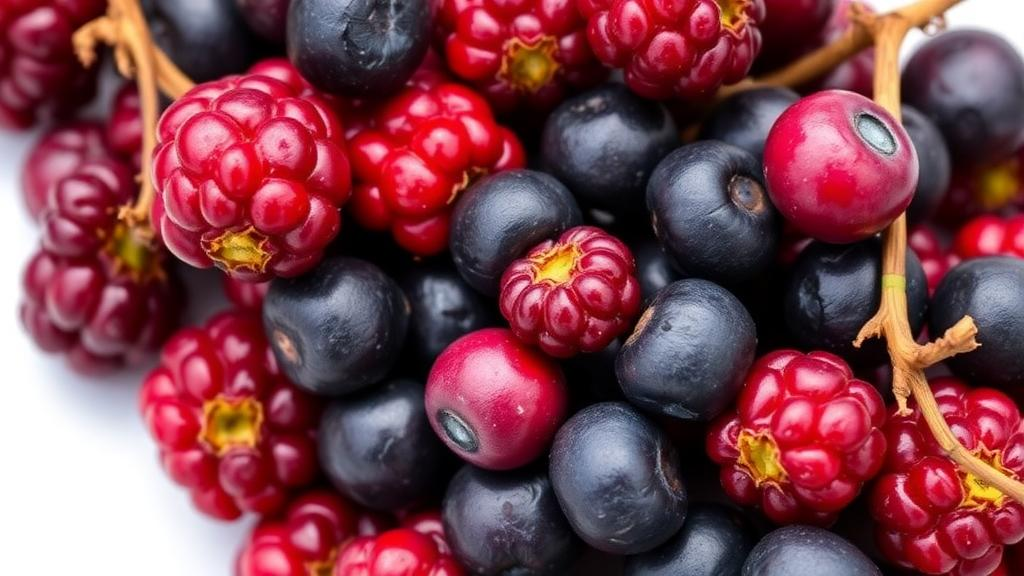
A climbing shrub that has been a staple of Ayurvedic medicine for centuries is now the focus of a meticulous modern chemistry effort. Embelia ribes Burm. f., known traditionally as Vidanga, produces a small orange benzoquinone molecule called embelin that researchers believe could become a valuable natural antioxidant for the cosmetics industry. A team of scientists at Emami Limited in Kolkata, India, has now worked out how to extract and purify this compound quickly and cheaply, and has validated a rapid laboratory test to measure it with precision. Their study, published in Discover Chemistry, offers a practical blueprint that could help move embelin from traditional remedy to industrial ingredient.
The significance of embelin lies in its unusual molecular architecture. Chemically identified as 2,5-dihydroxy-3-undecyl-2,5-cyclohexadiene-1,4-benzoquinone, the molecule combines a quinone ring with a long hydrophobic carbon chain. That structure underpins a striking range of reported biological activities. Embelin has been described as a cell-permeable, non-peptide anticancer agent that selectively targets the BIR3 domain of XIAP, a key regulator of apoptosis, and it has been investigated in the context of neurodegenerative disorders and even antiviral research against SARS-CoV-2. Yet despite this pharmacological promise, the researchers note a persistent gap: the extraction process has never been properly optimized, which has limited the compound’s wider application, particularly in cosmetic formulations aimed at protecting skin from oxidative damage.
To close that gap, the team prepared six different extracts from the fruits of E. ribes, systematically varying both the solvent and the extraction temperature. Finely pulverized berries were extracted with methanol, 50 percent aqueous-methanol, and water, each in triplicate, under two contrasting conditions: a gentle cold extraction using 30 minutes of sonication at room temperature, and a hot extraction lasting four hours at 100 degrees Celsius in a Soxhlet apparatus. The extracts were filtered, pooled, and evaporated under vacuum, then stored chilled for analysis. This comparative design allowed the researchers to see exactly how solvent polarity and heat shape both the quantity and the quality of what comes out of the plant.
The results revealed a clear winner for overall extraction. Cold methanol sonication produced the highest yield at 12.5 percent by weight, while hot water extraction performed worst at 5.6 percent. The cold methanol extract also carried the richest load of total polyphenols, measured by the Folin-Ciocalteu method at 4.92 percent, expressed as gallic acid equivalents. The explanation, the researchers argue, is twofold. Heat appears to denature sensitive phenolic compounds, including embelin itself, while the hydrophobic character of the benzoquinone molecule means it simply does not dissolve well in water-rich systems. Semi-polar organic solvents like methanol are therefore ideally suited to leaching benzoquinone-type compounds from plant material.
Antioxidant performance told a slightly different story. Using the DPPH radical scavenging assay, a standard technique that measures how effectively a sample donates hydrogen atoms to neutralize free radicals, the strongest activity came from the cold aqueous-methanol extract, with an IC50 value of 1.19 micrograms expressed as ascorbic acid equivalents, followed closely by the cold methanol extract at 1.49 micrograms. The hot aqueous-methanol extract was the weakest performer, once again implicating heat as the enemy of antioxidant-active compounds. Importantly, the antioxidant potency of the extracts broadly tracked their polyphenol content, reinforcing a strong correlation between phenolic composition and free radical scavenging ability. The authors point out that the strong DPPH activity of the cold extracts is largely attributable to the overall polyphenol content rather than to embelin’s benzoquinone moiety alone.
With the optimal extract identified, the team turned to purification. Fifteen grams of the cold methanolic extract, absorbed onto silica gel, were loaded into a flash chromatography system, a pressure-assisted technique that dramatically accelerates separation compared with conventional gravity-flow columns. A gradient running from pure n-hexane to pure ethyl acetate, at a flow rate of 30 milliliters per minute and a pressure of 3 to 8 psi, separated the mixture into 95 fractions collected in 15-milliliter test tubes, monitored by ultraviolet detection at 285 nanometers. Fractions containing embelin were pooled and crystallized in hexane, yielding 560 milligrams of an orange amorphous powder, a 0.448 percent yield by weight of the crude extract. The compound’s identity was confirmed by its melting point of 141 degrees Celsius, matching the reported range for authentic embelin, and by mass spectrometry showing characteristic ions consistent with the molecular formula C17H26O4.
The analytical centerpiece of the study is a validated high-performance liquid chromatography method for quantifying embelin. The method uses a gradient of phosphate buffer and acetonitrile on a standard C18 column, detecting embelin at 288 nanometers, and produces a single, well-resolved peak at a retention time of 8.835 minutes. Validation followed the International Council for Harmonization Q2(R2) guidelines, the global benchmark for analytical method quality. Linearity was excellent across the working range of 200 to 1000 nanograms, with a correlation coefficient of 0.999. The limits of detection and quantification were 96.43 and 292.22 nanograms respectively, satisfying the ICH criterion that the quantification limit must be at least three times the detection limit.
The remaining validation parameters were equally convincing. Precision studies, covering system precision, intra-day variation across six independent sample preparations, and inter-day variation across three consecutive days, all produced relative standard deviations well below the 2 percent acceptance threshold. Accuracy was assessed through spike recovery experiments at 80, 100, and 120 percent addition levels, yielding a mean recovery of 95.3 percent, within the acceptable range. Ruggedness was demonstrated by having two different analysts run samples on two different HPLC systems with different column lots, and robustness was confirmed by deliberately perturbing the flow rate by 10 percent and the detection wavelength by 5 nanometers, with results remaining stable throughout. The theoretical plate count of 26,779 and a tailing factor of 1.338 further indicated good column efficiency and peak symmetry.
When the validated method was applied across all six extracts, an intriguing nuance emerged. The hot methanol extract actually contained the highest embelin content, at 22.33 percent, compared with 11.94 percent in the cold methanol extract, likely because higher temperatures improve the solubility and diffusion of the lipophilic embelin molecule even as they degrade thermo-labile polyphenols. The cold aqueous-methanol extract contained only a trace at 0.247 percent, and no embelin was detectable in any of the purely aqueous extracts, conclusively confirming the compound’s hydrophobic nature. This creates a practical decision point: cold methanol extraction is the better choice when the goal is to preserve antioxidant-active polyphenols and potential anti-photoaging activity, while hot methanol extraction may be preferred when maximizing pure embelin yield is the priority. Photoaging, the premature skin aging caused by ultraviolet radiation, is driven by oxidative stress that degrades collagen and elastin, and naturally derived phenolic antioxidants are considered promising candidates to counteract it.
The authors conclude that their optimized cold methanol extraction, combined with flash chromatography and the validated HPLC assay, constitutes a cost-effective and time-saving standard procedure that can be employed for quality control and quality assurance of E. ribes. Because the berries were collected following national guidelines and authenticated by a taxonomist with a deposited voucher specimen, the work also provides a traceable reference material chain. For an industry increasingly hungry for plant-derived actives that can be standardized, quantified, and reproduced batch after batch, the study demonstrates that an ancient Ayurvedic fruit can meet modern analytical expectations, and it opens the door to embelin-enriched extracts being investigated further as reliable sources of antioxidant agents for cosmetic and pharmaceutical development.
Subject of Research: Optimized extraction, flash chromatographic isolation, validated HPLC quantification, and antioxidant evaluation of embelin from Embelia ribes fruits
Article Title: Fast isolation of embelin from Embelia ribes Burm. f. by comparative evaluation of extract, HPLC method validation and evaluation of its antioxidant activity
Article References: Ash, A., Chatterjee, A., Ganguly, S., Mohapatra, S., & Singh, R. (2026). Fast isolation of embelin from Embelia ribes Burm. f. by comparative evaluation of extract, HPLC method validation and evaluation of its antioxidant activity. Discover Chemistry, 3(1), Article 575. https://doi.org/10.1007/s44371-026-01006-8
Image Credits: AI Generated
DOI: 10.1007/s44371-026-01006-8
Keywords: embelin, Embelia ribes, Ayurvedic medicine, antioxidant activity, HPLC validation, flash chromatography, polyphenols, DPPH assay, natural products, cosmetic ingredients, benzoquinone, extraction optimization
Cite Scienmag News
Bethany Barker. (October 11, 2026). Ancient Ayurvedic Berry Yields Potent Antioxidant Through Faster, Cheaper Lab Route. Scienmag. https://scienmag.com/ancient-ayurvedic-berry-yields-potent-antioxidant-through-faster-cheaper-lab-route/
Bethany Barker. "Ancient Ayurvedic Berry Yields Potent Antioxidant Through Faster, Cheaper Lab Route." Scienmag, 11 October 2026, https://scienmag.com/ancient-ayurvedic-berry-yields-potent-antioxidant-through-faster-cheaper-lab-route/. Accessed 11 October 2026.
Bethany Barker. "Ancient Ayurvedic Berry Yields Potent Antioxidant Through Faster, Cheaper Lab Route." Scienmag. October 11, 2026. https://scienmag.com/ancient-ayurvedic-berry-yields-potent-antioxidant-through-faster-cheaper-lab-route/


