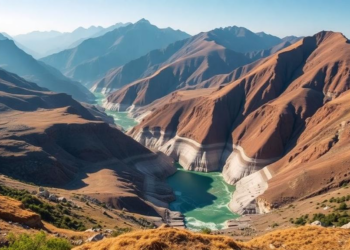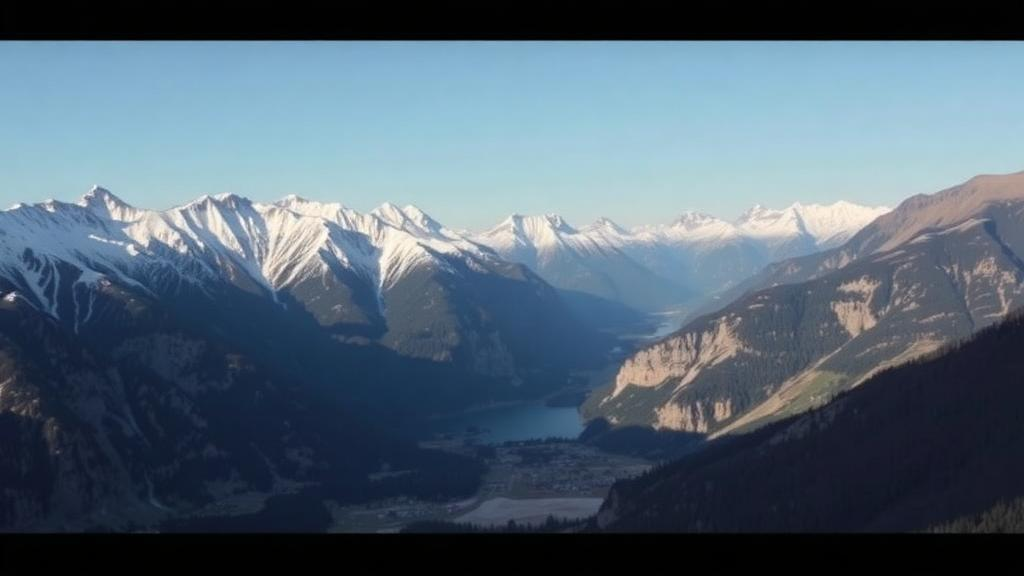
Beneath the gravel plains of the lower Salzach Valley in Austria lies a thick blanket of blue-grey silt and sand that geologists have argued about for decades. Known locally as the Salzburger Seeton, or Salzburg lake clay, these fine-grained sediments are the ghost of a vanished glacial lake that once pooled in a deep trough carved by ice. A new study has now pinned down, for the first time with reliable numerical dating, exactly when this mysterious deposit was laid down, and the answer is rewriting a small but important chapter of Alpine Ice Age history.
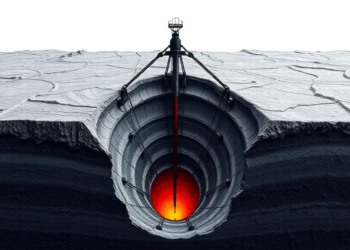
A team of researchers at BOKU University in Vienna, led by Gustav Firla, extracted a 30-meter-long drill core from the bank of the Salzach River near the Urstein hydroelectric power plant, just south of Salzburg. The core, recovered in 2013 with a percussion drilling rig, pierced through the full thickness of the lake sediments and into the coarser materials above. Using single-grain luminescence dating on six samples spread across the entire depth of the core, the team calculated that the sediments were deposited around 18,600 years ago, with an uncertainty of roughly 900 years. That places the lake phase squarely in the late glacial period, after the peak of the Last Glacial Maximum.
The finding matters because the Salzburger Seeton has long been a chronological puzzle. Earlier work relied on radiocarbon dating of peat layers intercalated within the lake sediments, which suggested a much older origin, potentially during the early part of the last glaciation more than 80,000 years ago. Other researchers, studying the geometry of the valley’s sedimentary fill, argued for deposition before the Last Glacial Maximum. The new luminescence ages contradict all of these older estimates and instead support a interpretation first proposed in 1979 by the Austrian geologist Dirk van Husen, who suggested the lake clays were of late Würmian age, deposited as the last ice age was winding down.
Luminescence dating works on a simple but powerful principle: when mineral grains such as quartz or feldspar are exposed to sunlight, the natural radiation dose stored in their crystal lattices is reset to zero. Once the grains are buried and shielded from light, ionizing radiation from surrounding sediments and cosmic rays gradually rebuilds this stored signal. In the laboratory, scientists can measure the light emitted when the grains are stimulated, calculate the total radiation dose absorbed since burial, and divide it by the rate at which that dose accumulated in the environment. The result is the time elapsed since the sediment last saw daylight, which in most settings corresponds closely to the moment of deposition.
For glacial sediments, however, the method faces a serious complication. Ice-transported and water-transported grains are often dumped into lakes without adequate exposure to sunlight, a phenomenon known as poor bleaching. When this happens, some grains retain residual signals from earlier burial episodes, and the measured age distribution becomes skewed toward values that are too old. The researchers observed exactly this pattern: all six samples produced right-skewed equivalent dose distributions, the classic fingerprint of incompletely bleached glacial material. To handle this, they applied a statistical tool called the three-parameter Minimum Age Model, which isolates the population of grains that were best reset at deposition and therefore yields the most accurate burial age.
The team measured potassium-rich feldspar grains individually using a Risø luminescence reader equipped with a single-grain attachment at the Vienna Laboratory for Luminescence Dating. They employed a two-step measurement protocol, detecting one infrared-stimulated signal at 50 degrees Celsius and a second, more thermally stable signal at an elevated temperature of 225 degrees Celsius. This post-infrared infrared stimulation approach is prized because the higher-temperature signal is far less susceptible to anomalous fading, a slow, athermal leakage of the stored signal that would otherwise make feldspar ages appear artificially young. Fading experiments confirmed that the 225-degree signal was essentially stable, while the 50-degree signal required a correction based on measured fading rates.
The comparison between the two signals proved highly informative. Ages derived from the faster-bleaching 50-degree signal were consistently younger than those from the 225-degree signal, exactly as expected if the sediments were incompletely bleached at deposition. Because the 50-degree signal resets more quickly in daylight, the team considers its fading-corrected ages the most faithful record of the last depositional event. Strikingly, the five samples from the lower and middle parts of the core all agreed within their uncertainties, showing no age trend from bottom to top. This pattern indicates that a substantial thickness of lake sediment, spanning roughly 27 meters of the core, accumulated in a geologically brief interval, with a combined average age of 18.6 plus or minus 0.9 thousand years.
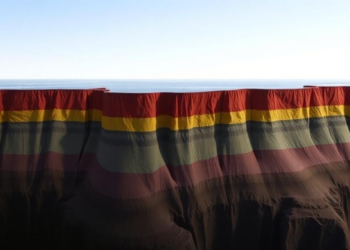
The sedimentology of the core tells a coherent story alongside the dates. The lowest unit, extending from 30 meters down to about 14.6 meters, consists of silt-dominated fines with a coarsening-upward trend and the characteristic blue-greyish color described in classic accounts of the Salzburger Seeton. Above it lies a sandy unit, also coarsening upward, reaching to about 3 meters depth. The topmost unit is dominated by gravel and shows signs of human disturbance, including fragments of roof tiles and bricks. Radiocarbon dating of plant debris from this upper zone returned a modern age of 1966 to 1967, suggesting the surface sediments were reworked during construction of the nearby hydroelectric plant. A basal radiocarbon sample from the lake sediments, meanwhile, was beyond the reliable limit of the method, yielding only a minimum age of greater than 43,500 years.
That discrepancy between the radiocarbon and luminescence results carries its own scientific lesson. Radiocarbon dating measures when organic material last exchanged carbon with the atmosphere, but in glacial environments old plant matter can be eroded from older deposits and swept into younger lakes, where it is buried without any record of its true age. The researchers point to known interglacial deposits near Adnet, southeast of the drill site, as a plausible source of such reworked organic material. Luminescence dating, by contrast, dates the sediment grains themselves and their last exposure to sunlight, making it far more robust against this kind of recycling. The combination of right-skewed dose distributions and conflicting radiocarbon ages thus points convincingly to the presence of ancient, redeposited organic matter within the lake clays.
The study also resonates with parallel work on other overdeepened basins of the northern Alpine Foreland. In a companion investigation of a core from Neusillersdorf west of Salzburg, the same group found that a basin more than 100 meters deep filled rapidly, with no discernible age trend from its base to the top of its fine-grained fill. Together, these results paint a picture of Alpine valleys whose glacially carved depressions were quickly inundated and infilled as the ice retreated after the Last Glacial Maximum, rather than preserving long, slow sedimentary archives spanning multiple ice age cycles. For the lower Salzach Valley, the conclusion is clear: at least the shallow parts of this overdeepened trough were filled by post-glacial lake sediments around 18,600 years ago, closing a long-standing debate with the quiet glow of individual feldspar grains.
Subject of Research: Luminescence dating of glacio-lacustrine sediments in an overdeepened Alpine valley
Article Title: The depositional age of glacio-lacustrine sediments (Salzburger Seeton) from the lower Salzach Valley, Austria
Article References: Firla, G., Fiebig, M., Rauter, T., & Lüthgens, C. (2025). The depositional age of glacio-lacustrine sediments (Salzburger Seeton) from the lower Salzach Valley, Austria. E&G Quaternary Science Journal, 74(2), 213-218. https://doi.org/10.5194/egqsj-74-213-2025
Image Credits: AI Generated
DOI: 10.5194/egqsj-74-213-2025
Keywords: luminescence dating, Salzburger Seeton, Salzach Valley, glacio-lacustrine sediments, Last Glacial Maximum, overdeepened basins, feldspar, Quaternary geology, radiocarbon dating, Alpine foreland, late glacial, Austria
Cite Scienmag News
Violet Maxwell. (October 10, 2026). Ancient Alpine Lake Sediments Finally Dated: Ice Age Waters Filled Austrian Valley 18,600 Years Ago. Scienmag. https://scienmag.com/ancient-alpine-lake-sediments-finally-dated-ice-age-waters-filled-austrian-valley-18600-years-ago/
Violet Maxwell. "Ancient Alpine Lake Sediments Finally Dated: Ice Age Waters Filled Austrian Valley 18,600 Years Ago." Scienmag, 10 October 2026, https://scienmag.com/ancient-alpine-lake-sediments-finally-dated-ice-age-waters-filled-austrian-valley-18600-years-ago/. Accessed 10 October 2026.
Violet Maxwell. "Ancient Alpine Lake Sediments Finally Dated: Ice Age Waters Filled Austrian Valley 18,600 Years Ago." Scienmag. October 10, 2026. https://scienmag.com/ancient-alpine-lake-sediments-finally-dated-ice-age-waters-filled-austrian-valley-18600-years-ago/