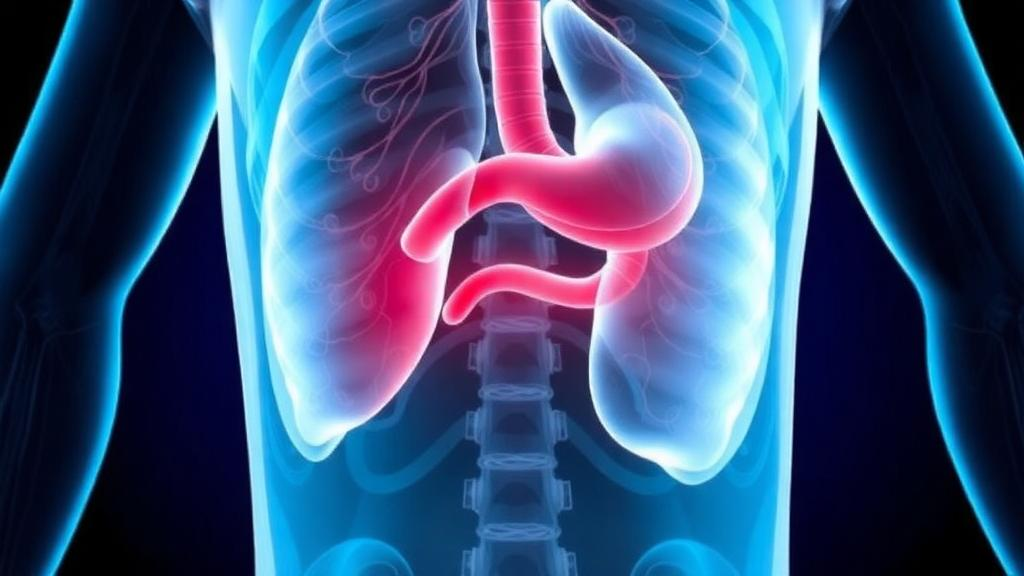
Kawasaki disease is best known as a childhood illness that inflames blood vessels and, in its most feared complication, damages the coronary arteries that supply the heart. Yet the disease is a systemic vasculitis, meaning it can reach far beyond the cardiovascular system, and one of its least appreciated targets sits in the right upper abdomen: the gallbladder. A new single-center case series from the Children’s Hospital of Fudan University in Shanghai, published in BMC Pediatrics, documents how often gallbladder abnormalities in children with Kawasaki disease go unrecognized, particularly when the illness presents in its incomplete form with misleading gastrointestinal symptoms. The findings carry a practical message for pediatricians worldwide: an enlarged or thick-walled gallbladder in a febrile child may be a window into a hidden vasculitis, not simply a surgical emergency.
The research team, led by Lu Zhao and Li-ping Xie, who contributed equally as co-first authors, with Fang Liu and Guo-ying Huang as corresponding authors, retrospectively analyzed the clinical records of children diagnosed with Kawasaki disease complicated by gallbladder abnormalities between 2016 and 2022. From that six-year window, fifteen children met the criteria for inclusion. Eleven were male and four were female, a male predominance that mirrors the sex ratio seen in Kawasaki disease more broadly. The average age at onset was 32 months, with a standard deviation of 20 months, placing these patients squarely in the toddler and preschool age range where Kawasaki disease is most common. The average time from illness onset to diagnosis was 6.4 days, plus or minus 1.8 days, a delay that the authors suggest reflects how easily the gallbladder findings can distract clinicians from the underlying diagnosis.
The clinical presentations in this series were strikingly abdominal. Nine of the fifteen children arrived with gastrointestinal complaints: four with abdominal pain, four with vomiting, and two with diarrhea. Five children had incomplete Kawasaki disease, the form of the illness that fails to satisfy the classic diagnostic criteria of prolonged fever plus four of the five principal features, including rash, conjunctival injection, oral mucosal changes, extremity changes, and cervical lymphadenopathy. Those five children were initially misdiagnosed, a fact that underscores a persistent diagnostic trap. When a febrile toddler vomits and clutches the right side of the belly, the differential diagnosis typically tilts toward appendicitis, cholecystitis, or a viral gastroenteritis, and the possibility of a systemic vasculitis inflaming the gallbladder wall can be overlooked entirely.
Laboratory testing in these fifteen patients revealed a pattern that, in retrospect, pointed toward Kawasaki disease. Inflammatory markers were elevated, and liver function tests were abnormal, with increases in total bilirubin that were predominantly of the direct, or conjugated, type. Alanine aminotransferase, an enzyme released when liver cells are stressed or damaged, was raised, as was γ-glutamyl transferase, an enzyme associated with the biliary system. This combination of conjugated hyperbilirubinemia and elevated hepatobiliary enzymes in a febrile child is a recognized accompaniment of Kawasaki disease, and the authors note that gallbladder involvement in the condition is associated with more intense inflammation. In other words, the sick liver and the swollen gallbladder were not a separate surgical problem but an extension of the same vasculitic process.
Imaging confirmed the gallbladder involvement in every patient, though the specific findings varied. Fourteen of the fifteen children showed gallbladder enlargement on ultrasound, while one child showed thickening of the gallbladder wall instead. Eight children also had hepatomegaly, an enlarged liver, on imaging. Acalculous cholecystitis, inflammation of the gallbladder without gallstones, is the classic gallbladder manifestation of Kawasaki disease, and the ultrasound findings in this series fit that picture. The absence of stones is diagnostically important, because it argues against routine biliary colic and shifts attention toward systemic inflammation as the driving force behind the gallbladder’s distress.
Treatment followed the standard escalation pathway for Kawasaki disease. All fifteen patients received initial therapy with intravenous immunoglobulin at a dose of 2 grams per kilogram of body weight, the internationally accepted first-line treatment that dramatically reduces the risk of coronary artery aneurysms when given promptly. Six patients also received glucocorticoids concurrently with that first dose. The response data were sobering: nine of the fifteen patients, a majority, did not respond to the initial IVIG treatment. This rate of IVIG resistance aligns with the study’s central observation that children with gallbladder abnormalities tend to mount more severe inflammatory responses and are harder to treat than typical Kawasaki disease cases. Resistance to IVIG is itself a recognized risk factor for worse coronary outcomes, which makes early recognition of these patients all the more consequential.
For the children who failed initial therapy, the clinicians escalated aggressively. Nine patients received a second dose of intravenous immunoglobulin. Six patients received glucocorticoids at 1 to 2 milligrams per kilogram, and two patients required higher doses of 5 to 10 milligrams per kilogram. Beyond immunosuppression, supportive hepatobiliary care played a prominent role: eleven patients were treated with hepatoprotective and choleretic drugs, medications intended to shield liver cells and promote bile flow. One child underwent gallbladder drainage, the only invasive procedural intervention in the series. Notably, no child in the cohort required gallbladder surgery, a point the authors emphasize as evidence that aggressive anti-inflammatory therapy can render operative management unnecessary in most cases.
The outcomes were uniformly favorable. Clinical symptoms improved in all fifteen children, and blood counts and biochemistry panels returned to normal. Eleven children were followed with repeat abdominal ultrasound, and the imaging told a reassuring story of resolution. In five cases the gallbladder had normalized completely by two months of follow-up, with the actual time to normalization ranging from one to seven months. In the remaining six cases the gallbladder had already decreased in size by the one-month mark. This trajectory of gradual, medication-driven resolution contrasts sharply with the natural history of surgical gallbladder disease and reinforces the argument that these children need immunomodulation, not an operating room.
The broader significance of the study lies in its diagnostic lesson. Kawasaki disease affects children predominantly, and its incomplete form is notoriously difficult to catch, yet the coronary consequences of missing it are severe. Gallbladder abnormalities, particularly an enlarged, stone-free gallbladder in a febrile young child with abdominal pain, vomiting, or diarrhea, should prompt clinicians to consider Kawasaki disease in the differential and to look for the supporting evidence: conjunctival redness, mucosal changes, rash, and the characteristic laboratory signature of elevated inflammatory markers and hepatobiliary enzymes. The Shanghai series suggests that when gastrointestinal symptoms dominate the presentation, the gallbladder may be the first organ to announce the vasculitis, and recognizing that signal can shorten the path to IVIG treatment within the critical first ten days of illness.
As a single-center retrospective case series of fifteen patients, the study has inherent limitations, including its modest sample size and its reliance on records from one large Chinese children’s hospital. The authors are careful to frame their conclusions accordingly. Even so, the clinical course they document, from misdiagnosis to aggressive anti-inflammatory therapy to full recovery without surgery, offers a concrete template for pediatricians encountering the same puzzle. For a disease in which timing is everything and the stakes are the coronary arteries of young children, an unexpected gallbladder finding may be far more than a gastrointestinal curiosity; it may be the clue that saves a heart.
Subject of Research: Gallbladder abnormalities in children with Kawasaki disease
Article Title: Gallbladder abnormalities in Kawasaki disease: a single-center case series study
Article References: Zhao, L., Xie, L.-P., Zhao, Q.-M., He, L., Chu, C., Liang, X.-C., Liu, F., & Huang, G.-Y. (2026). Gallbladder abnormalities in Kawasaki disease: a single-center case series study. BMC Pediatrics. https://doi.org/10.1186/s12887-026-07719-0
Image Credits: AI Generated
DOI: 10.1186/s12887-026-07719-0
Keywords: Kawasaki disease, gallbladder abnormalities, acalculous cholecystitis, IVIG resistance, pediatric vasculitis, incomplete Kawasaki disease, gastrointestinal symptoms, liver function, abdominal ultrasound, glucocorticoids, coronary artery lesions, BMC Pediatrics
Cite Scienmag News
Ophelia Keating. (October 10, 2026). When Kawasaki Disease Hides in the Belly: Gallbladder Clues That Doctors Often Miss. Scienmag. https://scienmag.com/when-kawasaki-disease-hides-in-the-belly-gallbladder-clues-that-doctors-often-miss/
Ophelia Keating. "When Kawasaki Disease Hides in the Belly: Gallbladder Clues That Doctors Often Miss." Scienmag, 10 October 2026, https://scienmag.com/when-kawasaki-disease-hides-in-the-belly-gallbladder-clues-that-doctors-often-miss/. Accessed 10 October 2026.
Ophelia Keating. "When Kawasaki Disease Hides in the Belly: Gallbladder Clues That Doctors Often Miss." Scienmag. October 10, 2026. https://scienmag.com/when-kawasaki-disease-hides-in-the-belly-gallbladder-clues-that-doctors-often-miss/