


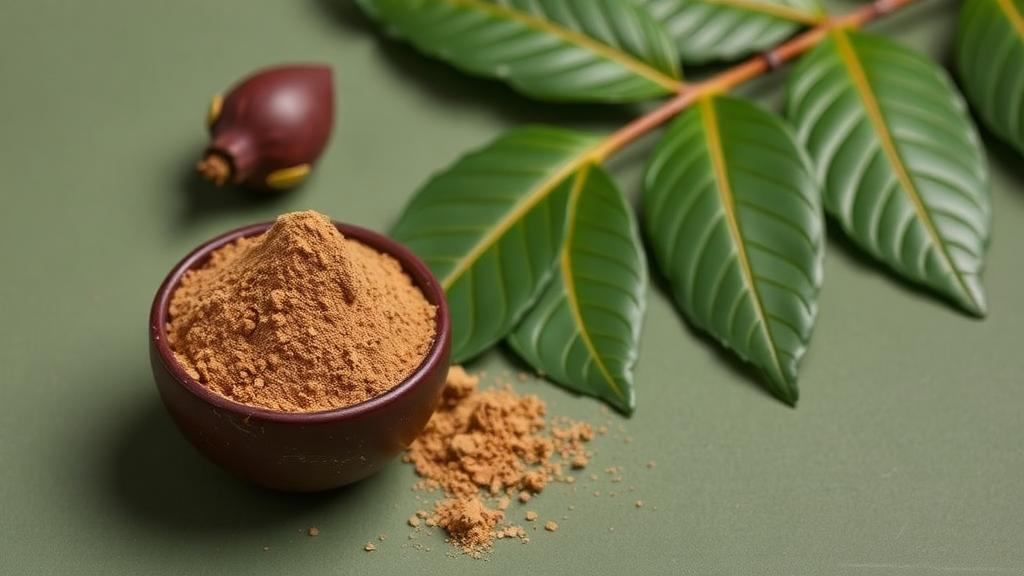
Deep in the bushveld of South Africa’s Mpumalanga Province, a hard-shelled fruit that most of the world has never heard of has quietly sustained rural communities for generations. Now a review published in Frontiers in Sustainable Food Systems has pulled together everything science knows about Nkwakwa, a dried powdered food product made from the seed coat of the black monkey orange tree, Strychnos madagascariensis, and the picture that emerges is striking. What sounds like an obscure regional specialty turns out to be a nutrient-dense flour rich in fat, fiber, minerals, and vitamins, with real potential to help address food insecurity in some of the driest corners of Southern Africa.
The black monkey orange is a deciduous tree of the Loganiaceae family that thrives across tropical and subtropical Africa, including South Africa, Lesotho, Zimbabwe, and Eswatini. Growing five to eight meters tall, usually with a single stem and a spreading, uneven canopy, it carries pale grey bark marked with white patches and leathery, hairy green leaves. Unlike domesticated crops, it flourishes precisely where agriculture struggles most, in hot and relatively dry conditions, making it one of the most resilient indigenous fruit species in the region. In Bushbuckridge Local Municipality, where the review is centered, locals call the tree and its fruit Makwakwa in Xitsonga, and in southern Mozambique the same species goes by the name Macuácua, a striking linguistic echo across the border.
The review, written by Philix Mnisi, systematically searched databases including Google Scholar, Science Direct, Scopus, and Web of Science between November 2025 and August 2026, screening 112 articles down to 72 relevant studies. From this body of literature the author reconstructed the complete indigenous processing cycle for Nkwakwa, a name that refers both to the final powdered product and, locally, to the tree itself. The cycle begins with gathering ripened fruit between August and December, a season when cultivated foods are often scarce across Southern Africa. The fruit itself is a large, smooth, nearly spherical berry, roughly 8 to 10 centimeters in diameter, that shifts from green or blue-green to orange-yellow as it matures.
Cracking that fruit is no small feat, because the shell is extremely hard and woody. Communities smash it open using hard objects, and the review notes a traditional practice missing from the formal literature: two fruits are sometimes cracked against each other. Once the shell is broken, the seeds are retrieved by hand and the pulp is separated. The seeds and their pulp are then sun-dried, often spread on corrugated iron sheets, in a technique that is a cornerstone of indigenous knowledge systems across Africa. Sun drying reduces microbial viability and can preserve monkey orange pulp for anywhere from two months to five years, according to previous research. It is also remarkably sustainable, relying on solar thermal energy rather than electricity or fuel, though it carries drawbacks including potential contamination and losses of heat-sensitive bioactive compounds such as carotenes, vitamin C, and phenolics.
After drying, the kernels are separated from the dried seed coat, which is then crushed or ground in a traditional hardwood mortar into the fine powder known as Nkwakwa in South Africa and Nfuma in Mozambique. The flour can be eaten on its own or mixed with honey or sugar to soften its natural bitterness, and some fruits are sweet enough to need nothing at all. Crucially, the powder keeps for long periods without spoiling, a property that transforms a highly seasonal wild fruit into a year-round food reserve. That longevity is exactly what makes Nkwakwa valuable during shortages and droughts, when rural communities historically have turned to indigenous fruits as survival foods.
The nutritional analysis assembled in the review is where the story becomes genuinely compelling. Studies of the flour report fat content ranging from about 26 to 46 percent, fiber exceeding 6 percent with some measures reaching 53 grams, carbohydrates around 10 percent, vitamin E at 6.7 to 8.0 milligrams per 100 grams, and carotenes at 2.2 to 2.6 milligrams per 100 grams. The seed coat itself carries roughly 42 percent oil on a dry weight basis. Among macronutrients, potassium levels range from 594 to 1,660 milligrams per 100 grams, meaning a single serving contributes meaningfully toward the World Health Organization’s recommended daily intake of 3,510 milligrams, which supports blood pressure control, muscle function, and nerve transmission. Sodium content is refreshingly low at 16 to 51 milligrams per 100 grams, a tiny fraction of the recommended ceiling, while magnesium hovers near 80 milligrams per 100 grams, contributing nearly a fifth of the adult requirement.
The micronutrient profile is equally notable. Manganese reaches up to 9.86 milligrams per 100 grams, essentially meeting the full average recommended daily intake of about 10 milligrams, which supports bone health, enzyme activity, and antioxidant defense. Iron content ranges from 3.4 to 15.8 milligrams per 100 grams, approaching the upper population reference intake, a significant finding in a region where iron deficiency anemia remains widespread. Zinc and copper are present at 0.1 to 1.36 and 0.40 to 0.72 milligrams per 100 grams respectively, both essential for immune function, enzyme systems, and red blood cell formation. The fruit also contains vitamins A and C, key biochemical components that protect the immune system, eyesight, nervous system, and cardiovascular health.
Perhaps the most surprising detail concerns the fruit’s oil. The Macuácua oil pressed from dried pulp flour has a higher oleic acid content than baobab, watermelon seed, or mongongo oils, and rivals marula oil, whose oleic acid content reaches 70 to 78 percent. Oleic acid is the same monounsaturated fat that dominates olive and canola oils, and accumulating evidence suggests it helps regulate body weight and may protect against obesity and related metabolic problems. Combined with the powder’s exceptional fiber content, which exceeds adequate intake recommendations for both women and men, the review argues that regular consumption of Nkwakwa could help reduce the long-term risk of cardiovascular disease, type 2 diabetes, and colorectal cancer, while improving digestive health.
Beyond the numbers, the review situates Nkwakwa within a global context. It connects the product to the United Nations Sustainable Development Goal of Zero Hunger, noting that Southern Africa holds a significant supply of edible indigenous fruit species capable of addressing food and nutritional shortages. Previous studies have found that Nkwakwa products offer health benefits for children and immune-compromised people, with regular consumption apparently increasing weight and disease resistance. Crude extracts of the seed coat and pulp have even shown antioxidant and antidiabetic potential in laboratory studies, hinting at future nutraceutical applications for diabetes management.
The review also sounds a note of caution. Many indigenous fruits remain underutilized, and of 82 documented edible indigenous fruit species in one cited study, only 22 had been recorded as traditionally processed or preserved, suggesting dozens of species with untapped food potential. Domestic processing and preservation methods need upgrading to reliably extend availability beyond the August-to-December harvest window, and further processing is required to ensure the safety of seed-derived products for human consumption. Still, the author’s conclusion is clear: the black monkey orange and its value-added products deserve preservation, promotion, and wider consumption. In a warming world where drought-tolerant, nutrient-dense foods are increasingly precious, this ancient powder from a forgotten tree may be one of the most quietly important foods Southern Africa has.
Subject of Research: Nutritional value and traditional processing of the indigenous African fruit product Nkwakwa from Strychnos madagascariensis
Article Title: A review: indigenously processed dried powdered food product “Nkwakwa” and the nutrients of Strychnos madagascariensis from Bushbuckridge Local Municipality, Mpumalanga, South Africa
Article References: A review: indigenously processed dried powdered food product “Nkwakwa” and the nutrients of Strychnos madagascariensis from Bushbuckridge Local Municipality, Mpumalanga, South Africa. (n.d.). https://doi.org/10.3389/fsufs.2026.1965994
Image Credits: AI Generated
DOI: 10.3389/fsufs.2026.1965994
Keywords: black monkey orange, Strychnos madagascariensis, Nkwakwa, indigenous fruit species, food security, nutrition, sun drying, micronutrients, oleic acid, dietary fiber, South Africa, sustainable food systems
Cite Scienmag News
Daisy Hatcher. (October 16, 2026). Ancient African Fruit Powder Nkwakwa Packs a Surprising Nutritional Punch. Scienmag. https://scienmag.com/ancient-african-fruit-powder-nkwakwa-packs-a-surprising-nutritional-punch/
Daisy Hatcher. "Ancient African Fruit Powder Nkwakwa Packs a Surprising Nutritional Punch." Scienmag, 16 October 2026, https://scienmag.com/ancient-african-fruit-powder-nkwakwa-packs-a-surprising-nutritional-punch/. Accessed 16 October 2026.
Daisy Hatcher. "Ancient African Fruit Powder Nkwakwa Packs a Surprising Nutritional Punch." Scienmag. October 16, 2026. https://scienmag.com/ancient-african-fruit-powder-nkwakwa-packs-a-surprising-nutritional-punch/


