


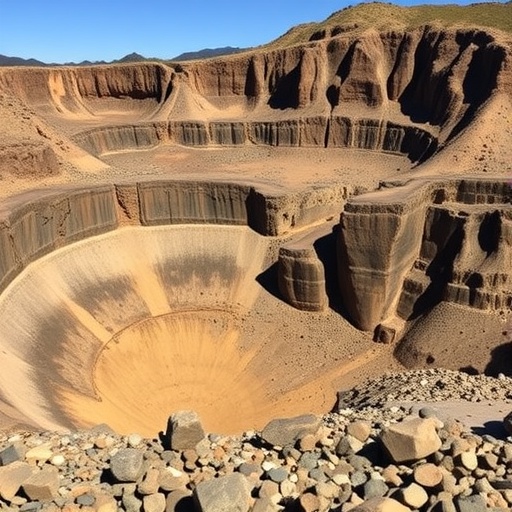
In a groundbreaking study, researchers carried out extensive investigations into the presence of heavy metals in the vicinity of a prominent gold mine in South Africa, shedding light on the environmental concerns that arise from mining activities. The study, published in the journal “Environmental Monitoring and Assessment,” offers vital insights into the scale of contamination and its implications for both public health and ecological sustainability.
The focal point of the research was to conduct bulk sampling across various locations in the gold mining area, allowing the team to comprehensively assess the concentration levels of heavy metals such as lead, arsenic, cadmium, and mercury. The choice of this specific location is particularly relevant given the region’s historical significance in gold extraction and the subsequent environmental challenges that ensued. The study meticulously documented how mining operations can inadvertently lead to the infiltration of toxic metals into the surrounding environment, posing risks to human health and biodiversity.
The methodology employed by the researchers consisted of systematic sampling from various soil and water sources within the mine’s vicinity. Using advanced analytical techniques, the team was able to deduce the concentration levels of multiple heavy metals and identify their spatial distribution. The findings point to a concerning trend of elevated metal levels in proximity to mining activities, raising alarms about potential contamination pathways that could affect local communities.
Moreover, the choice of heavy metals for investigation was not arbitrary; these particular metals are notorious for their persistent nature and toxic effects on both human health and the environment. Cadmium, for instance, is linked to severe respiratory issues and kidney damage, while arsenic exposure is associated with a range of cancers. The research highlights the need for urgent public health interventions and environmental regulations tailored to mitigate exposure risks.
As the research advanced into source apportionment analysis, the team delved deeper into identifying the specific activities and processes contributing to the contamination. The results indicated a clear correlation between mining practices and rising levels of heavy metals, emphasizing the significant role of both direct emissions and runoff from mining sites. This analysis provides a stronger framework for understanding how mining activities can influence environmental quality and public health.
In addition to the immediate findings, the research presents a crucial call to action for policymakers and stakeholders involved in mining operations. It underlines the importance of implementing more stringent regulatory measures that govern mining activities, particularly in vulnerable areas where communities are directly affected by environmental degradation. Effective management strategies must prioritize the reduction of heavy metal emissions and safeguard the health of local populations.
The implications of these findings extend beyond mere statistical data; they echo the broader narrative of environmental justice and the need for a balanced approach to resource extraction. As gold mining continues to play a pivotal role in the South African economy, it is imperative that both the industry and government prioritize sustainable practices that shield communities from harmful exposures and foster ecological resilience.
Furthermore, the study serves as a reminder of the critical importance of environmental monitoring. Regular assessments of soil and water quality are necessary to detect and address contamination before it escalates into a public health crisis. The researchers advocate for integrating comprehensive monitoring frameworks into mining operations, ensuring that the health of both the environment and local populations remains a priority.
Interdisciplinary collaboration plays a significant role in effective environmental management, as the complexities surrounding mining, health, and ecological impacts require multifaceted solutions. As the study suggests, involving local communities in the monitoring process could empower them to take an active role in protecting their environment and advocating for their health rights.
In conclusion, the research by Thabethe, Makonese, and Masekameni offers a timely analysis of heavy metal contamination in a gold mining area of South Africa. By elucidating the link between mining practices and environmental degradation, the study not only enriches the scientific understanding of these issues but also calls for urgent action from both policymakers and the mining industry. As the world grapples with the dual challenges of economic growth and environmental sustainability, this research stands as a crucial reminder of the responsibilities that come with resource extraction.
The study ultimately highlights the indispensable need for continuous research, regulation, and community involvement in mitigating the adverse effects of mining, ensuring a healthier future for both people and the planet. In a world increasingly aware of the detrimental impact of mining activities, this research represents a significant stride towards understanding and addressing the environmental fallout associated with one of humanity’s oldest industries.
Thabethe, N.D.L., Makonese, T.N., Masekameni, M.D. et al. Bulk sampling and source apportionment of heavy metals within a gold mine area, South Africa.
Environ Monit Assess 197, 1250 (2025). https://doi.org/10.1007/s10661-025-14713-z
Cite Scienmag News
Violet Maxwell. (October 25, 2025). Analyzing Heavy Metal Sources in South African Gold Mine. Scienmag. https://scienmag.com/analyzing-heavy-metal-sources-in-south-african-gold-mine/
Violet Maxwell. "Analyzing Heavy Metal Sources in South African Gold Mine." Scienmag, 25 October 2025, https://scienmag.com/analyzing-heavy-metal-sources-in-south-african-gold-mine/. Accessed 3 September 2026.
Violet Maxwell. "Analyzing Heavy Metal Sources in South African Gold Mine." Scienmag. October 25, 2025. https://scienmag.com/analyzing-heavy-metal-sources-in-south-african-gold-mine/


