


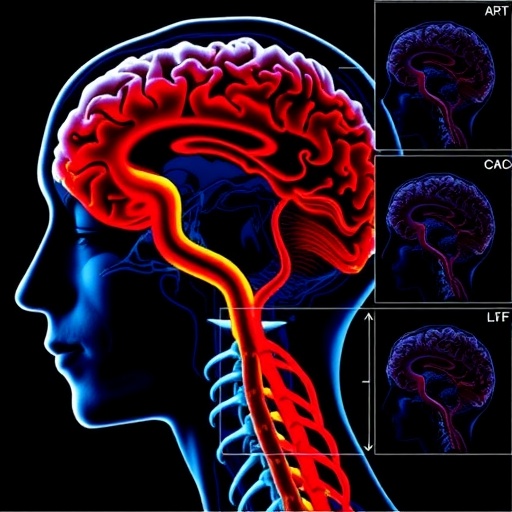
Takayasu arteritis, a rare inflammatory disease that attacks the body’s largest arteries, may be linked to activity deep inside the brain’s amygdala, according to a new study published in the European Journal of Nuclear Medicine and Molecular Imaging. Researchers report that lower amygdalar metabolic activity was associated with cerebrovascular events and severe narrowing of arteries supplying the brain, particularly among patients who had not yet begun treatment. The finding points toward a possible connection between the brain’s stress and immune-regulation networks and the vascular damage caused by large-vessel inflammation.
Takayasu arteritis, often called “pulseless disease,” primarily affects the aorta and its major branches. Inflammation can thicken the arterial wall, reduce the diameter of the vessel, and eventually restrict blood flow to the brain, arms, kidneys, or other organs. Neurological complications may include transient ischemic attacks, strokes, dizziness, visual disturbances, and fainting. Because symptoms and laboratory markers do not always reflect the full extent of vascular injury, clinicians increasingly rely on imaging to identify active inflammation and structural narrowing. The new work explores an unusual imaging target: the amygdala, a small almond-shaped structure located in the medial temporal lobe and involved in emotional processing, stress responses, autonomic regulation, and communication with the immune system.
The investigators analyzed data from 303 people with Takayasu arteritis who underwent whole-body ¹⁸F-fluorodeoxyglucose positron emission tomography/computed tomography, commonly known as ¹⁸F-FDG PET/CT. The radioactive glucose analogue is taken up by metabolically active cells, allowing PET to visualize tissues with increased glucose consumption. In large-vessel vasculitis, inflammatory cells in the arterial wall can accumulate FDG and produce a measurable signal. The researchers also quantified FDG uptake in the amygdala and bone marrow, as well as in affected vessel walls, while collecting clinical information, blood-test results, and vascular imaging findings. Participants were followed for a median of 27 months, during which cerebrovascular and other adverse events were recorded.
The principal result was not uniform across the entire cohort. When all participants were analyzed together, amygdalar standardized uptake values, or SUVs, were not significantly associated with cerebrovascular events. SUV is a semi-quantitative measure that estimates how much tracer has accumulated in a region after accounting for factors such as injected dose and body size. SUVmax represents the highest measured activity within a region of interest, whereas SUVmean reflects the average activity. This distinction matters because a single intense voxel can influence SUVmax, while SUVmean may provide a broader estimate of regional metabolic activity. In the overall study population, neither measurement consistently separated patients who experienced cerebrovascular events from those who remained event-free.
A clearer pattern emerged in the treatment-naïve subgroup. Patients who had suffered cerebrovascular events showed lower amygdalar activity than those without such events. Mean amygdalar SUVmax was 9.3 compared with 10.3 in event-free patients, while mean SUVmean was 6.6 compared with 7.4. The differences were statistically significant, with p values of 0.011 and 0.003, respectively. When the researchers divided patients according to amygdalar metabolic activity, 24.3 percent of people in the low-SUV group had experienced cerebrovascular events, compared with 15.9 percent in the higher-SUV group. The low-activity group also had higher immunoglobulin G and immunoglobulin A levels and lower lymphocyte counts, suggesting that reduced amygdalar uptake may coexist with distinctive systemic immune features.
The relationship became especially notable when the researchers examined structural disease in the arteries supplying the head and neck. Higher amygdalar SUVmax was identified as an independent protective factor against combined carotid and vertebral artery stenosis. The reported odds ratio was 0.876, with a p value of 0.032. An odds ratio below one indicates that, within the statistical model, increasing amygdalar activity was associated with lower odds of the outcome after accounting for other evaluated factors. The carotid arteries deliver blood to much of the brain’s anterior circulation, while the vertebral arteries contribute to the posterior circulation. Narrowing in both systems can substantially reduce cerebral blood flow and increase the risk of ischemic injury.
Follow-up findings provided additional support for the signal, although they also illustrated the complexity of the biology. Patients who later experienced cerebrovascular events had a significantly lower amygdalar SUVmax than a group described as having new-onset symptoms without the same event outcome: 8.2 compared with 10.4. This observation raises the possibility that amygdalar metabolic activity could reflect a brain-body state associated with vascular vulnerability before or during clinically important disease. However, PET uptake is not a direct measurement of stress, emotion, or immune control. It can be influenced by age, medication, glucose levels, scanner characteristics, image-processing methods, brain structure, and other medical conditions. The amygdala is also small, making accurate measurement vulnerable to partial-volume effects, in which limited spatial resolution causes activity from neighboring tissues to blend into the region of interest.
The authors’ interpretation builds on a growing body of research concerning the brain’s role in cardiovascular and immune regulation. Earlier studies in other populations have linked resting amygdalar activity with cardiovascular events, while experimental work has shown that stress-related neural circuits can influence the hypothalamic-pituitary-adrenal axis, sympathetic nervous system, bone marrow activity, and inflammatory signaling. The amygdala communicates with regions that regulate autonomic output and endocrine responses, and these pathways can affect circulating immune cells and the behavior of inflammatory tissues. In Takayasu arteritis, such neuroimmune interactions could theoretically alter the inflammatory environment surrounding the aorta and its branches. The present study does not prove this mechanism, but it adds a new imaging-based association to the emerging concept that vascular inflammation may be shaped by both immune processes and neural activity.
The findings should therefore be viewed as a potential biomarker discovery rather than a clinical test ready for routine use. The study was observational, and its results cannot establish whether reduced amygdalar activity contributes to arterial stenosis, results from chronic vascular disease, or reflects another factor shared by patients with worse outcomes. The absence of a significant association in the full cohort also suggests that treatment exposure and disease history may modify the relationship. In addition, the reported associations came from a single clinical cohort and require confirmation in independent populations using standardized PET acquisition and analysis. Future studies could combine serial brain PET, vascular imaging, inflammatory biomarkers, autonomic measurements, psychological assessments, and long-term clinical follow-up. If the association is reproduced, amygdalar metabolism might eventually help identify patients who need closer neurological surveillance, more detailed carotid and vertebral imaging, or intensified prevention strategies.
For now, the study offers a striking shift in perspective on Takayasu arteritis. The disease is traditionally assessed through arterial anatomy, blood-flow measurements, laboratory inflammation markers, and metabolic activity within the vessel wall. The new results suggest that the brain itself may contain information about the risk of vascular complications. A low amygdalar PET signal cannot yet predict an individual stroke, and it should not replace established clinical evaluation. Nevertheless, the work highlights how a scan originally used to map glucose metabolism can reveal connections between emotional-neural circuitry, systemic immunity, and arterial injury. As researchers continue to decode these pathways, the amygdala may become an important part of the story of how large-vessel inflammation affects the whole body.
Cite Scienmag News
Cassandra Pierce. (August 26, 2026). Amygdala Activity Linked to Stroke and Carotid-Vertebral Stenosis in Takayasu Arteritis. Scienmag. https://scienmag.com/amygdala-activity-linked-to-stroke-and-carotid-vertebral-stenosis-in-takayasu-arteritis/
Cassandra Pierce. "Amygdala Activity Linked to Stroke and Carotid-Vertebral Stenosis in Takayasu Arteritis." Scienmag, 26 August 2026, https://scienmag.com/amygdala-activity-linked-to-stroke-and-carotid-vertebral-stenosis-in-takayasu-arteritis/. Accessed 4 September 2026.
Cassandra Pierce. "Amygdala Activity Linked to Stroke and Carotid-Vertebral Stenosis in Takayasu Arteritis." Scienmag. August 26, 2026. https://scienmag.com/amygdala-activity-linked-to-stroke-and-carotid-vertebral-stenosis-in-takayasu-arteritis/


