


In an era marked by rapid technological advancements and escalating climate concerns, the American Meteorological Society (AMS) continues to stand at the forefront of atmospheric and environmental sciences, disseminating pioneering research that shapes our understanding of weather, climate, and hydrological systems. Their suite of twelve scientific journals serves as a vital repository for state-of-the-art studies, many of which are currently accessible in early online formats, providing the scientific community and public with timely insights into pressing meteorological phenomena and innovations.
One of the seminal discussions emerging from recent AMS publications centers on the burgeoning role of artificial intelligence (AI) in weather forecasting. A critical analysis presented in the Bulletin of the American Meteorological Society challenges the prevailing optimism surrounding machine learning (ML) approaches. While ML demonstrates superior performance when abundant observational data is available, the study underscores its limitations in data-scarce environments. It posits that physics-based numerical simulations grounded in atmospheric sciences remain indispensable for accurate weather prediction, reinforcing the necessity of integrating AI with traditional simulation methods rather than replacing them outright.
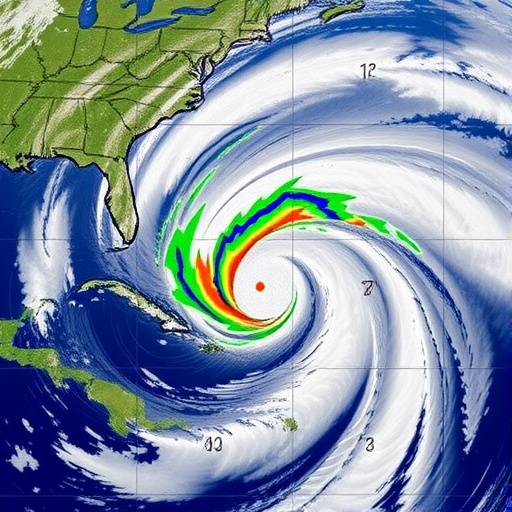
The dynamics of tropical cyclones in the Atlantic basin have also garnered substantial attention. A comprehensive analysis published in the Journal of Climate reveals that the traditionally reinforcing effects of potential intensity and moist entropy deficit on cyclone frequency are projected to diverge under future warming scenarios. This divergence complicates the prediction of hurricane trends, emphasizing the growing importance of nuanced regional climate modeling to anticipate the complex interplay of atmospheric thermodynamics and moisture availability influencing storm genesis and evolution in a warming climate.
Addressing the challenges posed by extreme heat, researchers have proposed a novel, simplified heat index computational algorithm as documented in the Journal of Applied Meteorology and Climatology. This streamlined algorithm enhances the speed and usability of heat stress assessments, with minor deviations in index values at moderate temperatures. More significantly, the study introduces refined categorizations for heat stress — normothermic, hyperthermic, and lethal — providing a more accurate framework to distinguish between survivable and fatal heat exposure levels, a critical development in an era of increasingly frequent heatwaves.
A striking revelation emerges from a study on lightning safety in Africa, published within the Bulletin of the American Meteorological Society. Africa bears a disproportionately high burden of lightning-related fatalities and injuries, yet is paradoxically underserved in terms of research and safety initiatives. The study highlights the urgent need for expanded scientific inquiry, education, and infrastructure to mitigate this environmental hazard, illustrating a gap where technological and policy interventions could substantially reduce human vulnerability.
Advancing natural hazard prediction, a paper in Weather and Forecasting demonstrates the efficacy of integrating high-resolution precipitation data from NOAA’s High-Resolution Rapid Refresh (HRRR) model with the global Landslide Hazard Assessment for Situational Awareness (LHASA) system. This fusion markedly improved landslide forecasting accuracy during Hurricane Helene in a retrospective modeling exercise, pinpointing hazard zones with greater precision and underscoring the transformative potential of high-fidelity meteorological inputs for disaster preparedness and response.
In the realm of ecological impacts, the Journal of Applied Meteorology and Climatology reports on a study assessing drought influences on pollinator populations in the mid-Atlantic United States. The research reveals that bumblebees (genus Bombus) exhibit greater sensitivity to drought conditions compared to other bee genera, with effects varying by ecological region. Such findings elucidate the complex interactions between climatic stressors and biodiversity, bearing significant implications for ecosystem services and agricultural productivity under shifting climate regimes.
Governance and policy dimensions of climate action have been scrutinized in a study featured in Weather, Climate, and Society, which examines the relationship between climate legislation and the transition toward green development globally. The research underscores that legislative frameworks foster environmental progress most effectively when complemented by robust governmental capacity and active international environmental engagement, especially outside rapidly emerging economies, highlighting the multifaceted nature of policy-driven climate mitigation and adaptation efforts.
Unveiling methodological nuances in urban climatology, a rigorous inter-comparison study in the Journal of Applied Meteorology and Climatology finds that the choice of radiation shield around meteorological sensors can significantly skew air temperature readings. This has profound consequences for urban heat assessments, as certain shield types tend to overestimate extreme daytime temperatures and underestimate nocturnal warmth, variables crucial for heat-related health risk evaluations. UV-stable white plastic shields emerge as the optimal choice, advocating for standardized instrumentation protocols in urban meteorological networks.
Agricultural resilience in drought-prone regions is further bolstered by a financial impact analysis of enhanced soil moisture monitoring networks published in the Bulletin of the American Meteorological Society. By expanding observation stations in the Upper Missouri River Basin, drought extent estimations improve dramatically, potentially increasing the efficacy of federal compensation programs such as the USDA’s Livestock Forage Disaster Program. This integrative approach exemplifies the synergy between scientific monitoring and socio-economic support mechanisms vital for sustaining agricultural livelihoods in the face of climatic variability.
Innovative techniques in tornado damage assessment also surface in the Monthly Weather Review, where researchers explore the utility of cycloidal debris swaths—distinctive loop-shaped deposit patterns left by tornadoes—as proxies for wind speed estimation. Utilizing advancements in aerial imaging and geographic information systems, this approach offers a complementary metric to traditional damage indicators, enriching the forensic toolkit available for severe weather characterization and improving predictive modeling of tornado intensity.
The complex interactions between atmospheric phenomena and topography receive fresh insights through idealized simulations of supercell thunderstorms in diverse terrain, detailed also in the Monthly Weather Review. The findings elucidate how storm maturity and approach angle modulate the terrain’s influence, which may either suppress or enhance storm intensity and longevity. Such studies refine our understanding of localized weather dynamics, particularly within mountainous regions like the Appalachians, which bear unique vulnerability profiles.
Together, these multifaceted studies exemplify the American Meteorological Society’s commitment to advancing atmospheric sciences and fostering informed responses to weather- and climate-related challenges worldwide. As global environmental complexities deepen, such interdisciplinary research remains pivotal for enhancing predictive capabilities, shaping policy frameworks, and protecting vulnerable communities and ecosystems.
For those seeking comprehensive access to the latest in atmospheric science research, details and full articles can be explored at the American Meteorological Society’s journals portal.
Web References:
Cite Scienmag News
Russell Cooper. (April 15, 2026). AMS Science Preview: Exploring AI Forecast Boundaries, Unraveling Hurricane Unpredictability, and Streamlining Heat Index Calculations. Scienmag. https://scienmag.com/ams-science-preview-exploring-ai-forecast-boundaries-unraveling-hurricane-unpredictability-and-streamlining-heat-index-calculations/
Russell Cooper. "AMS Science Preview: Exploring AI Forecast Boundaries, Unraveling Hurricane Unpredictability, and Streamlining Heat Index Calculations." Scienmag, 15 April 2026, https://scienmag.com/ams-science-preview-exploring-ai-forecast-boundaries-unraveling-hurricane-unpredictability-and-streamlining-heat-index-calculations/. Accessed 3 September 2026.
Russell Cooper. "AMS Science Preview: Exploring AI Forecast Boundaries, Unraveling Hurricane Unpredictability, and Streamlining Heat Index Calculations." Scienmag. April 15, 2026. https://scienmag.com/ams-science-preview-exploring-ai-forecast-boundaries-unraveling-hurricane-unpredictability-and-streamlining-heat-index-calculations/


