


In a groundbreaking advancement set to redefine the landscape of energy storage, researchers have unveiled an innovative alumina foam-based electrolyte engineered specifically for thermal batteries. This pioneering material design, detailed by Ahn, Yu, Ha, and colleagues in their recent publication, marks a significant leap in optimizing battery performance under the extreme conditions characteristic of thermal battery operation. Thermal batteries, known for their ability to function reliably at elevated temperatures, stand to gain considerable improvements in both durability and efficiency through this novel electrolyte composition.
Thermal batteries are unique among electrochemical power sources due to their high-temperature activation mechanism, which typically involves a solid-state electrolyte that transitions to an ionic conductor only upon reaching operational temperatures. Conventional electrolytes in these batteries often suffer from limitations related to material stability, ionic conductivity, and structural integrity when subjected to extreme heat. The introduction of alumina foam—a porous, lightweight ceramic material—into the electrolyte matrix directly addresses these limitations by enhancing thermal resilience while maintaining essential conductive pathways.
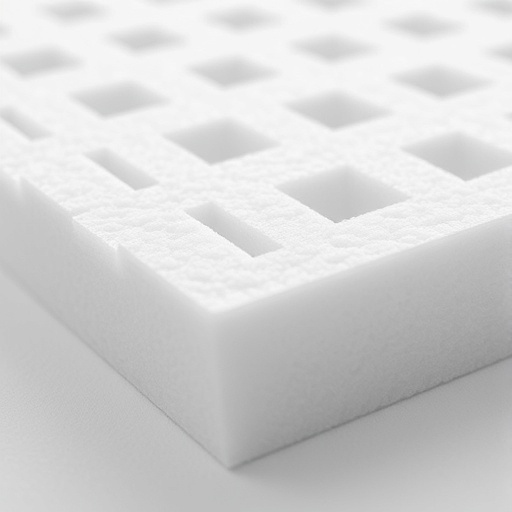
The core of this research hinges on the utilization of alumina foam as a scaffold within the electrolyte structure. Alumina (aluminum oxide) is renowned for its remarkable mechanical strength, chemical inertness, and excellent thermal stability. By developing an interconnected porous foam structure, the team has ingeniously increased the electrolyte’s surface area and ionic transport channels. This morphological design not only supports efficient ion conduction but also mitigates thermal stresses that typically lead to electrolyte degradation during battery cycling.
In-depth characterization of the alumina foam-based electrolyte revealed significant improvements across multiple performance metrics. Electrochemical testing showed enhanced ionic conductivity at operational temperatures, which directly correlates to improved battery power output and responsiveness. The thermo-mechanical analyses underscored the material’s exceptional tolerance to thermal expansion and contraction cycles, a common source of failure in traditional electrolyte materials. These findings suggest a promising pathway toward extending the lifecycle and reliability of thermal batteries.
Beyond the immediate performance enhancements, the alumina foam electrolyte design also opens avenues for weight reduction and miniaturization in thermal battery systems. The inherent porosity and low density of the foam material reduce the overall mass of the electrolyte, crucial for applications where weight and size constraints are critical, such as aerospace and military technologies. Additionally, the structural integrity retained through high-temperature cycles implies that devices can be made more compact without sacrificing safety or effectiveness.
The implications of these advancements extend well beyond the laboratory. Thermal batteries are indispensable in scenarios demanding instant, reliable power bursts at elevated temperatures, including missile guidance systems, emergency power supplies, and deep space probes. The ability to significantly improve electrolyte performance underpins the reliability and operational efficiency of these technologies, directly impacting mission success and safety.
One of the fascinating aspects of this study is the multidisciplinary approach that fused materials science, chemical engineering, and electrochemistry. Computational modeling helped optimize foam microstructures before physical fabrication, streamlining the development process. Meanwhile, advanced manufacturing techniques, such as additive manufacturing and controlled sintering, allowed for precise control of the foam’s pore size, distribution, and interconnectivity—parameters critical to achieving the desired balance between ionic conductivity and mechanical stability.
Material synthesis was carefully tuned to produce alumina foams with varying densities and porosities. Through iterative experimentation, the research team succeeded in identifying optimal fabrication conditions that facilitate superior electrolyte behavior. These experiments were complemented by extensive analytical methodologies, including scanning electron microscopy to visualize the foam’s architecture, X-ray diffraction to confirm crystalline phases, and impedance spectroscopy to measure ionic pathways.
Importantly, this alumina foam electrolyte exhibited excellent compatibility with commonly used thermal battery electrodes, ensuring seamless integration into existing battery architectures. This compatibility reduces barriers to commercialization and enables straightforward scale-up processes. Additionally, the chemical inertness of alumina minimizes undesired reactions within the cell, accounting for improved cycle stability and reduced degradation rates over extended use.
Safety considerations formed a core pillar of the investigation, as thermal batteries operate under inherently risky thermal conditions. The alumina foam-based electrolyte demonstrated high thermal stability, inherently reducing the risk of electrolyte breakdown or combustion. Such properties are critical to meeting stringent safety standards, especially for military and aerospace applications, where catastrophic failure is not an option.
The researchers also explored the electrolyte’s impact on thermal battery startup time, a crucial factor in tactical scenarios where swift activation is needed. Experimental data revealed that the foam structure facilitates rapid ionic conduction upon heating, thereby enabling quicker power delivery from the moment the battery is triggered. This responsiveness elevates the utility of thermal batteries in time-sensitive missions.
Looking toward the future, this alumina foam electrolyte technology could catalyze further innovation in thermal battery design. Its adaptability suggests potential uses beyond lithium-based systems, possibly extending to sodium or magnesium chemistries, which are gaining traction for sustainable energy solutions. Moreover, its fabrication methodology could inspire similar porous ceramic networks applicable to solid oxide fuel cells or high-temperature sensors.
Notably, this research exemplifies the intersection of materials innovation and energy technology, highlighting how advanced ceramic engineering can address perennial challenges in electrochemical energy storage. It transcends incremental improvement by proposing a fundamentally new electrolyte paradigm that harmonizes conductivity, stability, and manufacturability—criteria essential for next-generation thermal batteries.
The impact of this development may ripple into broader sectors, including renewable energy storage and electric mobility, where thermal management and electrolyte robustness remain challenging. Furthermore, the lightweight and heat-resistant nature of the alumina foam electrolyte aligns with increasing demands for compactness and reliability in portable and remote power systems.
As the global energy landscape shifts toward high-performance, durable power sources capable of operating in extreme environments, innovations such as the alumina foam-based electrolyte position thermal batteries at the forefront of this transformation. This breakthrough not only promises enhanced technical performance but also underpins strategic capabilities in defense, space exploration, and emergency energy provision.
In summary, by harnessing the unique properties of alumina foam, the research team has introduced a revolutionary electrolyte design that significantly elevates the performance envelope of thermal batteries. Their comprehensive approach—from material synthesis and structural design to rigorous performance evaluation—sets a new benchmark for how ceramic-based electrolytes can overcome the challenges posed by high temperature electrochemistry. This work heralds a new era of thermal battery technology, with far-reaching implications for energy storage innovation.
Cite Scienmag News
Faith Mcneil. (June 5, 2026). Alumina Foam Electrolyte Boosts Thermal Battery Performance. Scienmag. https://scienmag.com/alumina-foam-electrolyte-boosts-thermal-battery-performance/
Faith Mcneil. "Alumina Foam Electrolyte Boosts Thermal Battery Performance." Scienmag, 5 June 2026, https://scienmag.com/alumina-foam-electrolyte-boosts-thermal-battery-performance/. Accessed 3 September 2026.
Faith Mcneil. "Alumina Foam Electrolyte Boosts Thermal Battery Performance." Scienmag. June 5, 2026. https://scienmag.com/alumina-foam-electrolyte-boosts-thermal-battery-performance/


