


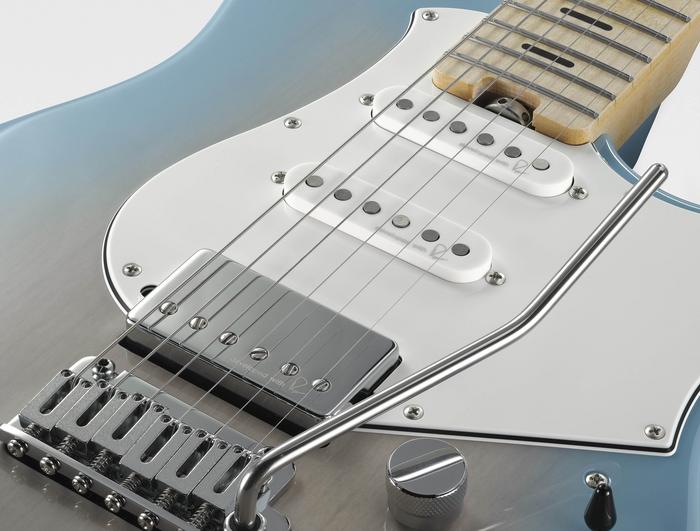
OTTAWA, Ontario, May 15, 2024 – The electric guitar has been a core element of popular music for much of the past century. Pickups are the components that turn vibrations from the strings into electricity for sound and can be seen as the “heart” of the instrument. Electric guitarists have long known that the magnetic force from pickups affects the quality of their sound and how smoothly the sound transitions, known as timbre.

Credit: Yamaha Corporation of America
OTTAWA, Ontario, May 15, 2024 – The electric guitar has been a core element of popular music for much of the past century. Pickups are the components that turn vibrations from the strings into electricity for sound and can be seen as the “heart” of the instrument. Electric guitarists have long known that the magnetic force from pickups affects the quality of their sound and how smoothly the sound transitions, known as timbre.
Takuto Yudasaka, visiting scholar at McGill University and researcher at Yamaha, will present their work on the physics behind electric guitar pickups Wednesday, May 15, at 10:30 a.m. EDT as part of a joint meeting of the Acoustical Society of America and the Canadian Acoustical Association, running May 13-17 at the Shaw Centre located in downtown Ottawa, Ontario, Canada.
“In electric guitars, the vibration of a magnetized string generates an electric current in the pickup coil,” said Yudasaka. “This current is very weak, but by winding the coil thousands of times, more signal can be detected.”
The details of how the pickup coil is wound has a significant impact on the resulting sound of the instrument. Winding the coil more will increase the output volume, but a coil wound too much can begin to lose its clarity. A minuscule winding of the coils, even as small as a hundredth of a millimeter, can make a noticeable sound change to a trained ear.
Furthermore, variables such as the type and thickness of the wire, the winding pattern, the shape and size of the pickup, and even the type of magnets used can all influence the guitar’s sound. While the average listener may not pick up on it, electric guitarists have both noticed and been intrigued by these physical phenomena.
With such a range of choices, finding the perfect sound can be a challenge, one Yudasaka and their colleagues hope to address.
“We were able to understand how the magnetic force of pickups affects the sound of electric guitars and how we can simulate it,” said Yudasaka. “This simulation has the potential to not only reduce design time but also to enable the development of electric guitars with new timbres.”
This understanding allows guitarists to make customary pickup selections and adjustments purposefully, removing most of the guesswork involved.
Yudasaka and their collaborators will continue their research on how pickups affect timbre through future simulations.
###
———————– MORE MEETING INFORMATION ———————–
Main meeting website:
Technical program:
ASA PRESS ROOM
In the coming weeks, ASA’s Press Room will be updated with newsworthy stories and the press conference schedule at https://acoustics.org/asa-press-room/.
LAY LANGUAGE PAPERS
ASA will also share dozens of lay language papers about topics covered at the conference. Lay language papers are summaries (300-500 words) of presentations written by scientists for a general audience. They will be accompanied by photos, audio, and video. Learn more at https://acoustics.org/lay-language-papers/.
PRESS REGISTRATION
ASA will grant free registration to credentialed and professional freelance journalists. If you are a reporter and would like to attend the hybrid / in-person meeting or virtual press conferences, contact AIP Media Services at media@aip.org. For urgent requests, AIP staff can also help with setting up interviews and obtaining images, sound clips, or background information.
ABOUT THE ACOUSTICAL SOCIETY OF AMERICA
The Acoustical Society of America is the premier international scientific society in acoustics devoted to the science and technology of sound. Its 7,000 members worldwide represent a broad spectrum of the study of acoustics. ASA publications include The Journal of the Acoustical Society of America (the world’s leading journal on acoustics), JASA Express Letters, Proceedings of Meetings on Acoustics, Acoustics Today magazine, books, and standards on acoustics. The society also holds two major scientific meetings each year. See https://acousticalsociety.org/.
ABOUT THE CANADIAN ACOUSTICAL ASSOCIATION/ASSOCIATION CANADIENNE D’ACOUSTIQUE
• fosters communication among people working in all areas of acoustics in Canada
• promotes the growth and practical application of knowledge in acoustics
• encourages education, research, protection of the environment, and employment in acoustics
• is an umbrella organization through which general issues in education, employment and research can be addressed at a national and multidisciplinary level
The CAA is a member society of the International Institute of Noise Control Engineering (I-INCE) and the International Commission for Acoustics (ICA) and is an affiliate society of the International Institute of Acoustics and Vibration (IIAV). Visit https://caa-aca.ca/.
###
Cite Scienmag News
Bethany Barker. (May 15, 2024). All wound up: A clearer look at electric guitar pickups #ASA186. Scienmag. https://scienmag.com/all-wound-up-a-clearer-look-at-electric-guitar-pickups-asa186/
Bethany Barker. "All wound up: A clearer look at electric guitar pickups #ASA186." Scienmag, 15 May 2024, https://scienmag.com/all-wound-up-a-clearer-look-at-electric-guitar-pickups-asa186/. Accessed 4 September 2026.
Bethany Barker. "All wound up: A clearer look at electric guitar pickups #ASA186." Scienmag. May 15, 2024. https://scienmag.com/all-wound-up-a-clearer-look-at-electric-guitar-pickups-asa186/

